




An Ancient Method of Flavour Preservation
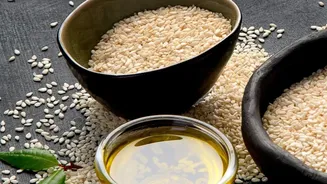
The secret to the superior taste of traditional sesame oil lies in its production method: cold-pressing. This is a simple, mechanical process where high-quality sesame seeds are crushed to extract the oil without the use of high heat or chemical solvents.
This gentle technique is designed to preserve the natural integrity of the sesame seed. Think of it as the most direct path from the seed to the bottle. By keeping temperatures low, typically below 40-50°C, the process ensures that the delicate compounds responsible for the oil's characteristic nutty aroma and deep flavour remain intact. It’s a method that prioritizes quality and taste over sheer quantity, resulting in an oil that is not just a cooking medium, but an ingredient in its own right.
The Industrial Process: Neutrality by Design
Refined vegetable oils, such as soybean, canola, or sunflower oil, undergo a much more intensive journey. Their production is an industrial process designed for maximum yield, stability, and neutrality. After an initial pressing, the remaining seed pulp is often washed with a chemical solvent like hexane to extract every last drop of oil. What follows is a multi-stage refining process. The crude oil is degummed to remove solids, neutralized with an alkaline substance to remove free fatty acids, and bleached with activated clay to strip away colour pigments. The final, and most crucial step for taste, is deodorization. Here, the oil is heated to very high temperatures (up to 250°C) and steam is passed through it to strip away all volatile compounds—which are the very molecules that create aroma and flavour. The end goal is a stable, clear, and completely tasteless oil.
Preserved Nuance vs. Stripped-Down Fat
The difference in taste comes down to what is preserved versus what is removed. Cold-pressed sesame oil is packed with the natural flavour compounds from the original seeds, including antioxidants like sesamol and sesamin, which contribute to its profile. This gives it a distinct, nutty, and earthy character that can elevate a dish. In contrast, the high-heat, multi-step refining process deliberately removes these flavourful compounds from vegetable oils. While this makes refined oils versatile for applications where you don't want the oil to impart any taste, it also means they are essentially just fat without any of the original character of the plant source. So, when you choose cold-pressed sesame oil, you are choosing an oil that tastes like sesame; when you choose a refined vegetable oil, you are choosing an oil that has been engineered to taste like nothing at all.
Beyond the Smoke Point
A common argument for using refined oils is their higher smoke point, making them suitable for high-heat cooking like deep-frying. While true, this focus overlooks the primary role of many oils in cooking: adding flavour. Cold-pressed sesame oil has a medium smoke point, making it perfectly suitable for gentle sautéing, stir-frying, and tempering. More importantly, it shines brightest when used as a finishing oil or in dressings and marinades, where its flavour is the star. Drizzling it over a finished soup, a bowl of noodles, or roasted vegetables adds a layer of aromatic richness that a neutral refined oil simply cannot replicate. The comparison isn't just about heat tolerance; it's about culinary purpose. One is for function, the other is for flavour.