



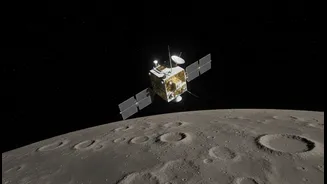
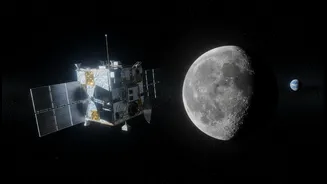


Meet CAPSTONE: The Little Spacecraft That Could
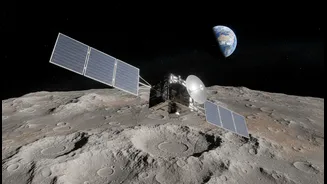
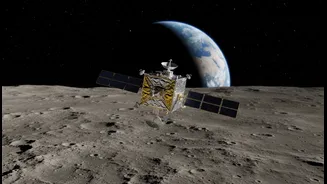
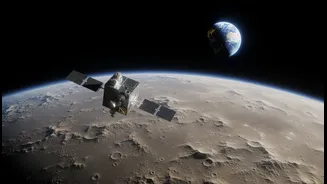
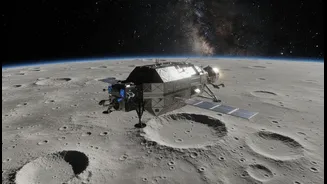
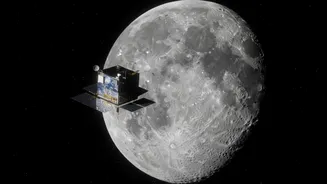
CAPSTONE, short for Cislunar Autonomous Positioning System Technology Operations and Navigation Experiment, is a 55-pound CubeSat launched in June 2022. Owned and operated by Advanced Space, it was designed as a low-cost pathfinder mission for NASA. Its
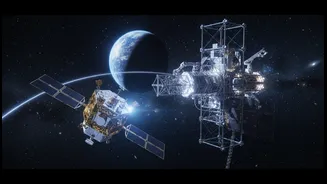
primary goal was bold: to be the very first spacecraft to fly in a unique and challenging lunar orbit, paving the way for future missions, most notably NASA's planned Lunar Gateway space station, a cornerstone of the Artemis program. After a four-month journey and overcoming initial communication challenges, CAPSTONE successfully entered its target orbit in November 2022, ready to begin its historic work.
The All-Important Orbit: NRHO
The route CAPSTONE was sent to test is called a near-rectilinear halo orbit, or NRHO. Unlike the relatively circular orbits of the Apollo era, an NRHO is a highly elliptical path. It brings the spacecraft within 1,600 kilometers of one lunar pole before swinging it out to a distant 70,000 kilometers from the other pole. This specific orbit is a gravitational sweet spot, a point of precise balance between the Earth and Moon’s gravity. The benefit is immense stability, which means spacecraft operating in an NRHO require very little fuel for station-keeping, making it an ideal long-term staging area for missions to the lunar surface and beyond. CAPSTONE's mission was to prove that models and simulations of this orbit held up in the real world.
A Mission of Firsts and New Capabilities
During its primary and extended missions, CAPSTONE achieved all its key objectives. It successfully characterized the NRHO, validating that the orbit was as stable and efficient as predicted. But it did more than just fly a specific path. The spacecraft also demonstrated a groundbreaking autonomous navigation system called CAPS (Cislunar Autonomous Positioning System). By communicating directly with NASA’s Lunar Reconnaissance Orbiter (LRO), CAPSTONE tested its ability to determine its own position in space without relying exclusively on tracking from Earth. This technology is crucial for a future where dozens of spacecraft might be operating around the Moon simultaneously, reducing the strain on Earth-based deep space communication networks.
The New Way: Opening the Data Vaults
While NASA's official activities on the mission concluded in June 2026, the legacy of CAPSTONE is now entering a new phase. In a move that embodies a modern, collaborative approach to space exploration, the operational data from the mission is being made available to the broader space and engineering community. This includes the vital flight dynamics and navigation information gathered while mastering the NRHO. By sharing this hard-won data, NASA and Advanced Space are providing an invaluable resource for other space agencies, commercial companies, and academic institutions planning their own lunar missions. It allows them to de-risk their own mission designs, refine their navigation strategies, and build upon CAPSTONE's success without having to re-learn its lessons from scratch.
Paving the Way for Artemis and Beyond
This data release is more than just a technical document; it is a toolkit for building humanity’s future on the Moon. The Artemis program, which aims to establish a sustainable human presence on the lunar surface, relies on the NRHO for the Lunar Gateway. Future landers, supply ships, and orbiting habitats will all benefit from the precise operational data CAPSTONE has provided. The successful demonstration of autonomous navigation and resilient deep-space communications technologies further solidifies the architecture for a bustling lunar environment. By proving out these systems on a small, cost-effective spacecraft, CAPSTONE has delivered an outsized return on investment, accelerating the development of the entire lunar ecosystem.