




Why This Look Is Trending Now
For years, minimalist design reigned supreme with its clean lines and cool tones. But today, there's a major shift towards interiors that feel more personal, layered, and lived-in. Enter the appeal of aged brass. Unlike its shiny, brand-new counterpart,
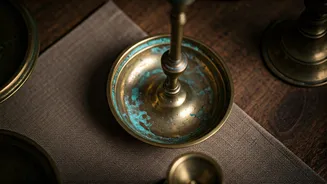
vintage or patinated brass tells a story. Its subtle green, blue, or dark brown undertones provide a rich texture and depth that make a space feel curated over time, not bought in a day. This aesthetic, often seen in styles like 'grandmillennial' or 'dark academia,' celebrates history and individuality. It’s also a nod to sustainability; upcycling an old or thrifted brass item is far more eco-friendly and affordable than buying a new, expensive designer piece. The trend capitalises on our desire for unique items that bring a sense of soul into our homes.
The 'Secret' Is Simple Science
The magic behind this transformation isn't magic at all—it's basic chemistry. The trick involves accelerating the natural oxidation process that happens to brass over many years. Brass is an alloy of copper and zinc. When exposed to oxygen and other elements, the copper component reacts, forming a layer of tarnish known as a patina. The sought-after greenish-blue hue is called verdigris. While you could wait a few decades for this to happen naturally, social media's favourite hack uses common household ingredients—specifically an acid (like vinegar) and salt—to create the perfect environment for rapid oxidation. By fuming the brass item in a sealed container with these agents, you can achieve a beautiful, authentic-looking patina in a matter of hours, not years.
What You'll Need For This Project
The beauty of this DIY is its simplicity and low cost. You probably have most of what you need already. Before you start, gather these items: * **A Brass Object:** This can be anything from a cheap new brass-plated frame to a thrifted candlestick or planter. Look for items in local flea markets or even your own storage. Note: This works best on solid or plated brass. If you're unsure, a magnet will not stick to solid brass. * **White Vinegar:** The acidic component that kickstarts the oxidation. * **Salt:** This works with the vinegar to speed up the process. * **A Plastic Container with a Lid:** It needs to be large enough to hold your object without it touching the vinegar solution at the bottom. * **Paper Towels or a Small Dish:** To hold the vinegar and salt mixture. * **Optional - A Clear Sealant:** A matte or satin spray sealant can protect the finish and prevent it from rubbing off.
Your Step-by-Step Guide to a Perfect Patina
Ready to transform your brass? Follow these simple steps. It's best to work in a well-ventilated area. 1. **Clean Your Brass:** Start by thoroughly cleaning your object with soap and water to remove any dirt, oils, or lacquer. If it has a protective coating, you may need to strip it with acetone or paint stripper first for the patina to take hold. 2. **Prepare the Fuming Chamber:** Pour a shallow layer of vinegar (about half an inch) into the bottom of your plastic container. In a separate small dish or on a wad of paper towels, sprinkle a generous amount of salt and pour a little vinegar over it to make a damp slush. Place this inside the container, but not touching your main object. 3. **Position Your Object:** Place your brass piece in the container. The key is to have it elevated above the vinegar pool. You can use a small plastic rack, stones, or another non-reactive object to prop it up. The goal is for the fumes, not the liquid, to do the work. 4. **Seal and Wait:** Secure the lid on the container to trap the acidic fumes. Now, you wait. You can start seeing changes within an hour, but for a deeper, more dramatic patina, leave it for 4-8 hours or even overnight. Check on its progress periodically. 5. **Rinse and Finish:** Once you're happy with the look, carefully remove the object. Rinse it gently with water to stop the chemical reaction and let it air dry completely. If you want to preserve the exact finish, apply a thin coat of a clear matte spray sealant.
How to Style Your New Vintage Pieces
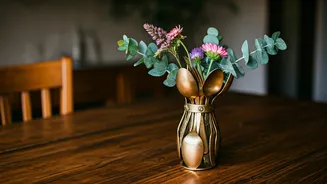
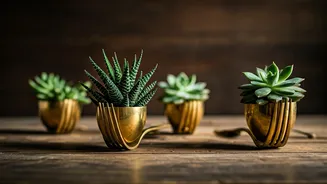
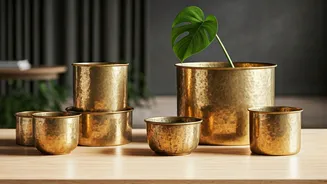
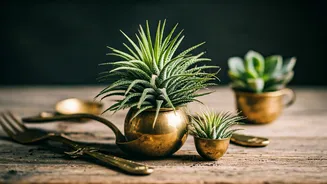
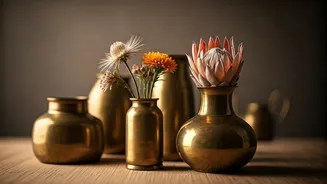
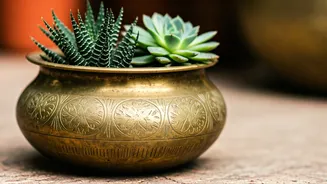
Now for the fun part: showing off your creation. Aged brass works beautifully as an accent piece that adds warmth and sophistication. Place a pair of patinated candlesticks on a dark wood dining table or a bookshelf. Use a newly aged brass bowl as a catch-all on your entryway console for keys and mail. Upcycled brass drawer pulls or cabinet knobs can completely transform a boring dresser or kitchen. A small, tarnished brass planter adds an element of rustic charm to your indoor greenery. The contrast between the old-world finish of the brass and the clean lines of a modern home creates a dynamic and interesting visual that feels both timeless and perfectly on-trend.