

The Moon's Power Problem
For humanity to return to the Moon and stay, as planned under the Artemis program, we need more than just rockets and habitats; we need durable power. The lunar environment is brutally hostile to technology. Temperatures on the Moon's South Pole, a key
target for exploration, can swing from a scorching 100°C (212°F) in the sun to a deep freeze of minus 200°C (minus 328°F) during the long lunar night. Traditional lithium-ion batteries, like those in our phones and cars, contain a liquid electrolyte. In such extreme cold, this liquid would freeze solid, damaging the battery's internal structure. At high temperatures, it can fail, and in the vacuum of space, it can evaporate. This makes standard batteries a non-starter for the continuous power needed for long-duration missions.
A Solid Solution Called SPEARS
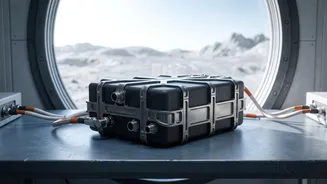
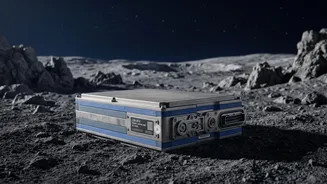
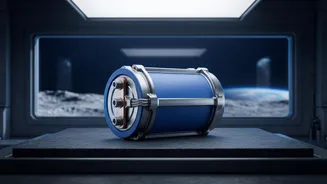
To solve this, NASA is developing a new generation of solid-state batteries. The project is called SPEARS, which stands for Solid Power for Extreme Environment Adaptability and Resilience in Space. The core innovation of SPEARS is replacing the volatile liquid electrolyte with a solid, ceramic- or polymer-based material. This fundamentally changes the battery's resilience. Without a liquid to freeze, the battery can survive the most extreme lunar cold without being permanently damaged. Recent tests at NASA's Langley Research Center showed that prototype cells could survive temperatures from 100°C all the way down to minus 170°C (minus 274°F). While they don't generate power at the absolute coldest temperatures, they don't break. With a small, built-in heater, they can be quickly warmed up to an operational state, a far more efficient solution than trying to keep a battery warm for two straight weeks.
Powering the Next Generation of Rovers
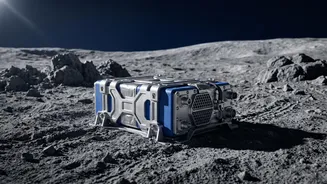
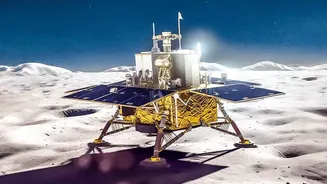
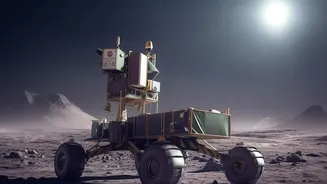
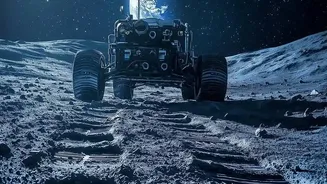
One of the most exciting applications for SPEARS is in powering a new generation of lunar rovers. For rovers to explore permanently shadowed craters, where water ice may be hiding, or to operate during the long lunar night, they need a power source that won't quit in the cold. Current rover designs are often limited by the need to stay in sunlight for solar power. Solid-state batteries would allow rovers to 'cold-soak' during the darkest, coldest periods and then reactivate when needed, dramatically expanding their range and scientific capabilities. Furthermore, the solid-state design is inherently safer and more stable, which is crucial for complex robotic systems. By reducing the need for heavy and complex thermal management systems, SPEARS technology can make rovers lighter and more efficient, allowing more mass to be dedicated to scientific instruments.
A Lifeline in an Emergency
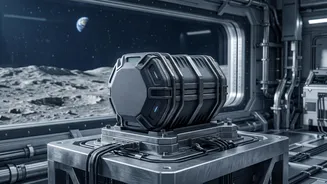
Beyond exploration, reliable power is a matter of survival. For astronauts on the lunar surface, a dependable power source for an emergency life-support pack is non-negotiable. SPEARS technology could be used in these critical backup systems, providing a safe and reliable energy source that is guaranteed to work even after exposure to extreme cold. The applications are extensive, from powering handheld tools like drills in shadowed craters to running long-duration scientific instruments that must survive months of thermal cycling. Because the chemistry of SPEARS batteries can be adjusted, NASA can tune them for different needs—whether that means optimizing for high energy storage, maximum power output, or long-term durability.