




X-Men (2000): Taking Mutants Seriously
Before 2000, superhero films were often seen as campy or silly. Bryan Singer's 'X-Men' changed that by treating its source material with dramatic weight. Opening with a harrowing scene in a 1944 concentration camp, the film immediately established a grounded,
serious tone. It translated the comics' core themes of prejudice and social alienation, making the struggle of mutants a powerful metaphor for real-world discrimination. This approach gave Hollywood permission to tell complex, character-driven stories that had previously been confined to comic book pages. By proving that a team of relatively unknown heroes could anchor a successful film with mature themes, 'X-Men' laid the critical groundwork for the wave of superhero cinema that followed, including the more celebrated films from Marvel and DC.
The Dark Knight (2008): The Prestige Crime Drama
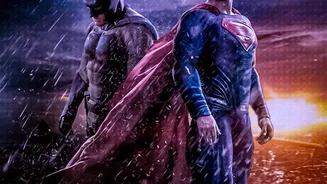
If 'X-Men' made superhero films serious, 'The Dark Knight' made them art. Christopher Nolan treated his sequel not as a comic book movie, but as a sprawling crime thriller in the vein of films like 'Heat'. The movie introduced a level of gritty realism that was unprecedented for the genre, from its tactile costumes to its depiction of Gotham as a city plagued by systemic corruption. Heath Ledger's posthumous Oscar-winning performance as the Joker shattered the ceiling for acting in the genre, proving that these roles could be as complex and demanding as any in prestige drama. The film was the first superhero movie to cross the one-billion-dollar mark, demonstrating immense commercial power while earning widespread critical acclaim. Its infamous snub for a Best Picture Oscar nomination is even credited with pushing the Academy to expand the category from five to ten nominees, forever changing the awards landscape.
The Avengers (2012): The Universe Blueprint
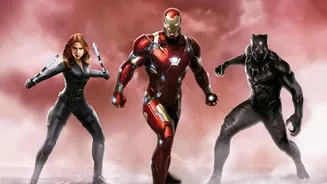
While individual films had found success, Marvel Studios had a grander vision: a shared cinematic universe. After years of building through solo films like 'Iron Man' and 'Thor', 'The Avengers' was the spectacular culmination. It proved that audiences would follow multiple characters across different franchises for a single, massive crossover event. The film’s success fundamentally altered the business model of Hollywood. Studios scrambled to replicate the formula, launching their own interconnected universes with varying degrees of success. The Marvel Cinematic Universe (MCU) became the highest-grossing film franchise in history, demonstrating a new way to build a brand where every film adds value to a larger, continuous story. This model of long-form, cross-media storytelling became the new blueprint for blockbuster entertainment.
Logan (2017): The Superhero Western
Just when it seemed like the genre had a set formula, 'Logan' tore up the rulebook. It wasn't just an R-rated superhero film; it was a bleak, character-driven drama that felt more like a modern Western than a typical blockbuster. The story focused on an aged and ailing Wolverine, stripping away the spectacle to deliver a poignant and violent meditation on mortality, legacy, and family. Along with 'Deadpool', 'Logan' proved there was a significant market for adult-oriented comic book stories, unshackled by the need to be a four-quadrant, family-friendly hit. Its success encouraged studios to take creative risks, blending genres and committing to definitive, impactful endings for beloved characters. It was a powerful reminder that these stories could be deeply personal and emotionally resonant.
Into the Spider-Verse (2018): The Visual Revolution
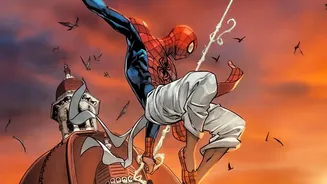
For years, live-action was seen as the only way to do justice to major comic book properties. Then, 'Spider-Man: Into the Spider-Verse' swung in and changed everything. The film broke new ground in animation, blending 2D and 3D techniques to create a stunning visual style that looked like a comic book come to life. Its narrative was equally bold, juggling multiple Spider-heroes from different dimensions in a story that was both hilarious and heartfelt. The film won the Academy Award for Best Animated Feature, a rare feat for a superhero movie. More importantly, it pushed the boundaries of what a mainstream animated film could look and feel like, inspiring a new wave of stylistic creativity in the animation industry and proving that the most faithful adaptation might not be live-action at all.