



Drainage Is Your Top Priority
The single biggest threat to balcony plants during the rainy season is waterlogged soil. When roots sit in soggy soil, they can't access oxygen, leading to the dreaded root rot. Symptoms often include yellowing leaves, mushy stems, and a foul, drain-like
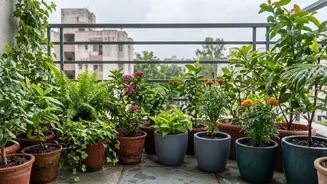
smell from the soil. Before the heavy rains begin, ensure every pot has clear, unobstructed drainage holes. A simple but highly effective trick is to elevate your pots on stands, bricks, or 'pot feet'. This small gap allows excess water to escape freely and improves air circulation around the base, which is crucial for preventing root suffocation.
Rethink Your Watering Schedule
It’s tempting to stick to a routine, but monsoon watering requires flexibility. With natural rainfall and high humidity, your plants will need significantly less water than they do in summer. The golden rule is to check the soil before you even think about watering. Push your finger about two inches into the topsoil; if it comes out damp, do not water. For plants directly exposed to rain, you may not need to water them manually at all. Instead, your job is to monitor them to ensure they aren't getting too much water.
Watch for Unwanted Pests
High humidity creates a paradise for common garden pests. Snails, slugs, aphids, and mealybugs thrive in damp conditions. Snails and slugs can be identified by the irregular holes they chew in leaves, and they can be deterred by placing sharp barriers like crushed eggshells around the base of your plants. Aphids and other sap-sucking insects often attack new growth. Inspect your plants regularly, paying close attention to the undersides of leaves and stem joints. A preventative weekly spray of neem oil mixed with a little liquid soap can keep many of these pests at bay.
Guard Against Fungal Diseases
Along with pests, fungi love the monsoon. Powdery mildew, which looks like a white dusty coating on leaves, and black spot are common fungal issues. These diseases spread quickly when leaves remain wet and air circulation is poor. To prevent this, give your plants enough space to breathe. Avoid overcrowding your pots, as this traps humidity. Prune any dense or overgrown foliage to improve airflow through the plant. If you spot any infected leaves, remove them immediately to stop the fungus from spreading.
Manage Sunlight and Support
Overcast skies mean less sunlight, which can cause some plants to become 'leggy' or stretched as they reach for light. Rotate your pots every few days so all sides get some exposure. If possible, move sun-loving plants to the brightest part of your balcony. For taller plants or those with slender stems, the combination of strong winds and rain can be destructive. Provide support by using stakes or small trellises to prevent them from snapping. For very delicate plants, you might consider moving them to a more sheltered spot against a wall during intense downpours.
Adjust Your Fertilising Routine
Heavy and frequent rain can leach nutrients out of potting soil, washing them away before your plant can absorb them. While it’s important to replenish these nutrients, it's best to avoid fertilising during periods of continuous heavy rain. Stressed roots, especially those in very wet soil, can be susceptible to fertiliser burn. A better approach is to wait for a break in the weather. You can top-dress the soil with a thin layer of vermicompost or other organic compost, which slowly releases nutrients and improves soil structure.