
The Curve vs. The Corner
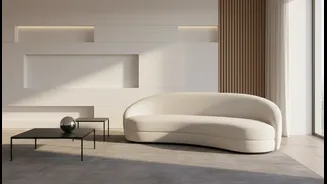
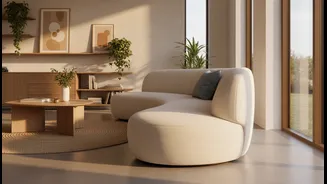
The biggest mistake homeowners make is pushing a curved sofa flush against a flat wall or jamming it into a 90-degree corner. This negates the very purpose of its shape, creating awkward, unused gaps behind it and a cramped feeling in front. Instead of fighting
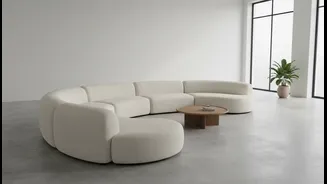
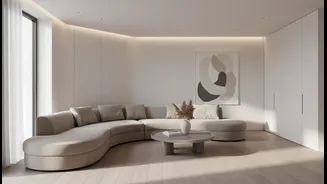
the room's geometry, use curves to soften it. A rounded armchair can make a sharp corner feel less severe. If you have a large curved sectional, pulling it away from the walls allows its sculptural form to be appreciated and creates a more layered, spacious look. Even a few inches of breathing room can make a significant difference, letting the piece command its space rather than being confined by it.
Mind Your Daily Traffic Patterns
Furniture placement should always prioritise movement. Before you commit to a location, walk the natural paths in your room: from the doorway to the seating area, from the sofa to the window. A key benefit of curved furniture is its ability to improve circulation. The rounded edges of a coffee table or the gentle arc of a sofa can guide movement smoothly, eliminating the sharp corners you might otherwise bump into. This is especially beneficial in smaller homes or apartments where every inch counts. Ensure that the widest part of a curved piece doesn't create a bottleneck, particularly near doorways or high-traffic hallways. The goal is to create flow, not obstruct it.
Create Conversational Zones
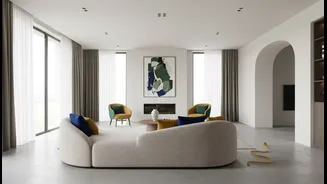
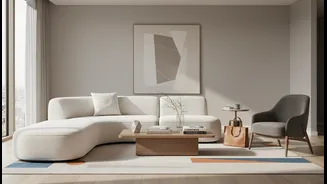
One of the greatest strengths of a curved sofa is its innate ability to foster connection. Unlike a straight sofa that lines people up, a curved design naturally angles sitters toward each other, promoting more intimate conversation. Use this to your advantage. Float a curved sofa in the middle of a larger room to create a distinct social hub. Paired with a round coffee table and a couple of accent chairs, it forms a self-contained zone that feels both purposeful and welcoming. In open-plan spaces, a large curved piece can act as a subtle divider, separating a living area from a dining space without needing a wall or screen.
Balance Curves with Straight Lines
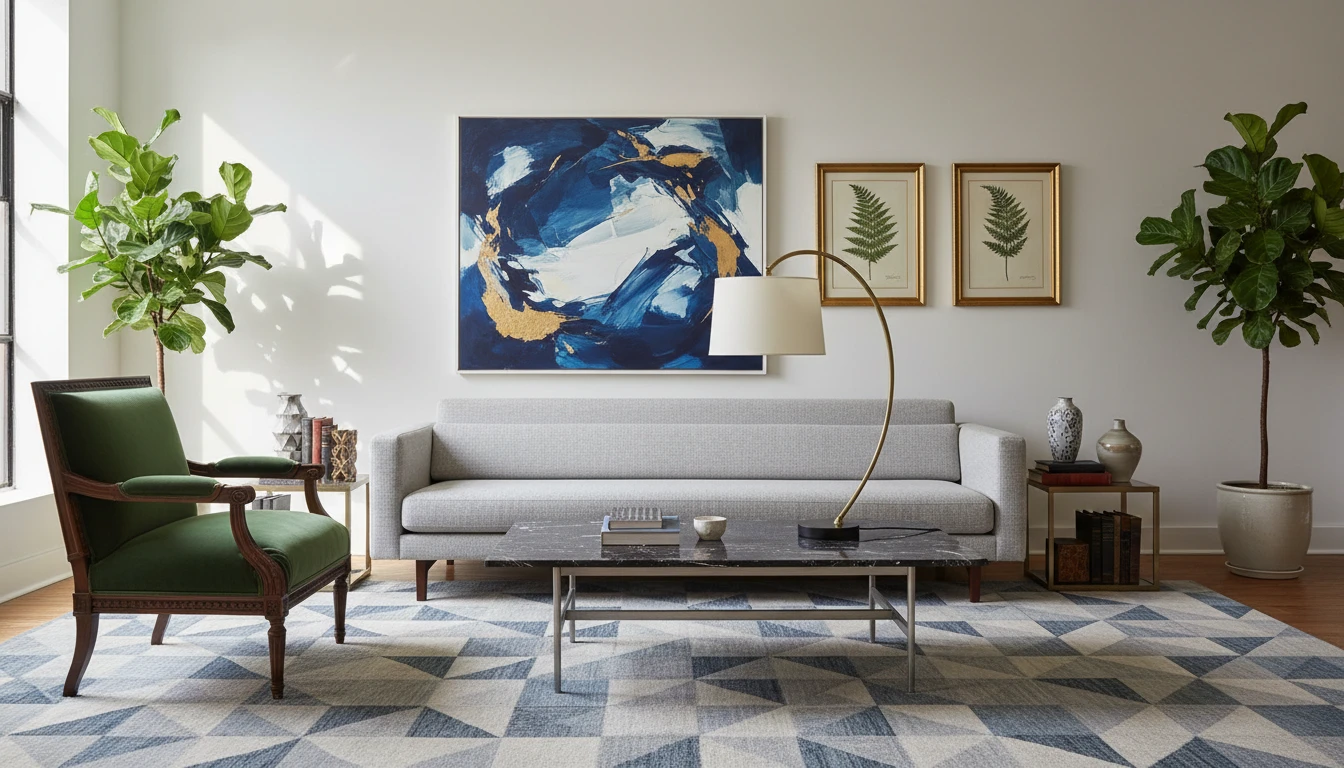
While embracing curves, be careful not to overdo it. A room where everything is rounded can feel visually confusing. A successful design often relies on contrast. Many designers suggest a 70/30 rule, where 70% of the room's elements are linear and 30% are curved. This creates a harmonious balance. Let your curved sofa be the star and support it with straight-lined pieces. A rectangular area rug can ground a floating curved sofa, connecting it to the room's architecture. A linear bookshelf, a sleek console table behind the sofa, or angular picture frames on the wall all provide a necessary counterpoint that makes the curves stand out even more.