






The Disposable Era of Space Telescopes
For decades, most advanced spacecraft have been launched with a one-way ticket. Once they run out of fuel or a critical component fails, their multi-billion-dollar missions come to an end. The Hubble Space Telescope was a rare exception, designed in the era
of the Space Shuttle to be serviced by astronauts in low-Earth orbit. These servicing missions dramatically extended its life and upgraded its capabilities, making it one of the most productive scientific instruments in history. But for telescopes sent much farther out, like the James Webb Space Telescope (JWST), this hasn't been an option. JWST orbits at a distant, gravitationally stable point 1.5 million kilometers from Earth, far beyond the reach of human crews. Its mission will end when its fuel runs out, a ticking clock on its search for cosmic secrets.
A Mechanic in the Void
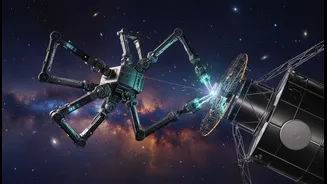
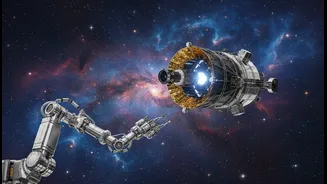
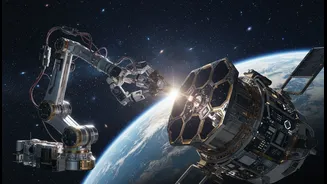
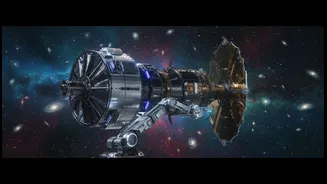
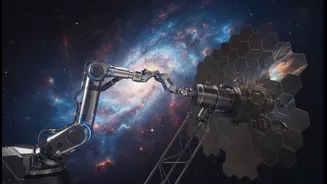
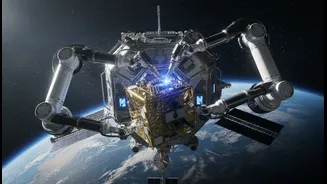
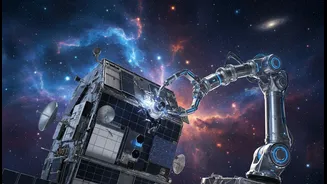
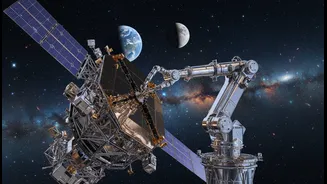
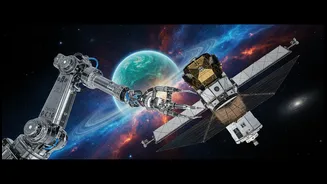
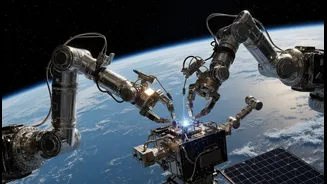
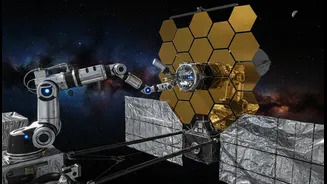
The solution is no longer science fiction: robotic servicing. The concept involves sending a specialized spacecraft to rendezvous with a satellite, where it can perform complex tasks autonomously or via remote control. These space-based mechanics can refuel, repair, and even upgrade scientific instruments. The technology is already being proven. In July 2026, NASA partnered with the commercial company Katalyst Space to launch a robotic spacecraft to save the aging Neil Gehrels Swift Observatory, which was falling out of orbit. The mission aims to grab the telescope with robotic arms and boost it to a higher altitude, potentially adding a decade to its operational life—a task performed on a satellite that was never designed to be serviced.
Designing for a Second Life
This capability is now becoming a core part of future mission planning. In a landmark decision, NASA recently mandated that its next great observatory, the $11 billion Habitable Worlds Observatory (HWO), must be designed from the ground up for robotic servicing. Scheduled for launch in the late 2040s, HWO's prime directive is to directly image dozens of Earth-like planets and scan their atmospheres for chemical hints of life, such as oxygen and methane. By building it with modular components and standardized interfaces, NASA is ensuring that robotic missions can visit the telescope to fix problems, install next-generation sensors, or top off its fuel tanks. This move signals a paradigm shift from disposable assets to sustainable, upgradable platforms in space.
More Time, More Chances
The implications for the search for extraterrestrial life are profound. Astrobiology is a game of patience and probabilities. Finding biosignatures on a distant exoplanet requires staring at tiny points of light for hundreds of hours, and surveying enough planets to get lucky. Extending a mission like HWO's from a planned five or ten years to potentially 20 or 30 years dramatically increases the time available for discovery. Just as human servicing allowed Hubble to evolve with technology, robotic servicing will allow HWO to be upgraded with more sensitive instruments developed long after its launch. This longevity multiplies the chances of answering one of humanity’s oldest questions.
The High-Stakes Challenge
While the promise is enormous, the execution is incredibly challenging. Operating a robot with millimeter precision a million kilometers away, where communication delays are significant, is a monumental engineering feat. A single mistake during a docking or repair maneuver could potentially damage or destroy a priceless scientific instrument. The path is littered with difficulty; NASA’s ambitious OSAM-1 mission, which was intended to demonstrate refueling a satellite not designed for it, was canceled in 2024 after facing significant cost overruns and technical hurdles. These challenges underscore the high stakes involved, but the recent mandate for HWO and the growth of a commercial servicing sector show a determined push to make this capability a routine part of space operations.