

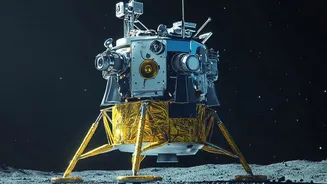

The Artemis Generation
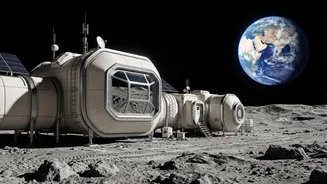
For decades, space exploration meant planting a flag and coming home. NASA's Artemis program changes that. The goal is to build a permanent human outpost on the Moon, called the Artemis Base Camp, likely near the lunar south pole. This isn't just about
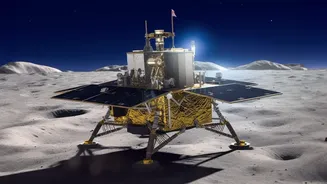
footprints; it's about creating a sustained presence where astronauts can live, work, and conduct research for extended periods. This lunar base will serve as a vital stepping stone, allowing humanity to test the technologies and strategies needed for the next great leap: a crewed mission to Mars. In early August 2026, NASA formally invited the Indian Space Research Organisation (ISRO) to participate in this monumental project, building on India’s status as a signatory of the Artemis Accords since 2023. This invitation is a recognition of India's proven capabilities, especially after the historic success of the Chandrayaan-3 mission, which made India the first and only nation to soft-land a craft near the lunar south pole.
India's Role on the Moon
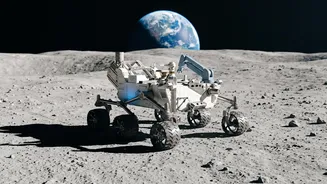
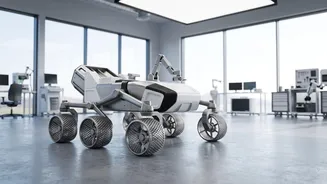
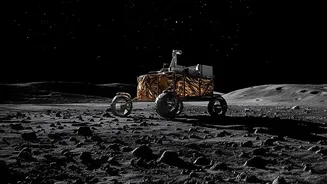
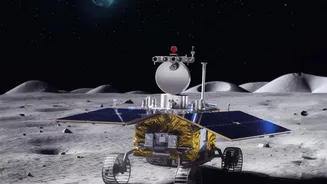
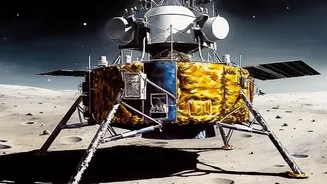
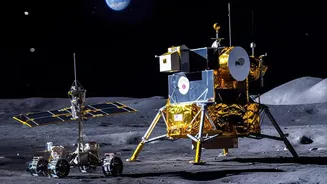
So, what will India’s contribution look like? While specific details are still being discussed, India’s strengths point towards several key areas. ISRO is globally renowned for its cost-effective and innovative engineering, a prime example being the Chandrayaan-3 mission, which was completed for a fraction of the cost of similar missions by other nations. This expertise could be invaluable in developing robotics, lander systems, and surface rovers. The Artemis Base Camp will require a fleet of robotic vehicles for construction, resource extraction, and exploration, and Indian firms are already making strides in this domain. Furthermore, the collaboration builds upon previous successful joint projects like the NISAR satellite, which demonstrated the seamless interoperability between the two space agencies. This partnership also aligns with India's own ambitious goals, which include a crewed lunar landing by 2040 and establishing its own space station, the 'Bharatiya Antariksh Station', by 2035.
The Engineers of a New World
Building a habitat in an environment with no atmosphere, extreme temperatures, and constant radiation is one of the greatest engineering challenges in history. This challenge creates a massive demand for a new generation of specialists. Aerospace engineers will be needed to design the spacecraft and landers, but the needs go much deeper. Materials scientists will have to develop composites and alloys that can withstand the harsh lunar environment. Robotics engineers will be essential for creating autonomous systems that can build structures and mine for resources like water ice, which is believed to be abundant in the shadowed craters of the south pole. Civil and construction engineers will face the unprecedented task of designing habitats, landing pads, and roads on a different world. Software and systems engineers will be the backbone of the entire operation, developing the flight software, communication systems, and data integration platforms that connect the Moon base to Earth.
Beyond Rockets and Robots
A self-sustaining lunar base is a miniature society, and it requires more than just engineers. The field of space medicine will become critical, with doctors and biologists studying the long-term effects of low gravity and radiation on the human body. Geologists will be the new prospectors, tasked with exploring the lunar surface to locate and analyze resources. With plans to grow food on the Moon, botanists and agricultural scientists will be needed to pioneer lunar farming techniques. Furthermore, the entire operation will depend on a vast support network on Earth. This includes mission controllers, data analysts processing the flood of information sent back from the Moon, and simulation specialists who create virtual environments for training and mission planning. As commercial activities expand, new fields like space law and policy will also grow, requiring experts to navigate the complex legal landscape of off-world resource extraction and property rights.
How to Join the New Space Race
For young Indians inspired by this vision, the career path is becoming clearer. Traditionally, ISRO has been the primary destination, recruiting top graduates in fields like mechanical, electronics, and computer science engineering. However, the landscape is rapidly changing. India is now home to over 400 private space-tech startups, from rocket builders like Skyroot Aerospace and Agnikul Cosmos to satellite and data analytics firms like Pixxel and SatSure. These companies are hiring aggressively and are poised to become a critical part of the supply chain for large-scale international missions. Aspiring space professionals should focus on core STEM disciplines, but also gain skills in areas like artificial intelligence, data science, and robotics. Whether working for ISRO, a burgeoning private startup, or a global aerospace giant, the opportunities to contribute to humanity's future on the Moon are no longer a distant dream, but an emerging reality.