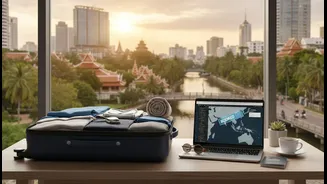









The New 9-to-5: A Tropical Twist
The concept of a 'workation'—blending work with vacation—has evolved dramatically. Once a short-term escape, it is now a viable long-term lifestyle for a generation unbound by physical offices. The rise of remote work has empowered young professionals
to trade expensive city apartments for the promise of adventure and a better quality of life. Southeast Asia has emerged as the epicentre of this movement, attracting a global community of digital nomads. Cities like Chiang Mai in Thailand, Canggu in Bali, and Da Nang in Vietnam are no longer just tourist hotspots; they are buzzing hubs for remote workers.
The Unbeatable Math of Living Costs
The primary driver behind this trend is simple arithmetic. The cost of living in many Southeast Asian hubs is significantly lower than in major Indian metropolitan areas. For instance, the monthly rent for a studio apartment in a prime Bangalore or Mumbai locality could potentially cover several months of comfortable accommodation in Chiang Mai or Ho Chi Minh City. A comfortable lifestyle, including accommodation, food, a co-working space membership, and transportation, can be managed on a budget of ₹75,000 to ₹1,25,000 per month in many of these cities. This affordability allows young earners to not only live well but also save money, a difficult feat in today's urban India.
More Than Just Savings: A Lifestyle Upgrade
While the low cost is a major draw, the appeal of Southeast Asia goes far beyond finances. It offers a tangible upgrade in quality of life. Many report a better work-life balance, trading traffic jams and pollution for serene landscapes and outdoor activities. The year-round warm climate and access to beaches, mountains, and vibrant cultural sites provide ample opportunities for exploration and relaxation. This environment is reported to boost productivity and mental well-being, as a midday break can mean a quick swim or a yoga session instead of a rushed coffee run. The result is a lifestyle that feels less about just working and more about living.
Plug-and-Play Paradise for Digital Nomads
These destinations haven't become popular by accident. They have developed a sophisticated infrastructure to cater specifically to remote workers. High-speed internet, once a concern, is now reliable in major hubs like Kuala Lumpur, Bangkok, and Da Nang. A dense ecosystem of co-working spaces and laptop-friendly cafés provides productive work environments and networking opportunities. Well-established digital nomad communities offer a crucial support network, making it easier for newcomers to settle in, find accommodation, and socialise. This plug-and-play setup reduces the friction of moving abroad and allows people to become productive almost immediately.
Navigating the Dream: Visas and Realities
Of course, the dream has its practical hurdles. Navigating visa requirements can be complex, though many Southeast Asian nations are simplifying the process by introducing special long-term or digital nomad visas. Thailand, Malaysia, and Indonesia have all launched initiatives to attract remote professionals. Beyond bureaucracy, there are personal challenges. The temptation to treat the trip as a permanent holiday can disrupt work discipline. Language barriers can be an issue outside of tourist zones, and building a genuine social circle takes effort. It’s a lifestyle that requires a proactive and adaptable mindset to truly succeed.