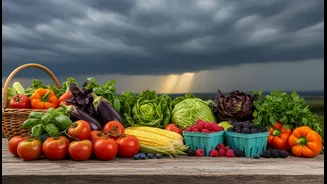








From Extreme Weather to Your Wallet
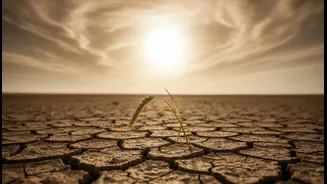
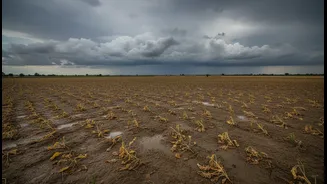
The connection between the weather and your food costs has always been straightforward. A failed monsoon or a blistering heatwave can decimate crops, leading to shortages and price hikes. What’s new is the frequency and intensity of these events. Recent
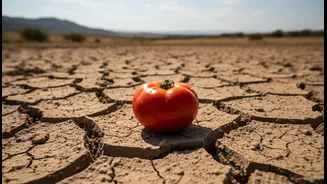
reports, including government economic surveys, explicitly link a pattern of extreme weather—erratic rainfall, heatwaves, and floods—to persistent food inflation in India. For years, such supply shocks were considered temporary hiccups. Now, institutions like the Reserve Bank of India are beginning to treat them as a structural, ongoing issue. The price of staples like tomatoes, onions, and pulses has become increasingly volatile, directly reacting to climate disruptions that damage harvests and disrupt supply chains. This isn't a one-off bad season; it's a new reality where climate change consistently impacts food availability and affordability.
The New Climate Scoreboard
Because these climate-driven price shocks are becoming more common, a different set of eyes is now paying close attention: the financial world. Investors, insurers, and global banks are looking at food price volatility not just as a consumer issue, but as a tangible metric for climate risk. When crop yields fall in a major agricultural region due to drought, it sends a ripple effect through the entire economic system. This volatility is now being factored into risk models and investment strategies. In essence, the price of food has become a live scoreboard for the physical impacts of climate change. It’s no longer just an agricultural statistic; it’s a financial indicator that signals instability, prompting financial markets to reassess the value and risk associated with companies, sectors, and even entire national economies.
What Exactly is 'Climate Finance'?
So, where does the 'finance' part come in? Climate finance refers to financial flows aimed at responding to climate change. This money funds two main types of activities: mitigation, which reduces greenhouse gas emissions, and adaptation, which helps us cope with climate impacts. In agriculture, this translates into significant investment. India’s draft climate finance taxonomy, for example, helps classify and direct capital towards these goals, aiming to make it clear what qualifies as a 'green' investment. This can mean funding for developing drought-resistant crop varieties, building better irrigation systems, or financing infrastructure like cold storage to reduce post-harvest losses. Both public and private money is being channelled into these areas, with private finance from commercial institutions taking a significant lead, often guided by government priorities.
A Double-Edged Sword for Farmers
For India's farmers, this new landscape presents both immense challenges and new opportunities. On one hand, they are on the front lines of climate change, facing unpredictable weather that threatens their livelihoods. Smallholder farmers are often the most affected by crop losses and have limited resources to absorb the shocks. On the other hand, the rise of climate finance opens doors for those who can transition to more sustainable and resilient practices. Government initiatives and private investment are increasingly available for climate-smart agriculture. This includes adopting techniques like conservation tillage to improve soil health, better water management, and planting crop varieties that can withstand climate stress. Farmers who can access this financing can not only protect themselves from risk but also potentially increase their productivity and income.
Investing in a Resilient Food Future
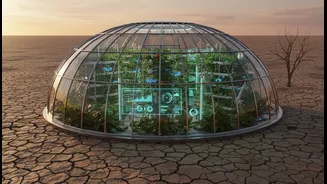
The trend goes beyond individual farms. There is a broader investment shift towards future-proofing the entire food supply chain. Venture capitalists and large investment funds are actively looking for the next big thing in agricultural technology (agri-tech) and climate technology. This includes everything from AI-powered weather forecasting for farmers to innovations in vertical farming and hydroponics that use fewer resources. The goal is to build a food system that is less vulnerable to the shocks of a changing climate. For India, a country that needs to ensure food security for a growing population while navigating climate risks, these investments are critical. The collaboration between policymakers, research institutions, and private companies is essential to scale these solutions and transform agriculture from a source of climate vulnerability into a pillar of resilience.