
Gravity Is Stronger Than You Think
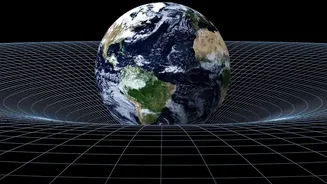
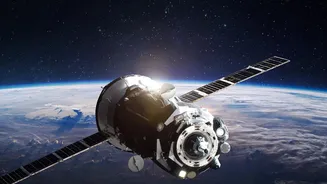
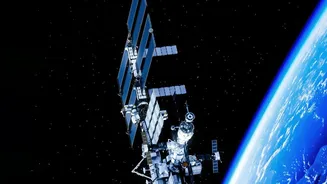
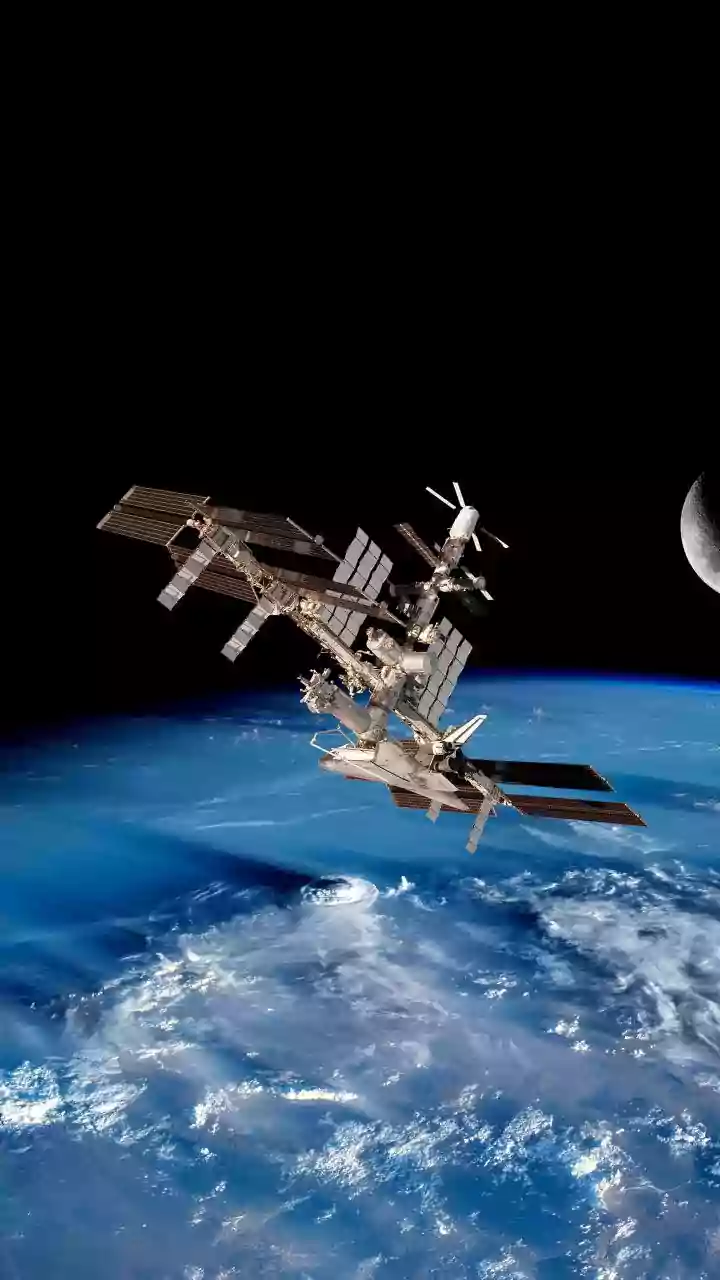
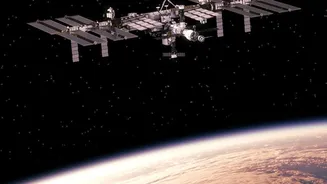
The first and most surprising fact is that gravity is very much present on the International Space Station (ISS). The station orbits at an altitude of about 250 miles (400 kilometers). At that height, Earth's gravitational pull is still about 90% as strong
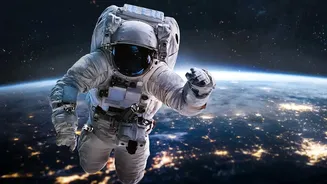
as it is on the surface. If you could build a ladder to the ISS and stand on a scale at the top, a 150-pound person would still weigh about 135 pounds. So, if gravity hasn't disappeared, why do astronauts and objects float freely as if it has? The station, and everything in it, isn't escaping gravity; it's succumbing to it in a very specific way.
The Never-Ending Fall
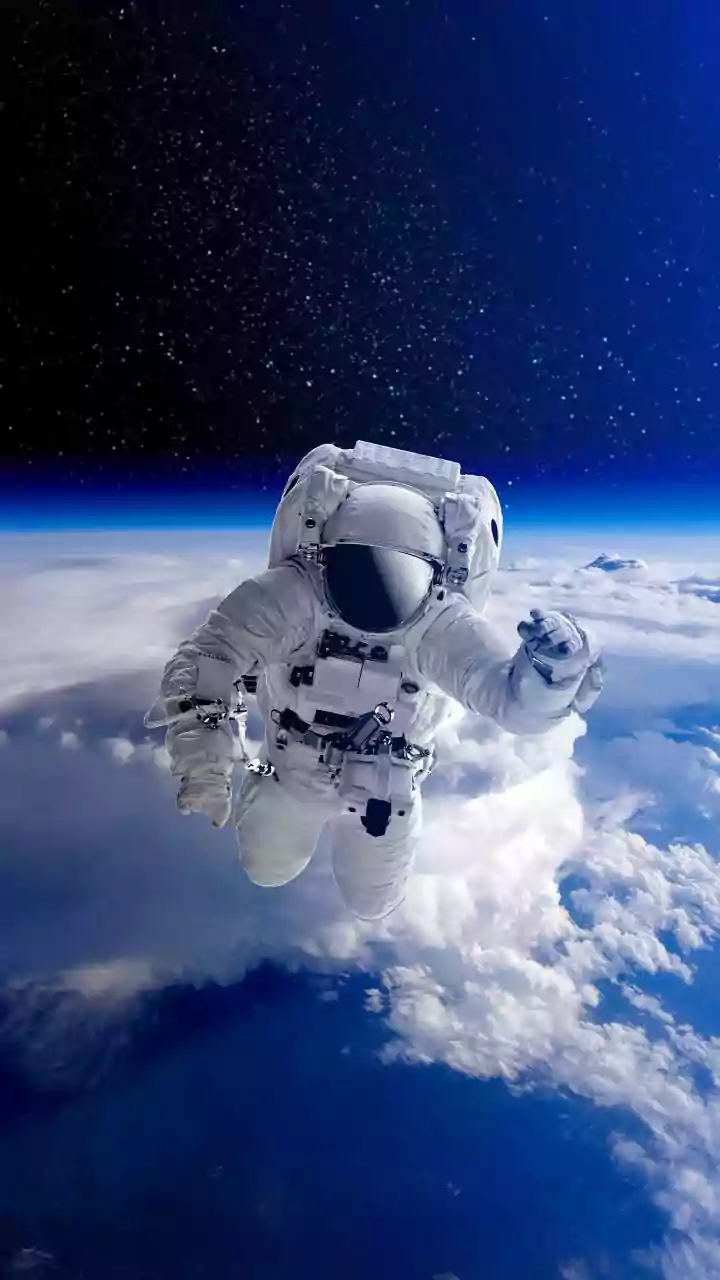
The real reason for the apparent weightlessness is a concept called 'freefall'. The ISS, along with its crew and cargo, is constantly falling toward Earth under the pull of gravity. But it's also moving sideways at an incredible speed—roughly 17,500 miles per hour (about 5 miles per second). This immense horizontal velocity means that as the station falls, the Earth's surface curves away beneath it at the exact same rate. The result is that the station is perpetually 'missing' the ground. It falls around the Earth, not into it. This continuous state of falling is what we call an orbit. The late author Douglas Adams playfully summed up the secret to flying as throwing yourself at the ground and missing; for the ISS, this is a literal, daily reality.
An Elevator Ride on a Cosmic Scale
To bring the concept down to Earth, imagine you're inside an elevator and its cable suddenly snaps. For the few terrifying seconds before impact, you and everything else in the elevator car—your phone, your keys, a pen—would be falling at the same rate. Relative to the elevator car around you, you would be floating. If you let go of the pen, it would hover in front of you instead of dropping to the floor. This is precisely what's happening on the ISS. The station is the elevator car, and the astronauts are the passengers. Since everything is falling together, there is no sensation of weight. Weight, as we perceive it, isn't just gravity; it's the force of the ground (or a chair) pushing back up on us. In freefall, that upward-pushing force disappears.
Welcome to the World of Microgravity
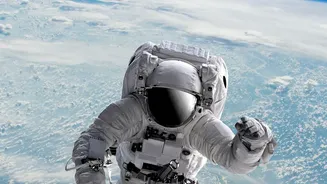
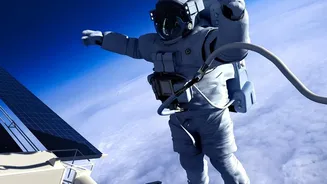
Because 'zero gravity' is inaccurate, scientists prefer the term 'microgravity'. The 'micro' prefix acknowledges that while the feeling of weight is almost entirely gone, there are still minuscule gravitational forces at play. For instance, an astronaut’s feet are slightly closer to Earth than their head, meaning they experience a tiny, imperceptible difference in gravitational pull. These tiny variations, along with other minor forces like atmospheric drag on the station, prevent the environment from being one of perfect 'zero-g'. Understanding microgravity is crucial not just for getting the physics right, but for studying its long-term effects on the human body, such as muscle and bone density loss, and for conducting experiments in material science and biology that are impossible in Earth's full gravity.