



A New Class of Worlds
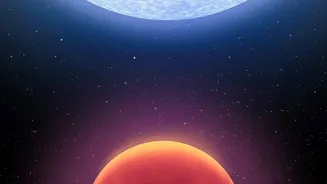
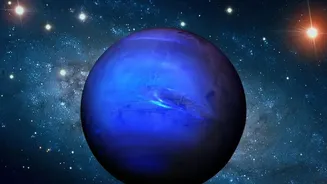
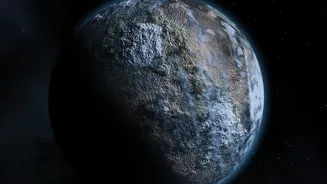
At the forefront of this cosmic search are 'Super-Earths,' a class of exoplanet more massive than our own world but smaller than ice giants like Neptune. Our solar system, curiously, doesn't have one, yet they appear to be one of the most common types
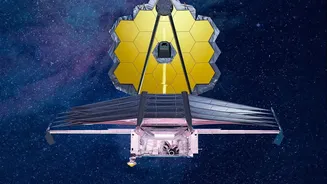
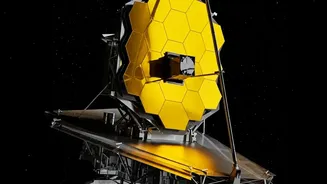
of planets in the galaxy. These worlds are incredibly diverse; some are dense, rocky planets, while others may be more gaseous 'mini-Neptunes'. Because of their size and potential to retain atmospheres, scientists see them as prime targets in the quest to find habitable environments beyond our solar system. The JWST's powerful instruments are finally allowing us to move beyond simply detecting these planets to actively characterising what they are made of.
Decoding Distant Skies
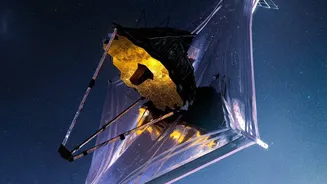
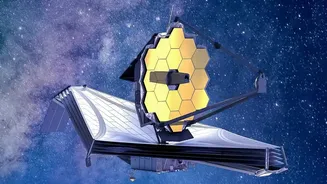
How does a telescope nearly 1.5 million kilometres away analyse the air of a planet light-years from Earth? The technique is called transit spectroscopy, and it is a marvel of modern astronomy. When an exoplanet passes in front of its host star from our perspective, a tiny fraction of the starlight shines through the planet's atmosphere. Molecules in that atmosphere absorb specific colours, or wavelengths, of light. The JWST's Near-Infrared Spectrograph (NIRSpec) is incredibly sensitive to these changes. By capturing the spectrum of the starlight before, during, and after the planet transits, astronomers can identify the chemical fingerprints of molecules like water vapour, methane, and carbon dioxide. It's like determining the ingredients of a recipe by analysing the light that passes through the steam rising from the pot.
A Gallery of Water Worlds
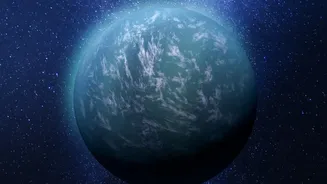
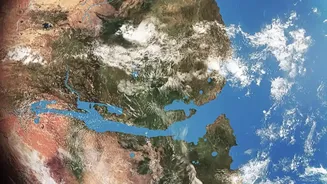
Recent observations have turned up several tantalising candidates. One of the most talked-about is K2-18 b, a planet about 124 light-years away that is roughly eight times the mass of Earth. JWST has confirmed the presence of water vapour, methane, and carbon dioxide in its atmosphere. This has led scientists to classify it as a potential 'Hycean' world—a hypothetical type of planet with a deep liquid water ocean beneath a dense, hydrogen-rich atmosphere. Another fascinating subject is GJ 1214 b, a closer exoplanet whose atmosphere was previously obscured by a thick layer of haze. JWST's infrared vision pierced through this veil, revealing compelling evidence that its atmosphere is primarily composed of water vapour. However, with scorching surface temperatures, it would be an inhospitable, steamy world, not one with gentle oceans.
The Chemistry of Habitability
The detection of water vapour is a monumental first step, but it is the combination of molecules that paints a more complete picture of a planet's potential for life. The presence of both methane and carbon dioxide alongside water on K2-18 b, for instance, is significant because this atmospheric mix is similar to what could be produced by a world with a large ocean. While these observations do not confirm life, they suggest the planet has the necessary ingredients to support it. Even on hellish planets like 55 Cancri e, a lava world where temperatures are hot enough to melt rock, JWST has provided insights. Data suggests it has an atmosphere that is being constantly replenished by gases venting from its molten interior, offering clues about the planet’s geological evolution. These discoveries demonstrate the telescope's ability to analyse a wide range of planetary environments.
The Ultimate Question
So, have we found aliens? The answer is a firm no, and scientists are quick to manage expectations. There is a vast difference between a 'habitable' planet—one with the basic conditions for life, like liquid water—and an 'inhabited' one. Some initial data from K2-18 b hinted at a gas called dimethyl sulphide (DMS), which on Earth is overwhelmingly produced by marine life. However, this has sparked intense debate, and subsequent analysis suggests there is not yet statistically significant evidence for it. This scientific back-and-forth is not a failure; it is the scientific process in action. It shows how rigorous the standards are for claiming a 'biosignature,' or a sign of life. JWST has proven it can detect the building blocks. The next challenge is finding a combination of chemicals that is difficult to explain without biology.