
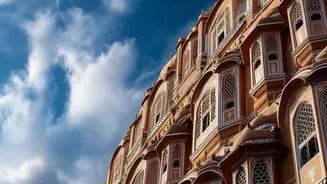
Rajasthan's Open-Air Art Gallery
Often called the world's largest open-air art gallery, the Shekhawati region is a cluster of towns in northeastern Rajasthan, including districts like Jhunjhunu, Sikar, and Churu. This semi-arid landscape is famous not for forts or lakes, but for its
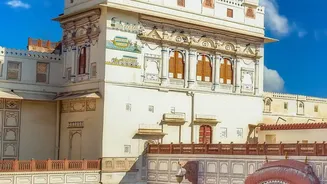
spectacular havelis—grand mansions built by wealthy Marwari merchants, primarily in the 18th and 19th centuries. Historically, the region was a crucial stop on the caravan trade routes, and the merchants who prospered here funnelled their wealth into constructing these architectural marvels, turning entire towns into canvases.
The Famed Frescoes and Havelis
The true magic of Shekhawati lies in the intricate frescoes covering nearly every surface of its havelis. These murals are a vivid chronicle of the times, depicting everything from mythological tales of Lord Krishna and Rama to scenes of daily life. More surprisingly, you'll find paintings of British colonial figures, early steam locomotives, and gramophones, reflecting the merchants' exposure to the world beyond Rajasthan. Towns like Mandawa, Nawalgarh, and Fatehpur are particularly dense with these painted homes, such as the Hanuman Prasad Goenka Haveli, the Podar Haveli (now a museum), and the Murmuria Haveli.
The New Shekhawati Circuit
Recognising the region's immense potential, the Rajasthan government is actively working to bring Shekhawati out of the shadows. The tourism department has launched an initiative to revive the havelis, many of which have fallen into disrepair. This includes a plan to develop a dedicated tourism circuit connecting key towns like Mandawa, Nawalgarh, Dundlod, Fatehpur, Ramgarh, and others. The push aims to decentralise tourism from the state's traditional hubs and create new economic opportunities. Financial incentives are also being offered to private owners to encourage the restoration of havelis built before 1950 and their conversion into heritage hotels.
Planning Your Journey
The renewed focus on Shekhawati makes now an ideal time to visit. The region is accessible by road from both Delhi (around 250 km) and Jaipur (around 190 km). The best time to explore is between October and March when the desert climate is most pleasant. A well-planned itinerary might start in Nawalgarh, known for the Dr. Ramnath A. Podar Haveli Museum, which offers a fantastic introduction to the region's art. From there, you can easily travel to Mandawa, often used as a base for exploring, and the culturally rich town of Fatehpur, which is home to the Nadine Le Prince Haveli, a beautifully restored mansion now functioning as a cultural centre.
Preserving a Fading Legacy
A visit to Shekhawati is more than just a sightseeing trip; it's an encounter with a living, fragile heritage. While some havelis have been meticulously restored and converted into hotels or museums, many others stand abandoned, their brilliant frescoes slowly fading. The government's revival plan, which requires the consent of the private owners, is a crucial step toward preservation. By choosing to visit, travellers contribute to an economy that makes saving these artistic treasures viable, ensuring that the stories painted on these walls can be read by future generations.