




The New Blueprint for Space
India's space ambitions are being consolidated under a long-term strategy, often referred to as "Space Vision 2047," aimed at transforming the nation into a leading global space power by the 100th anniversary of its independence. According to leaders
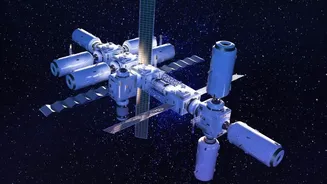
at the Indian Space Research Organisation (ISRO), this isn't just about continuing what they do well—like cost-effective launches—but about pioneering new frontiers. This vision involves expanding India's satellite constellations, establishing a space station by 2035, and even landing an Indian astronaut on the Moon by 2040. A key pillar of this strategy is a massive scale-up of infrastructure, with plans to launch over 100 new satellites in the coming years and a fleet of 50 advanced surveillance satellites within five years. To achieve this, India is aggressively opening its space sector to private companies, aiming to grow its share of the global space economy from around 2% to 10%.
What Are 'Intelligent' Satellites?
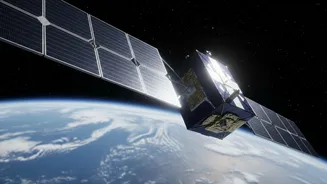
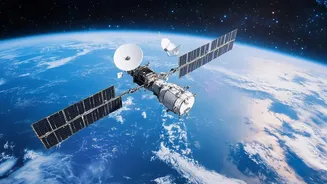
Forget the idea of satellites as simple relay stations taking orders from the ground. The "intelligent satellites" ISRO is developing are a significant leap forward. These next-generation systems will be equipped with on-board artificial intelligence (AI) and powerful processors. Think of them as autonomous platforms in orbit. Instead of beaming massive amounts of raw data back to Earth for analysis, these satellites can process information in space, identify what's important, and even communicate with other satellites to coordinate tasks. For example, a satellite detecting a potential security threat at a border could automatically task a lower-orbiting satellite to get a closer look, all without human intervention. This capability, known as edge computing, allows for faster decision-making in disaster management, urban planning, and national security. ISRO officials have noted these satellites will be reconfigurable, allowing their frequencies and bandwidth to be adjusted on the fly based on customer demand.
The Quantum Leap in Security
The other cornerstone of India's space vision is quantum technology, which promises to revolutionize secure communications. The primary goal is to use satellites for Quantum Key Distribution (QKD), a method of encryption that is, in theory, unhackable. Unlike conventional encryption, which relies on mathematical complexity that could one day be broken by powerful computers, QKD is based on the principles of quantum physics. Any attempt to intercept the key alters its state, immediately alerting the users. As part of its National Quantum Mission, India aims to demonstrate satellite-based secure communication over a range of 2,000 kilometers. ISRO has already successfully demonstrated free-space QKD over a 300-meter distance, a critical first step toward satellite-based systems. This technology is seen as vital for protecting sensitive military, financial, and government data networks from cyber threats.
A Strategy for Global Standing
This technological push is about more than just scientific achievement; it's a core part of India's geopolitical strategy. By developing its own sovereign capabilities in AI-powered surveillance and quantum-secured communications, India aims to reduce its reliance on other nations and establish what experts call a more resilient and autonomous technological ecosystem. This move is widely seen as a response to China's rapid advancements in similar space technologies, including its own quantum satellite, Micius. Developing this expertise strengthens India's position as a key partner for the United States and other allies within frameworks like the Quadrilateral Security Dialogue (the Quad). As India's capabilities grow, it becomes an even more attractive collaborator for agencies like NASA, which has already invited ISRO to participate in its permanent moon base program. This vision transforms India from a provider of reliable launch services into an indispensable partner and a power player shaping the future of space.