

The Gentle Reign of the Curve
Walk into any stylish Indian home from the last few years, and you will likely see the influence of the curve. The boucle sofa that seems to hug you, the arched mirror reflecting a softer version of your space, and the pebble-shaped coffee table have
become staples. This trend was a welcome response to a collective desire for comfort and warmth in our personal sanctuaries, especially post-pandemic. The organic, flowing lines of curved furniture mimic forms found in nature, creating a calming, gentle environment that feels both inviting and safe. Inspired by biophilic design and the photogenic quality of soft silhouettes on social media, rounded furniture quickly moved from a niche trend to a dominant force in interior design across India.
When Softness Becomes Too Much
Like any popular trend, however, saturation was inevitable. A room filled exclusively with curves can begin to feel undefined and visually chaotic. Without the grounding presence of straight lines, an overabundance of arcs and circles can make a space feel less anchored and lack a clear focal point. Designers and discerning homeowners are now finding that while curves bring softness, they need a counterpart to truly shine. The eye needs structure to appreciate the beauty of a curve. This has led to the end of the 'organic modern' style as we knew it, with its exaggerated, soft-only forms, and the beginning of a more refined approach. The new chapter in design isn't about eliminating curves but about integrating them with intention.
Understanding Visual Structure
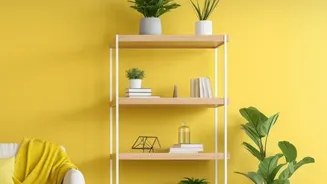
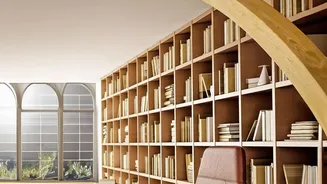
So, what exactly is this 'visual structure' that everyone is talking about? In interior design, structure comes from the lines that create a sense of order, stability, and precision. These are the foundational elements of a room: the horizontal line of a long console or shelf, the vertical lines of a tall bookcase or window frame, and the crisp grid of walls and floors. Straight lines act as a visual anchor, grounding the space and giving it a sense of calm and order. Visual structure is about creating a clear hierarchy that guides the eye, preventing every element from competing for attention at once. A room with strong structure feels deliberate, calm, and organised.
Achieving the Perfect Balance
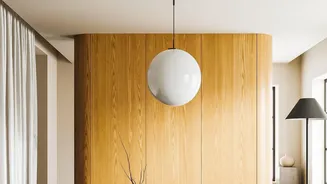
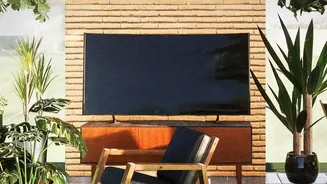
The key to mastering this rebalanced look is contrast, not conflict. The goal is to make curved and linear elements feel like they are in conversation with each other. A great rule of thumb is the 70/30 principle: aim for a room that is roughly 70% structured with straight lines and 30% softened with curves. This ensures the curves act as a statement without overwhelming the space. For example, pair a magnificent curved sofa with a rectangular rug and a linear media console. The straight lines of the rug and console will ground the seating area, making the sofa’s curves appear more intentional and sculptural. Similarly, placing an arched mirror above a sharp, rectangular console table creates a dynamic interplay that elevates both pieces.
Bringing the Rebalanced Look Home
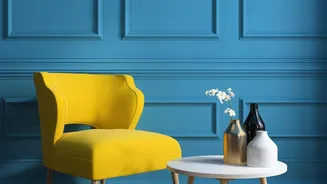
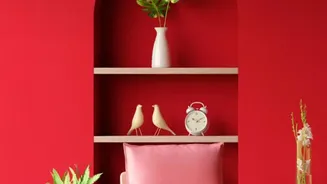
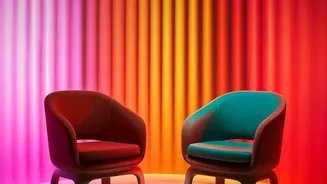
You don't need to start from scratch to adopt this sophisticated aesthetic. Start by identifying the dominant shapes in your room. If you already own a curved sofa, consider adding structure around it. A rectangular coffee table, a sleek floor lamp with a strong vertical line, or even a collection of framed art arranged in a grid can provide the necessary balance. Conversely, if your room is full of straight-lined furniture, introducing a single curved piece can make a huge impact. A round side table, a sculptural armchair with a curved back, or a circular ottoman can instantly soften the room and add a modern touch. Even smaller decor items like a curved vase on a linear bookshelf or a round tray on a square coffee table can introduce this essential dialogue between shapes.