


An Unexpected Scientific Opportunity
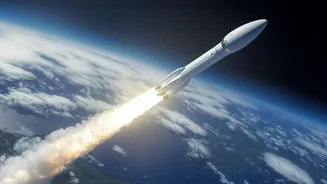
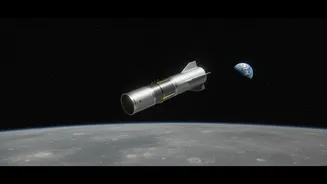
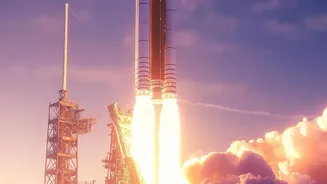
After launching a payload towards the Moon, a spent upper stage of a SpaceX Falcon 9 rocket can be left in a chaotic orbit. Without enough fuel to return to Earth or escape into deep space, its path becomes influenced by the gravitational pulls of the Earth,
Moon, and Sun. Eventually, these forces can guide the discarded stage onto a collision course with the Moon. While unintentional, this impact is a golden opportunity for science. Researchers know the object's mass, speed, and trajectory, turning a piece of space debris into a controlled impactor for a grand-scale geology experiment.
Excavating a New Lunar Crater
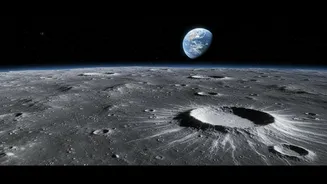
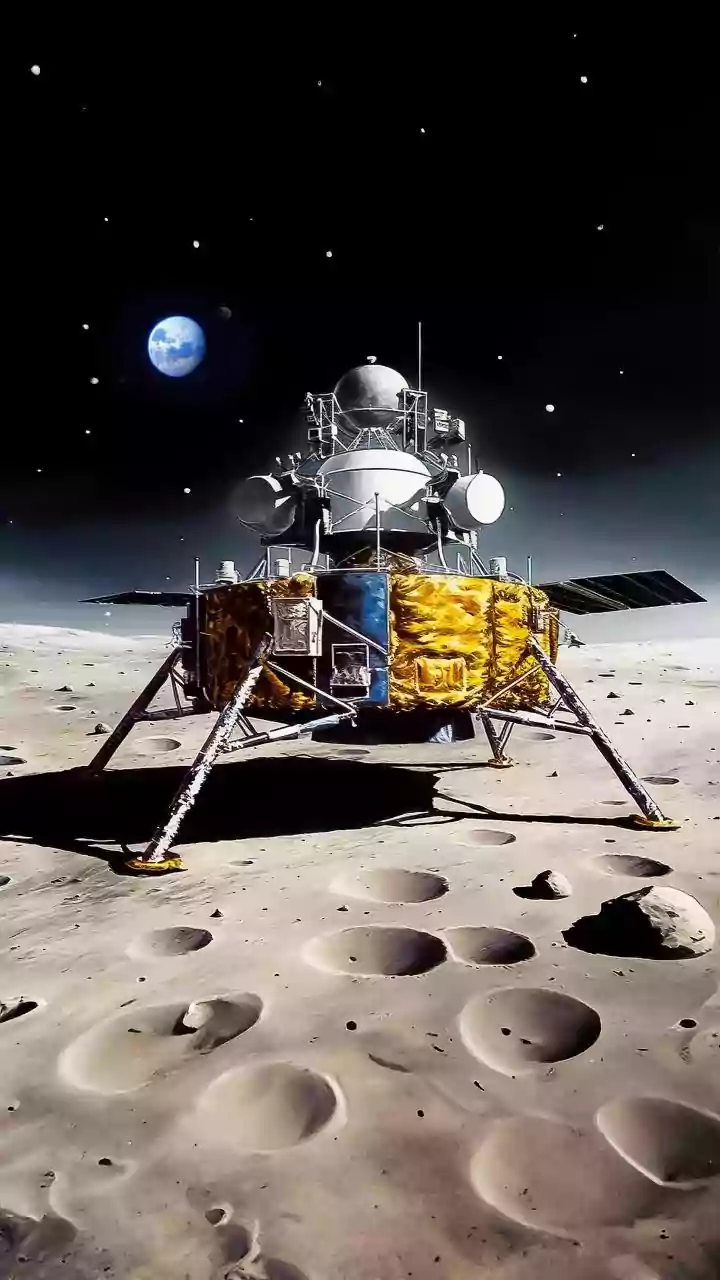
The Moon's surface is a preserved history of the solar system, with its craters acting as a record of past bombardments. A new impact from a known object like a Falcon 9 stage, expected to create a crater around 20 metres wide, provides a unique chance to study crater formation in real-time. Scientists can compare the actual crater with their computer models, refining their understanding of impact physics. More importantly, the collision excavates material from below the surface. This freshly unearthed rock and dust, or regolith, has been hidden from the harsh environment of space, offering a clean sample of the Moon's subsurface composition for orbiting spacecraft to analyse.
Analysing the Plume of Debris
The impact forcefully ejects a plume of lunar dust and rock high above the surface, which can remain visible for several minutes. Instruments on orbiters, like NASA’s Lunar Reconnaissance Orbiter (LRO), can study this cloud of debris. By analysing the sunlight passing through the plume, scientists use a technique called spectroscopy to determine its chemical makeup. A key target is the search for water ice. Previous intentional impact missions, like NASA's LCROSS in 2009, confirmed the presence of water ice in a permanently shadowed crater near the south pole by analysing the resulting plume. An unplanned impact could offer similar insights in a new location, adding another piece to the puzzle of lunar resources.
Sending Shockwaves Through the Moon
Just like an earthquake, an impact sends seismic waves rippling through the Moon. During the Apollo era, astronauts deliberately crashed parts of their spacecraft onto the surface to be measured by seismometers they had placed. Those experiments revealed that the Moon's outer layers are highly fractured and that seismic waves behave very differently than on Earth. Although there are no active seismometers on the surface right now, studying the seismic effects of an impact is a major goal for future missions. Understanding how these artificial 'moonquakes' travel can help scientists map the Moon's interior structure, from the crust down to the core, much like a planetary-scale ultrasound.
A New Model for Opportunistic Science
Intentionally designing and launching a mission to impact the Moon costs millions of dollars. An event like a Falcon 9 collision provides a wealth of similar data for free. It represents a new era of 'opportunistic science', leveraging the growing infrastructure of commercial spaceflight. As more missions from companies like SpaceX head to the Moon, the number of discarded rocket stages in cislunar space will grow. While this raises important questions about space traffic management and debris, it also presents more chances for low-cost research. These accidental experiments help scientists refine their models, prepare for future human and robotic exploration, and deepen our understanding of our nearest celestial neighbour without the budget of a dedicated mission.