








The Great Burnout Awakening
For decades, the Indian corporate ethos has often equated long hours with dedication. However, the tide is turning. Recent studies paint a concerning picture of employee well-being, suggesting the traditional model is reaching its breaking point. One
2023 survey revealed that a staggering 59% of Indian employees reported symptoms of burnout. [6] Another report found that 62% of Indian employees experience burnout, a figure three times the global average, with work-related stress and poor work-life balance cited as primary causes. [12, 13] This isn't just a feeling; it's a national-level challenge affecting productivity and talent retention, forcing companies and employees alike to ask if there's a better way to work.
Beyond the 9-to-5: The Rise of Hybrid
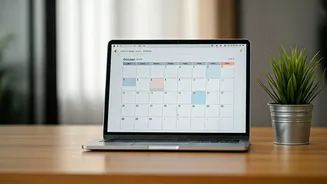
The most significant shift has been the widespread adoption of flexible work. No longer a niche perk, hybrid and remote options are becoming standard expectations. [5] As of early 2026, data shows that while a majority of employees still work from the office, a significant and growing portion have adopted new models. Recent reports indicate that 79% of employees in India prefer a hybrid arrangement, and 53% are already working in one—a figure higher than the global average. [15, 17] This trend suggests companies are increasingly responding to employee desires for flexibility. [17] The conversation has evolved from *if* flexibility is possible to *how* to make it work effectively, with a focus on making in-office days more intentional and collaborative. [15, 17]
The Four-Day Week Experiment
The most talked-about alternative is the four-day work week. While not yet widespread, it is gaining serious consideration. India's new labour codes, which came into effect in 2026, provide a legal framework for this shift by capping weekly work at 48 hours, allowing for compressed schedules like four 12-hour days. [2, 8, 16] Inspired by successful large-scale trials in countries like the UK, where productivity was maintained and employee well-being improved, Indian experts are optimistic. [4, 19, 20] However, significant hurdles remain. The model may not be suitable for all industries, such as manufacturing or client-facing services, and requires a fundamental shift from measuring presence to measuring output. [4, 11, 20] The debate continues, but the new laws have opened the door for experimentation. [22]
A Generational Shift in Priorities
Driving much of this change is a generational shift in what employees, particularly younger ones, expect from a job. While salary remains important, there is a growing emphasis on work-life balance, mental health support, and flexible schedules. [14] Data shows that younger workers, from Gen Z to millennials, are keenly aware of the importance of in-office time for career progression but also demand the flexibility that hybrid models offer. [17] For many, the 'hustle culture' of the past is being replaced by a desire for 'smart work'—a career that integrates with, rather than consumes, their personal lives. Companies are finding that to attract and retain top talent, especially among younger demographics, they must offer more than just a competitive pay package; they must offer a better quality of life. [5]
Roadblocks on the Path to Balance
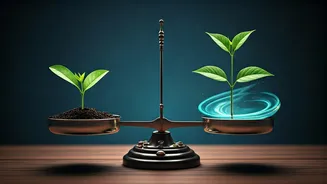
The search for a new rhythm is not without its challenges. Implementing flexible models across a diverse economy like India's is complex. Some sectors, particularly those governed by regulations like the Factories Act, face legal and practical barriers to adopting formats like a four-day week. [11] A major challenge is shifting the deep-seated cultural mindset that equates long hours with high performance. [19] For a four-day week or true hybrid flexibility to succeed, performance metrics must evolve to focus on outcomes, not hours clocked. [19] Furthermore, with over 80% of India's workforce in the informal sector, the current conversation about improved work rhythms risks being relevant only to a privileged few, highlighting the need for broader labour reforms. [19]