





The Private Sector Lifts Off
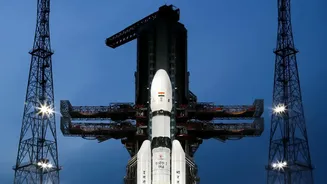
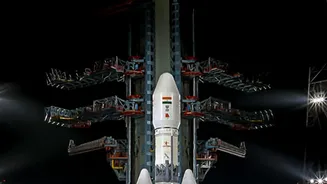
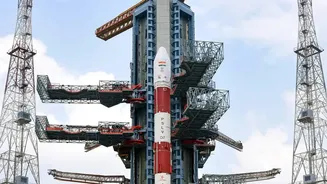
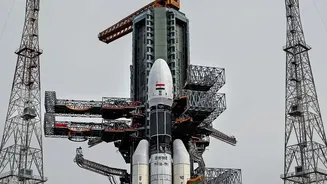
For over five decades, the Indian Space Research Organisation (ISRO) was the primary driver of the nation's space ambitions. Today, the landscape is transforming at light speed. A landmark policy shift in 2020 opened the sector to private enterprise,
leading to the birth of a vibrant startup ecosystem. The government established the Indian National Space Promotion and Authorisation Centre (IN-SPACe) to act as a single-window agency, empowering private companies to build and launch their own rockets and satellites. This has ignited a new space race within India, with nearly 400 private companies now in the fray, attracting significant venture capital and poised to turn India's space economy from a respectable $9 billion into a projected $44 billion industry by 2033.
Upstream: Building the Rockets and Satellites
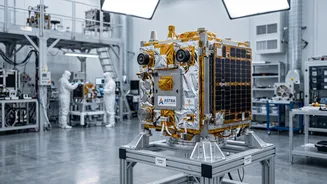
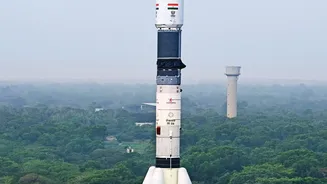
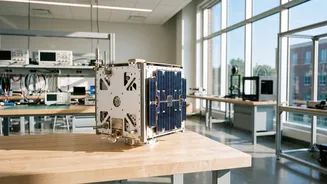
The most visible part of this new ecosystem is the "upstream" sector—companies that design, manufacture, and launch space hardware. Startups like Skyroot Aerospace, which successfully launched its own rocket, and Agnikul Cosmos, known for its innovative 3D-printed engines, are at the forefront. These firms are hiring a new generation of aerospace, mechanical, and avionics engineers. However, the roles are evolving. Expertise is needed not just in traditional rocketry but also in materials science to create lighter, stronger components and in robotics for automated manufacturing. Companies like Dhruva Space and Pixxel are focused on building satellites, creating demand for systems engineers, payload specialists, and RF communication experts to design the hardware that orbits Earth.
Downstream: The Data-Driven Gold Rush
Perhaps the largest area of job growth lies in the "downstream" sector, which has little to do with launching rockets and everything to do with using the data they send back. Modern satellites generate petabytes of information, creating a gold rush for professionals who can turn raw data into actionable intelligence. Companies like SatSure are hiring satellite data analysts and geospatial experts to analyse imagery for diverse applications, including crop health monitoring for agriculture, assessing flood damage for disaster management, and urban planning. This has created a massive demand for skills in data science, machine learning, and programming languages like Python. A background in computer science, geography, or environmental science is now a viable pathway to a career in the space industry.
The New Skillset for the Final Frontier
The diversification of India's space sector means the required skill set has also broadened dramatically. While a B.Tech in engineering remains a core entry point, it's no longer the only one. Software is critical; aerospace software engineers who can write the complex code for flight systems, navigation, and ground control are in high demand. With space assets becoming vital national infrastructure, cybersecurity experts are needed to protect satellites from digital threats. Furthermore, the commercialisation of space has created roles that were once unheard of. As startups compete for funding and customers, they need business development managers, marketing strategists, and finance experts. Even space law has become a crucial field, with lawyers and policy analysts needed to navigate treaties, licensing, and international regulations.