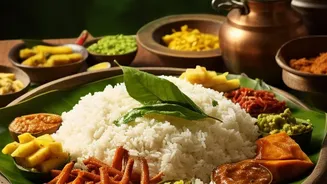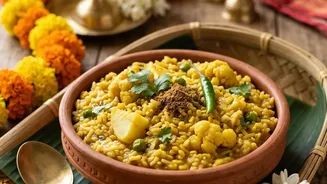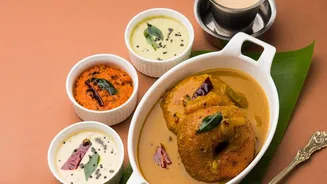



In India, rice is more than just a staple; it's a canvas for culinary creativity. Beyond the world-famous biryanis and pulaos lies a diverse universe of regional rice preparations, each telling a story of its origin, culture, and traditions.
Bisi Bele Bath from Karnataka
This iconic
one-pot meal from Karnataka translates to 'hot lentil rice dish'. It's a rich, wholesome preparation where rice, toor dal (pigeon peas), and a medley of vegetables are cooked together with tamarind pulp and a special spice blend known as Bisi Bele Bath powder. Believed to have originated in the royal kitchens of the Mysore Palace, this dish is the epitome of comfort food. It’s a complex symphony of spicy, sour, and slightly sweet notes, all brought together with a final tempering of ghee. Served piping hot, often with a side of crispy boondi or potato chips, it is a complete and satisfying meal in itself, enjoyed at festivals, family gatherings, and everyday meals alike.
Panta Bhat from Bengal and Eastern India
Panta Bhat is a testament to culinary ingenuity born from necessity. This humble dish from West Bengal, Assam, and other parts of Eastern India is made by soaking leftover cooked rice in water overnight, allowing it to ferment slightly. Traditionally consumed in the morning, especially during hot summer months, it's known for its cooling properties. It is typically served with simple accompaniments like salt, raw onion, green chillies, and mustard oil. Though born out of a need to prevent food wastage, Panta Bhat has become a cherished cultural staple, celebrated during the Bengali New Year (Pahela Baishakh) and appreciated for its probiotic qualities and gut-friendly nature.
Jadoh from Meghalaya
Hailing from the Khasi tribe of Meghalaya, Jadoh is a flavourful and hearty rice dish that literally translates to 'rice meat'. It is traditionally prepared with a local variety of short-grain red rice and generous amounts of pork, cooked together with a fragrant mix of ginger, onions, turmeric, and black pepper. The turmeric gives the dish its characteristic vibrant yellow colour. While pork is the classic choice, chicken is also sometimes used. More than just a meal, Jadoh is a centrepiece of Khasi festivals and community feasts, representing the deep connection between the people, their land, and their agricultural roots. For the more adventurous, an even richer version is prepared with pork blood.
Pulihora from Andhra Pradesh & Telangana
Pulihora, or tamarind rice, is a beloved dish across Southern India, with the version from Andhra Pradesh and Telangana being particularly celebrated. 'Puli' means sour, which points to the dish's signature tangy flavour derived from tamarind. Cooked rice is mixed with a flavourful paste called 'pulihora gojju', made from tamarind extract, jaggery, and spices. It is then tempered with oil, mustard seeds, lentils, peanuts, and curry leaves, creating a perfect balance of tangy, spicy, and nutty flavours. Pulihora is an essential part of festive menus and is frequently offered as 'prasadam' (a blessed food offering) in temples.
Vangi Bath from Karnataka & Maharashtra
Vangi Bath, which translates to 'brinjal rice', is a popular dish in both Karnataka and Maharashtra, with each region having its own unique spice blend. The Karnataka version typically uses green brinjals and a special 'vangi bath powder', which gives the dish its distinct aroma and flavour. The preparation involves sautéing tender pieces of brinjal with the spice powder and tamarind pulp, and then mixing it with cooked rice. It’s a flavourful, slightly tangy, and aromatic dish that showcases how a simple vegetable can be transformed into a memorable meal. It is a common feature in wedding feasts and is often packed for lunchboxes.
Neychoru (Ghee Rice) from Kerala
Neychoru, or ghee rice, is a simple yet elegant dish from the Malabar region of Kerala. The name itself describes the dish: 'ney' means ghee and 'choru' means rice. It is traditionally made with a short-grain, aromatic local rice variety called Kaima or Jeerakasala. The rice is cooked with fragrant whole spices like cinnamon, cloves, and cardamom in a generous amount of ghee. It’s then often garnished with fried onions, cashews, and raisins, which add layers of texture and a touch of sweetness. While not as complex as a biryani, Neychoru is a festive staple, commonly served at weddings and during celebrations like Ramadan than paired with a spicy meat or vegetable curry.