






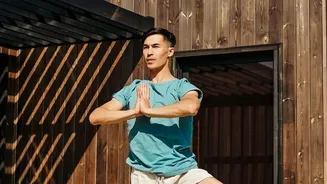
Why Make the Switch?
Leaving behind the structured world of gym machines and heavy barbells can feel daunting, but the benefits are significant. Bodyweight training, or calisthenics, builds functional strength that translates directly into everyday life. Instead of isolating
one muscle on a machine, exercises like squats, push-ups, and lunges engage multiple muscle groups and stabilizing cores, improving coordination and balance. Working out outdoors also offers unique advantages. Exposure to natural light can help combat seasonal mood slumps, and exercising in the cold may even provide an extra metabolic boost. It's a chance to build mental toughness and reconnect with your environment, turning your workout from a chore into an invigorating experience.
Dress for Success: The Art of Layering
The most common mistake in winter workouts is improper clothing. Dressing too warmly can lead to excessive sweating, which then cools and chills your body. The key is to dress in layers that you can remove as you heat up. Experts recommend a three-layer system. Start with a moisture-wicking base layer made of a synthetic fabric like polyester to pull sweat away from your skin. Avoid cotton, as it holds moisture. The middle layer should be for insulation—think fleece or wool—to trap body heat. Finally, an outer shell that is waterproof and wind-resistant will protect you from the elements. Don't forget to protect your extremities; a hat, gloves, and warm socks are essential, as blood flow is concentrated in your core during exercise.
The Foundational Bodyweight Exercises
You don't need a rack of dumbbells to get a full-body workout. Mastering a few fundamental movements is all it takes to build a powerful routine. These exercises are the cornerstones of calisthenics. For the lower body, squats and lunges are king; they build leg strength and stability. For the upper body, push-ups are a versatile classic that can be modified for any fitness level—from incline push-ups against a park bench to more advanced variations. If you can find a sturdy bar or tree branch, pull-ups and chin-ups are unparalleled for back and bicep strength, directly replacing many cable machine exercises. And for your core, the simple plank engages dozens of muscles at once, building the stability needed for every other movement.
Structuring Your Outdoor Workout
Consistency is more important than complexity. A great way to structure your outdoor session is with circuit training. This involves performing a series of exercises back-to-back with minimal rest in between, which keeps your heart rate elevated and maximizes your time. A simple, effective routine could look like this: perform a set of push-ups, followed immediately by squats, then lunges, and finish with a plank hold. Rest for 60 seconds, and repeat the circuit 3-5 times. You can also structure your workout as a form of High-Intensity Interval Training (HIIT) by performing an exercise with maximum effort for 40 seconds, followed by 20 seconds of rest before moving to the next one. Aim for a full-body workout 2-3 times a week, allowing your body time to recover and adapt.
Safety and Staying Motivated
Exercising in the cold requires a few extra precautions. Always start with a dynamic warm-up, such as high knees, jumping jacks, or torso twists, to increase blood flow and prepare your muscles and joints for activity. Cold muscles are more prone to injury. Listen to your body and be mindful of the conditions. On extremely cold or icy days, it may be wiser to opt for an indoor bodyweight session. Proper hydration is just as important in the cold as it is in the heat, so be sure to drink water before, during, and after your workout. To stay motivated, find a workout partner, explore new parks and trails, and focus on the progress you're making. Remember that your body is adapting not just to new exercises, but to a new environment.