

The Old, Quiet Ending
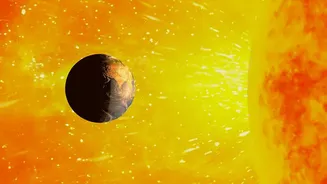
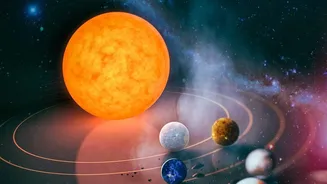
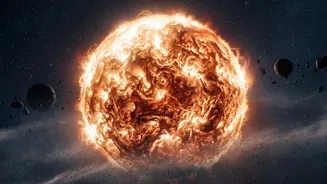
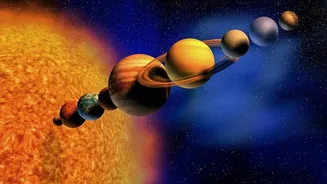
For a long time, the fate of our solar system seemed settled. In about five billion years, the Sun will exhaust its hydrogen fuel, swell into a red giant, and engulf the inner planets, including Mercury, Venus, and almost certainly Earth. After this fiery
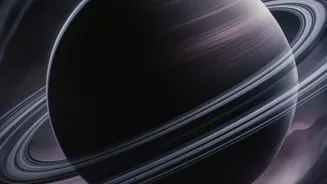
phase, it will shed its outer layers and collapse into a dense, dim white dwarf. The old assumption was that the surviving outer planets—Jupiter, Saturn, Uranus, and Neptune—would simply drift into wider, stable orbits around this lighter star. Protected by their immense distance, they were expected to continue their stately dance for an almost unimaginable length of time, perhaps a quintillion years, outlasting the current age of the universe many times over until a chance encounter with a passing star finally broke them apart.
A New, Violent Twist
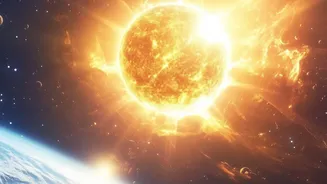
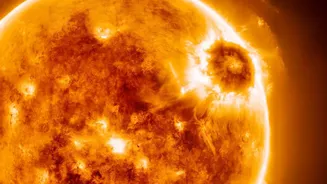
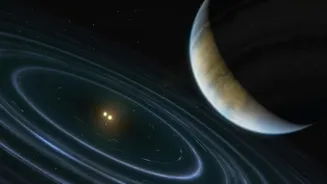
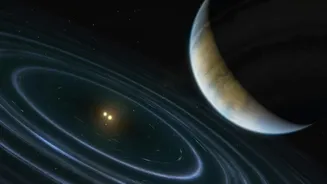
Recent simulations have completely upended that peaceful picture. A study published in The Astrophysical Journal Letters suggests the solar system's end will be brought about not by a wandering star, but by the Sun itself. The key difference in the new model is how the Sun dies. Previous models assumed it would lose mass smoothly and evenly. The new research, however, incorporates a more realistic, chaotic process where the dying Sun ejects mass in random bursts and directions. These asymmetrical ejections will deliver powerful gravitational 'kicks' to the remaining planets, shaking the entire system to its core.
A Dramatically Shorter Lifespan
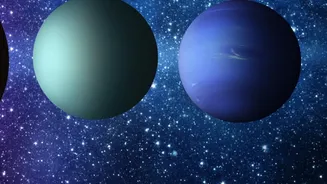
The consequences of these kicks are profound. Instead of lasting for a billion billion years, the new simulations predict the outer solar system will likely become unstable and fly apart in a relatively brief one billion years after the Sun becomes a white dwarf. That's a lifespan a billion times shorter than previously thought. The simulations, run by a team of astrophysicists, show that in the vast majority of scenarios, the planetary order breaks down. In about 40% of cases, the disruption begins even earlier, while the Sun is still in its red giant phase. The once-stable orbits of the gas giants devolve into chaos, with some planets being ejected from the solar system entirely to become lonely wanderers in the galaxy. In some scenarios, Uranus and Neptune even swap places before the final collapse.
Newton's Suspicion Was Right
Interestingly, this new vision of a chaotic end brings scientific thought full circle. Centuries ago, Isaac Newton himself suspected that the gravitational interplay between the planets was not eternally stable and would eventually lead to disorder. For much of the 20th century, advanced calculations suggested Newton's fears were unfounded and that the system was remarkably durable. This latest research, however, suggests Newton was right about the instability, but mistaken about the cause. The agent of destruction won't be the slow creep of planetary chaos, but the violent death throes of our own star. As the study's authors noted, the Sun 'in dying does not merely enlarge the planetary system it built—it shakes it, and more often than not, spills it'.