


The US midterm elections have passed, but the world is holding its breath. With a newly divided Congress, President Donald Trump's distinctive approach to foreign policy faces new domestic checks, creating fresh uncertainty for global diplomacy.
A New Political Landscape
The November
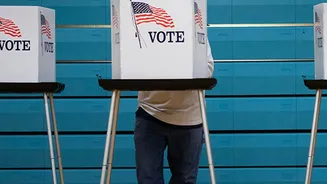
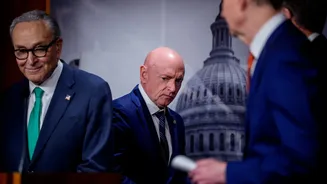
2026 midterm elections delivered a significant shift in Washington, with Democrats gaining control of both the House and the Senate. This result was widely seen as a public referendum on the Trump administration, fueled by voter concerns over the economy, the cost of living, and the impacts of foreign conflicts. While the president's party typically loses seats in midterm elections, this 'blue wave' creates a new dynamic. With Democrats now chairing key committees, they have enhanced powers of oversight and control over government funding. However, President Trump retains substantial authority in foreign policy, including his role as commander-in-chief and the power to veto legislation, setting the stage for a potential increase in confrontation between the White House and Congress.
The 'Art of the Deal' on the World Stage
To understand the challenges ahead, one must first grasp Donald Trump’s unique diplomatic style. It is often described as 'transactional', meaning it views international relations as a series of deals to be won. This approach prioritizes tangible, often economic, gains for the United States over appeals to shared values or long-standing alliances. Everything is seen as a potential bargaining chip, from military aid and basing rights to trade tariffs. This marks a departure from the post-World War II liberal order, which was built on alliances, multilateral institutions, and a degree of predictable American leadership. Trump’s method is also highly personal, favoring direct negotiations with world leaders and often bypassing traditional diplomatic channels, which can lead to both surprising breakthroughs and abrupt reversals.
The Predictability Problem
The core challenge for allies and adversaries alike is not just that Trump's actions can be surprising, but that they operate on a different logic. Traditional diplomacy relies on established norms and the idea that commitments, once made through formal processes like treaties, are credible and lasting. In contrast, a transactional approach can render agreements more fragile, as they are tied to the leader who made them and can be modified or discarded if a better 'deal' emerges. This creates a credibility problem. For example, a security guarantee offered to a nation might be questioned if it is not ratified by Congress and is instead based on an executive agreement. This forces other countries into a state of constant recalculation, trying to determine whether US commitments will hold from one crisis to the next.
A Constrained President Looks Abroad
With his domestic agenda likely to face significant roadblocks from a Democratic-controlled Congress, many analysts believe President Trump may focus more heavily on foreign policy, where he has more executive freedom. Blocked at home, a president might look for 'wins' abroad to demonstrate strength and effectiveness. This could manifest in several ways. He might intensify pressure for negotiated ends to conflicts like the war in Ukraine, potentially on terms that allies find unfavorable. Conversely, some experts warn that the twond month period before the new Congress is seated could be seen as a window for more decisive military action without immediate political backlash. This creates a volatile environment where the pressure to secure a legacynding diplomatic victory is high.
What the World Is Watching
International observers are now in a 'waitandsee' mode. Allies in Europe and Asia are grappling with the need for more strategic autonomy, recognizing that American foreign policy may be subject to sharp turns. There is hope in some capitals that a Democratic Congress can act as a moderating influence, particularly by using its power over funding to constrain military action or challenge tariff policies. However, there is also widespread skepticism, given that a president's foreign policy authority is substantial. Major powers are likely to hedge their bets, avoiding highstakes agreements until there is more certainty about the direction of US leadership leading into the 2028 election cycle. The coming months will be a critical test, showing how this new balance of power in Washington reshapes global negotiations.