






The Great Indian Coffee Shift
Not long ago, the journey of an Indian coffee bean was a straightforward one: grown in the hills of the South, sold as a commodity, and often destined for export or blended into a generic, mass-market powder. The best beans rarely stayed in the country.
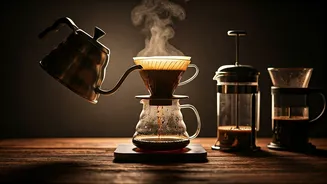
For the average Indian consumer, coffee was a functional beverage, a quick caffeine hit defined more by brand loyalty to an instant jar than by its origin, flavour profile, or brewing method. But the landscape is changing, and fast. The third-wave coffee movement, which treats coffee as an artisanal product rather than a commodity, has firmly taken root in India. This isn't just about fancy cafés in metro cities; it's a fundamental shift in how we perceive and consume coffee. Consumers are becoming more curious, asking not just for a 'cappuccino' but for a 'pour-over made with beans from Ratnagiri Estate'. This newfound curiosity is fuelling a comeback for regional Indian coffee, bringing it out of the shadows and into the spotlight.
Rediscovering Our Coffee Terroir
Just as wine has its 'terroir'—the unique combination of soil, climate, and geography that gives it a distinctive taste—so does coffee. India, with its diverse agricultural zones, is home to a stunning variety of coffee terroirs that have been overlooked for too long. For years, Indian coffee was marketed under the broad, uninspiring label of 'Indian coffee'. The comeback is being driven by a celebration of specificity. Today's specialty coffee movement is all about telling the story of a single place. We're learning that coffee from Chikmagalur in Karnataka, the birthplace of Indian coffee, can have notes of chocolate and nuts. Beans from the higher elevations of Coorg might offer spicy, fruity undertones. And coffee from the Shevaroy Hills in Tamil Nadu can be delicate and floral. By highlighting these unique regional profiles, roasters are teaching us that the land where the coffee is grown matters just as much as how it's brewed.
Spotlight on the Hills: Araku and Beyond
Perhaps no story better captures this revival than that of Araku Valley in Andhra Pradesh. Once a region with no coffee history, it has become a global benchmark for high-quality, organic, and socially conscious coffee. The a-ha moment for many was when Araku Coffee, grown by Adivasi farmers, launched its flagship store in Paris and won international acclaim. It proved that Indian coffee could be a luxury product, celebrated for its unique origin story and exceptional quality. Beyond Araku, legacy regions are also getting a modern makeover. In Coorg and Chikmagalur, fourth and fifth-generation planters are moving away from selling their entire crop to bulk traders. Instead, they are isolating their best lots, experimenting with processing methods like 'honey' and 'anaerobic fermentation', and often launching their own direct-to-consumer (D2C) brands. This allows them to retain control over quality and connect directly with the end consumer.
The New Coffee Evangelists
This cozy comeback wouldn't be possible without a new ecosystem of roasters, baristas, and D2C brands acting as a bridge between the farm and the cup. Companies like Blue Tokai, Third Wave Coffee, and a host of smaller, passionate roasters have made it their mission to source, roast, and deliver high-quality Indian coffee. They put the name of the farm, the farmer, and the flavour notes right on the packet, turning a simple purchase into an act of discovery. These brands have demystified the world of specialty coffee, making it accessible through online subscriptions and user-friendly cafés. They've educated a new generation of consumers, teaching them about brewing methods, grinding, and the simple joy of a freshly brewed cup that tells a story of its origin. They are the evangelists, turning what was once a niche interest into a mainstream cultural phenomenon.