





The Unseen Workforce Beneath Our Feet
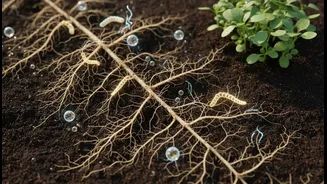
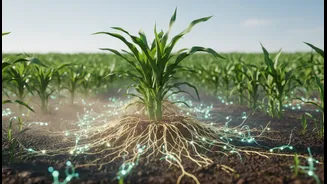
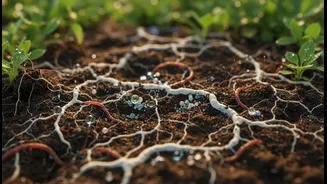
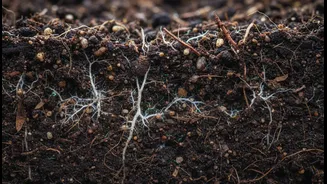
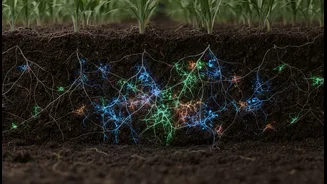
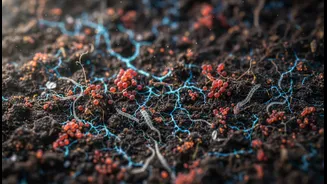
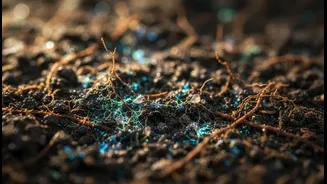
When we think of soil, we often just see dirt. But a single gram of healthy soil is teeming with billions of microorganisms, including bacteria, fungi, and archaea. This bustling community is known as the soil microbiome, and it acts as an invisible,
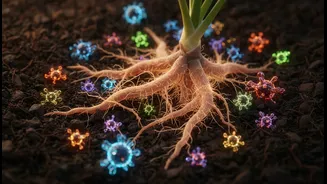
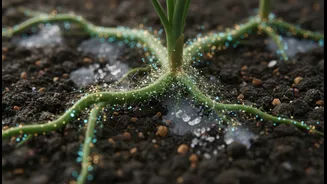
tireless workforce. These microbes are the primary drivers of essential processes like decomposition and nutrient cycling. They break down organic matter, such as old crop residues and manure, turning it into the vital nutrients that plants need to grow. Some bacteria, for instance, form symbiotic relationships with plants like legumes, converting nitrogen from the atmosphere into a form the plant can absorb, a natural alternative to synthetic fertilisers.
A Crisis of Tired Soil
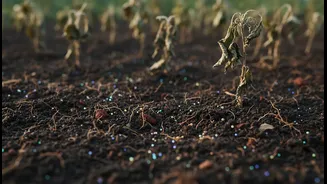
For decades, modern agricultural practices have inadvertently waged war on this microbial world. The heavy use of chemical fertilisers, pesticides, and intensive tilling has led to widespread soil degradation. This has created a harmful cycle sometimes called the “chemical treadmill.” An over-reliance on synthetic inputs can harm the native microbial populations that naturally cycle nutrients. This degradation leads to poor soil structure, reduced water retention, and an alarming imbalance of essential nutrients, forcing farmers to use even more chemicals for diminishing returns. Across India, from the fertile plains of Punjab to the black cotton soils of the Deccan, farmers are grappling with land that feels compacted and lifeless. This silent crisis not only threatens crop yields but also the long-term sustainability of our food supply.
Inside the Microbial Revolution
Recognising this challenge, scientists are spearheading a biological renaissance in farming. In India and around the globe, researchers are mapping the microbial diversity of different agricultural zones. The Indian Council of Agricultural Research (ICAR), for example, has initiated the Indian Soil Microbiome Project to create a comprehensive map of the country's soil microbes. Using advanced techniques, scientists are identifying and isolating specific strains of beneficial microbes. Researchers at Bengal's Raiganj University recently discovered a new species of soil bacteria, named Bacillus ayatagriensis, that shows immense potential in promoting plant health. Similarly, a team at IIT Bombay identified bacteria capable of breaking down toxic pesticide residues in the soil. The goal is to understand exactly which microbes perform which jobs, from fighting off diseases to helping plants absorb nutrients like phosphorus.
From the Lab to the Land
The practical application of this research lies in creating what can be thought of as 'probiotics' for the soil. These products, known as bio-fertilisers, are formulations containing live, beneficial microorganisms. Instead of chemically force-feeding the plant, bio-fertilisers work to restore the soil's natural vitality. Scientists are developing microbial cocktails tailored for specific crops and soil types — for instance, using Rhizobium bacteria for legumes or Azotobacter for cereals. Recent research has even shown that some bacteria help plants produce more lignin, a substance that strengthens their structure and makes them more resilient to stresses like high salinity. By harnessing these natural allies, farmers can reduce their dependence on costly and environmentally damaging chemical inputs.
The Future of Sustainable Farming
This focus on the soil microbiome is more than just a new technique; it represents a fundamental shift in how we view agriculture. The aim is to move toward a system of Integrated Nutrient Management, where biological solutions are a core component. By nurturing the soil's living ecosystem, farming can become more resilient to challenges like drought and disease. Healthier soils retain more water, reduce erosion, and can even help mitigate climate change by sequestering more carbon. For India's farmers, this microbial revolution offers a path away from the treadmill of rising costs and stagnating yields, promising a future that is both more profitable and ecologically sound. The key to feeding the nation tomorrow may very well lie in tending to the smallest forms of life today.