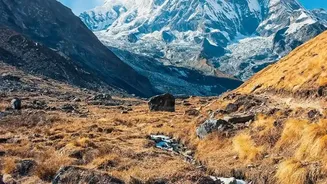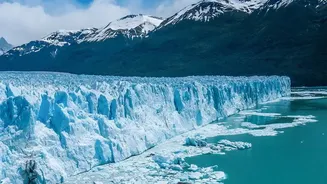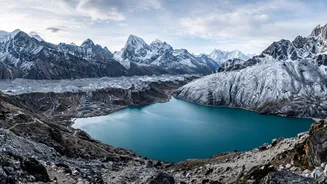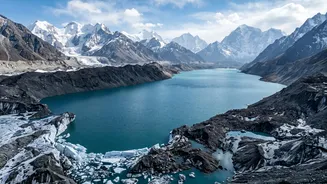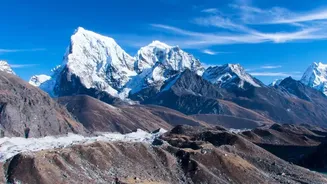





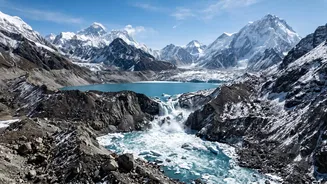
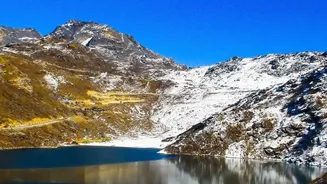
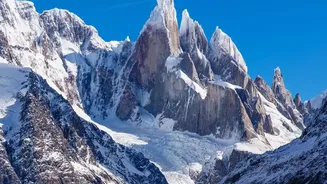
A stark UN report warns that millions living across the Himalayan river basins face a growing threat from catastrophic glacial lake outburst floods, turning a remote cryosphere crisis into an urgent human security issue for India and its neighbours.
What is a Glacial Outburst Flood?
A
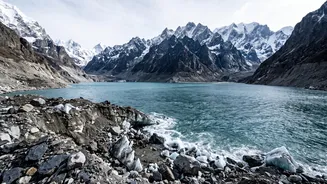
Glacial Lake Outburst Flood, or GLOF, is a sudden and often catastrophic release of water from a lake fed by melting glaciers. These lakes are typically dammed by unstable barriers of ice or moraine—a mixture of rock, soil, and ice. As climate change accelerates glacier melt, these lakes can grow rapidly, putting immense pressure on their natural dams. When the dam fails, it unleashes a devastating flash flood, a powerful torrent of water, rock, and debris that can travel dozens of kilometres downstream, destroying everything in its path including villages, roads, bridges, and critical infrastructure like hydropower plants. Recent events, such as the destructive flood in Nepal's Rasuwa region, have served as a grim reminder of their destructive power.
The UN's Alarming Findings
Several recent reports from UN-affiliated bodies paint a worrying picture. Two reports released ahead of the COP31 climate summit, 'Overshoot and the Cryosphere' and 'State of the Cryosphere 2026', reveal that frozen regions like the Himalayas are warming much faster than the global average. For example, a 1.5°C global temperature rise translates to between 1.8°C and 2.2°C of warming in the Hindu Kush Himalaya region. This accelerated melt is a key driver behind the increased GLOF risk. Another UN-led study highlights that the frequency of GLOF events has surged, rising to an average of 34 per decade since 1950—a fivefold increase from the pre-1950 period. The reports stress that even if the world meets its most ambitious climate targets, significant and irreversible ice loss is already locked in.
India's Extreme Vulnerability
For India, this is not a distant threat. The vast Indus, Ganga, and Brahmaputra river basins, which are lifelines for hundreds of millions, originate in the Himalayas. A separate UN-led study found that among eight countries in the Hindu Kush Himalaya region, India has recorded the highest number of deaths from GLOFs between 1835 and 2025, with a staggering 6,119 fatalities. While other countries like China have seen more GLOF events, the human cost in India has been the highest. States like Himachal Pradesh, Sikkim, Ladakh, Arunachal Pradesh, Jammu and Kashmir, and Uttarakhand are on the front line. Reports indicate the area of glacial lakes in these regions has grown significantly, escalating the risk to densely populated downstream communities.
A Race Against Time for Solutions
The UN warnings are coupled with urgent calls for action. The primary defence against GLOFs involves creating robust early warning systems to give downstream communities precious time to evacuate. This requires continuous monitoring of potentially dangerous glacial lakes, many of which are in remote, transboundary locations. Recent GLOFs in neighbouring Bhutan have triggered evacuations in West Bengal and Assam, demonstrating the cross-border nature of the threat and the importance of timely alerts. Beyond monitoring, structural solutions include controlled draining to lower water levels in the most dangerous lakes. However, experts note a significant gap between the recognised threat and the on-ground adaptation efforts, largely due to a lack of funding and technical capacity in the region.