







Looking for a powerful exercise to build upper body and core strength without any equipment? Meet the dolphin push-up. This guide breaks down the move in simple terms, starting with the all-important plank foundation for a safe, effective workout.
What Is a Dolphin Push-Up?
The
dolphin push-up is a dynamic bodyweight exercise that blends a forearm plank with an upward hip hinge, resembling a dolphin gracefully moving through water. Unlike a traditional push-up that primarily targets the chest, the dolphin push-up places significant emphasis on the shoulders, triceps, and the entire core. It's a challenging movement that builds strength and stability simultaneously, making it a highly efficient addition to any fitness routine. Because your hands stay planted and your forearms support your weight, it’s also a great way to challenge your upper body without putting strain on your wrists.
The Core Benefits for Strength and Stability
Incorporating dolphin push-ups into your workouts offers a wealth of benefits. The primary advantage is significant shoulder strength and stability, targeting the deltoid muscles. This is crucial for both daily activities and progressing to more advanced exercises. Your core also gets a serious workout; the constant tension required to keep your body stable strengthens the abdominals, obliques, and lower back, which can lead to improved posture. Furthermore, the exercise engages the triceps and upper back, creating a well-rounded upper-body movement. It serves as an excellent preparatory exercise for more demanding yoga inversions like headstands or forearm stands by building the necessary shoulder and core control in a safer, more accessible way.
Mastering the Forearm Plank: Your Foundation
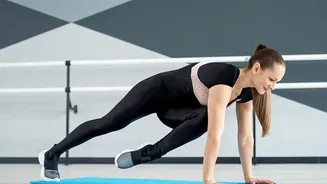
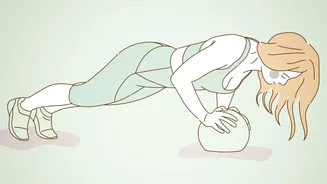
Before you can 'swim' like a dolphin, you need a solid foundation. The forearm plank is the non-negotiable starting point, and getting it right is key to the entire exercise. Start by lying on your stomach. Place your forearms flat on the floor with your elbows directly under your shoulders and your hands facing forward, about shoulder-width apart. Engage your core and lift your hips off the floor, forming a straight line from your head to your heels. Your back should be flat—avoid letting your hips sag or rise too high. Keep your gaze directed down at the floor, slightly ahead of your hands, to maintain a neutral neck position. Hold this position, focusing on keeping your abs tight and your body rigid. This is your starting and ending point for every single rep.
How to Perform the Dolphin Push-Up
Once your forearm plank is steady, you're ready to add the movement. Follow these steps for a perfect dolphin push_up:
1. Begin in a strong forearm plank position as described above, with your body in a straight line and core engaged.
2. Pressing firmly into your forearms, begin to walk your feet in towards your elbows, allowing your hips to rise towards the ceiling. Your body will form an inverted 'V' shape. Go as far as you comfortably can while keeping your legs relatively straight.
3. From this peak position, slowly lower your hips and walk your feet back out, returning to the starting forearm plank position with control. Your shoulders will move forward over your elbows. This completes one repetition.
Focus on a smooth, controlled motion throughout the exercise. The goal is not speed, but quality of movement.
Common Mistakes to Avoid
To get the most out of the exercise and prevent injury, watch out for these common errors. First, avoid letting your hips sag during the plank phase, as this transfers strain to your lower back. Always keep your core braced. Second, don't let your shoulders scrunch up towards your ears; actively press them down and back. Another frequent mistake is moving too quickly. The dolphin push_up is about control, not momentum. Finally, ensure your elbows stay directly under your shoulders and don’t flare out to the sides. Keeping them in line protects your shoulder joints and ensures the right muscles are working.
Modifications for Every Fitness Level
The dolphin push up is adaptable . If you 're a beginner , you can perform the exercise on your knees . Start in a modified forearm plank with your knees on the ground , then raise and lower your hips from there . This reduces the load while you build strength . Another option is to limit the range of motion ; simply don 't walk your feet in as far . For a more advanced challenge , try lifting one leg off the ground for the entire set before switching to the other side . This dramatically increases the demand on your core stability and working shoulder . You can also introduce a pause at the top of the movement to increase time under tension .