

The Urban Jungle Gym
The concept of using public parks for fitness, often called calisthenics or street workouts, is gaining popularity worldwide. It's a movement that embraces creativity and resourcefulness, turning everyday structures into powerful training tools. Instead
of being confined to a gym, you get fresh air, sunlight, and the satisfaction of mastering your own body weight. Playgrounds, with their sturdy construction and variety of bars, are the perfect starting point. This approach to fitness is not just about building muscle; it's about developing functional strength, stability, and a new appreciation for the public spaces in your community. It’s accessible, completely free, and connects your fitness journey to the world around you.
Spotting Your Pull-Up Station
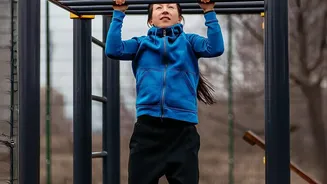
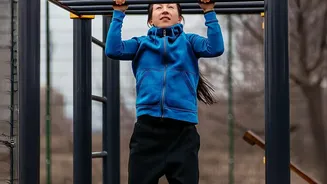
Dedicated outdoor fitness parks with pull-up bars are becoming more common, but you don't need one to get started. Many children's playgrounds offer fantastic alternatives. Look for the monkey bars, which are often the perfect height and thickness for a comfortable grip. Other options include the top of a swing set (provided it's a sturdy, metal frame), horizontal ladders, or any solid, overhead bar that can safely support your full body weight. Before you begin, always test the structure. Give it a good shake and a brief hang to check for stability. Avoid anything that creaks, sways, or feels loose. The surface should be easy to grip and free of rust or splinters that could affect your hold.
Beginner's Guide to Bar Basics
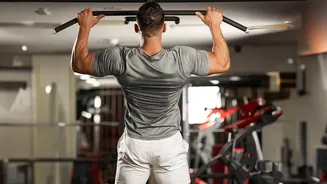
If you can't do a pull-up yet, you're in good company. The journey starts with building foundational strength, and playgrounds are perfect for these progressions. Start with a 'dead hang,' where you simply hang from the bar with your arms fully extended. This builds immense grip strength. From there, progress to 'scapular pulls,' where you hang and pull your shoulder blades down and together without bending your arms. The next step is the 'negative pull-up.' Use a step or jump to get your chin over the bar, then lower yourself down as slowly as possible. This eccentric movement is fantastic for building the strength needed for a full pull-up. Focus on controlling the descent for at least three to five seconds.
Intermediate and Advanced Moves
Once you've mastered the basics and can perform several clean pull-ups, it's time to add variety. A standard pull-up uses an overhand (pronated) grip, which primarily targets your back muscles. Switching to an underhand (supinated) grip for a chin-up will engage your biceps more. For an advanced challenge, try 'archer pull-ups,' where you shift your weight towards one arm at the top of the movement. You can also work on explosive power by trying to pull yourself up as fast as possible. Another way to increase the difficulty is through tempo training, where you slow down different phases of the pull-up to increase time under tension. Remember to prioritise good form over the number of repetitions to maximise gains and prevent injury.
Beyond the Pull-Up
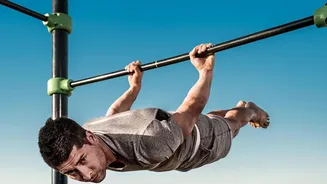
The bars you've found are versatile. They're not just for pull-ups; they are a complete core and upper-body station. One of the best exercises you can do is the 'hanging knee raise.' While hanging from the bar, brace your core and lift your knees towards your chest. This move is phenomenal for building abdominal strength. For a more advanced variation, keep your legs straight and lift them into a pike position. You can also use lower bars for 'inverted rows,' where you lie underneath the bar, grab it, and pull your chest up towards it. This is an excellent complementary exercise to the pull-up as it targets your back muscles from a different angle.
Safety First, Always
Outdoor workouts come with their own set of rules. Always inspect the equipment before use. The ground beneath you should be clear of rocks, roots, or other hazards. Check the weather beforehand; a wet, slippery bar can be dangerous. Be mindful of the time of day to avoid extreme heat, and always apply sunscreen. Hydration is key, so bring water with you, especially on warm days. Listen to your body. It's better to stop a set early with good form than to push to failure and risk a fall or strain. Finally, be aware of your surroundings, especially in a shared public space like a park or playground.