






The High Cost of Breathing
For any long-term mission beyond Earth, resources are everything. Every kilogram of water, food, or equipment must be launched from our planet, a process that costs thousands of dollars per kilogram. Oxygen is one of the heaviest and most critical supplies.
It's not just for breathing; it's also a key component of rocket propellant. To make a lunar base sustainable under NASA's Artemis program, the agency needs to break free from this costly supply chain. The solution is a concept called in-situ resource utilization (ISRU), which is a straightforward idea: live off the land. By harvesting local materials, missions become cheaper, more independent, and capable of staying for longer durations.
A Surprising Lunar Resource
At first glance, the Moon appears to be a desolate, airless world. But its surface is covered in a layer of fine dust and crushed rock called regolith. This material is surprisingly rich in oxygen, making up about 45% of its weight. The oxygen isn't free-floating, however. It's chemically bound with metals and minerals like silicon, aluminum, and iron to form oxides. For decades, scientists have known this oxygen was there, but the challenge has been developing a practical and efficient way to break those strong chemical bonds and release it in a usable, breathable form. Cracking this code is essential for the Artemis program's goal of creating a sustainable human presence on the Moon.
Cooking Rocks for Oxygen
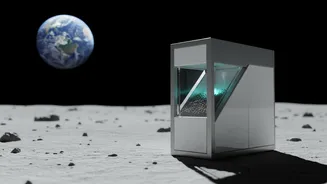
NASA and its partners are developing several methods to extract this trapped oxygen, with two primary techniques showing significant promise. One is called Molten Oxide Electrolysis (MOE). In this process, lunar regolith is heated in a reactor to around 1,600 degrees Celsius until it melts into a molten lava-like substance. An electric current is then passed through the molten soil. This electrolysis process splits the metal oxides, causing pure oxygen to bubble up and collect at an anode, where it can be captured. This is similar to how we produce metals on Earth, but in this case, the oxygen is the prized product, not the waste. Recent tests have successfully demonstrated the process in vacuum chambers that simulate the lunar environment.
More Than Just Air
Another promising method is carbothermal reduction. This process heats regolith in a reactor and introduces a reducing agent like carbon to pull the oxygen out of the minerals, producing carbon monoxide. This carbon monoxide can then be converted into pure oxygen. A major advantage of this approach is that it can be powered by concentrated sunlight, using the Moon’s own environment to drive the reaction. Regardless of the method, a significant co-benefit is the production of usable metals. The MOE process, for instance, leaves behind a mixture of molten metal alloys—including iron, aluminum, and silicon—that can be separated and used. This byproduct could become the raw material for 3D-printing tools, spare parts, or even construction materials for building habitats, turning an oxygen plant into a lunar factory.
Paving the Way for a Permanent Presence
These oxygen-extraction technologies are not just theoretical; they are actively being developed and tested for deployment on upcoming lunar missions. The ability to generate tons of oxygen per year from the regolith would fundamentally change the economics of space exploration. It would enable the creation of a lunar propellant depot, where rockets could refuel for missions deeper into the solar system, such as to Mars. NASA's success with the MOXIE experiment on Mars, which produced oxygen from the Martian carbon dioxide atmosphere, proved that ISRU is a viable strategy on other worlds. Applying a similar philosophy on the Moon is the next logical—and necessary—step toward making humanity a multi-planetary species.