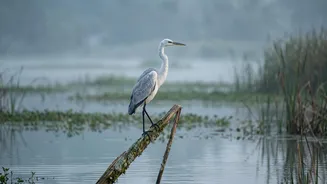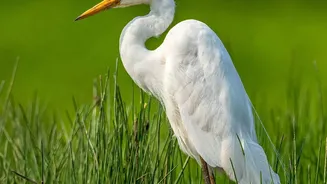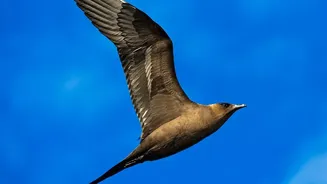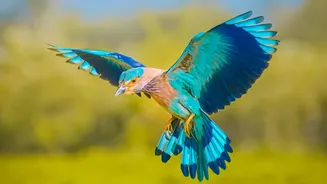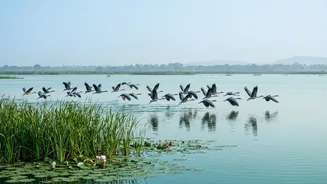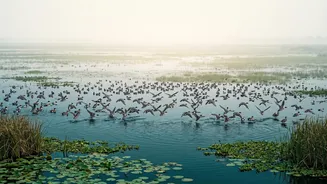



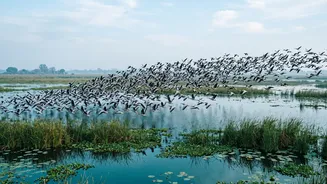


As a gentle chill settles over India, our skies and wetlands begin to host a breathtaking natural spectacle. Millions of winged travellers are arriving from distant lands, their epic journeys a powerful reminder of nature's interconnectedness.
An Epic Journey from the North
The story
begins thousands of kilometres away in the freezing landscapes of Siberia, Russia, and Central Asia. As winter freezes their homelands and food becomes scarce, countless birds embark on a gruelling southward journey. Among these visitors are the iconic Bar-headed Geese, famous for flying over the Himalayas, and the graceful Demoiselle Cranes that flock to Rajasthan. Species like the Ruddy Shelduck, Northern Pintail, and various sandpipers also make the trip, covering vast distances to reach the relative warmth and safety of India's wetlands. Recent reports from late October 2026 show some species, like those in West Bengal and Chennai, arriving earlier than usual, sparking hope among birdwatchers for a busy season.
The Invisible Superhighways
These birds don't travel randomly; they follow ancient, instinct-driven routes known as flyways. India is strategically located at the heart of the Central Asian Flyway (CAF), a vast migratory corridor that stretches from the Arctic to the Indian Ocean and covers 30 countries. This flyway is one of nine major avian highways in the world, connecting breeding grounds in the north with non-breeding wintering grounds in the south. Think of it as a biological trunk route, essential for the survival of over 180 migratory bird species that depend on it. The health of any single point along this route can impact the entire chain, making every stopover critical.
India: A Vital Sanctuary
For these long-distance travellers, India serves as a crucial destination. Our country provides critical stopover sites and wintering habitats for more than 90% of the bird species that use the CAF. Wetlands across the nation transform into bustling avian hubs. Key locations include Keoladeo National Park in Rajasthan, a UNESCO World Heritage site that hosts over 370 bird species; Chilika Lake in Odisha, Asia's largest brackish water lagoon; and Sultanpur National Park near Delhi. Further south, Pulicat Lake and the Vedanthangal Bird Sanctuary in Tamil Nadu also become vital refuges. These sites act like essential service stations, allowing the birds to rest, feed, and refuel after their exhausting journey.
More Than Just a Pretty Sight
The annual arrival of these birds is more than just a spectacle for photographers and nature lovers; it's a vital sign of ecological health. The presence, number, and diversity of these avian visitors act as bio-indicators, reflecting the condition of wetlands not just in India, but across the entire flyway. Healthy populations signal that the chain of habitats—from Siberian tundra to Indian marshes—is intact. Conversely, a decline in their numbers can sound an alarm about environmental degradation, such as water scarcity or pollution, at any point along their path. Their journeys connect distant ecosystems, reminding us that environmental well-being in one part of the world is often linked to another.
Threats on the Wing
Despite its ancient resilience, this incredible migration faces modern threats. Habitat loss due to urbanisation and agricultural expansion is the most significant challenge. Wetlands are being drained, fragmented, or polluted, reducing the safe spaces available for birds. Other dangers include climate change, which can alter migration timings and food availability, and illegal hunting and poaching in some areas. Recognizing these challenges, India has launched a National Action Plan for the conservation of migratory birds along the CAF and is taking a leadership role in coordinating efforts across the 30ndry country flyway. These conservation efforts are crucial to ensuring that these avian highways remain open for generations to come.