





Decoding 'Mission-Watch Mode'
The term 'mission-watch mode' signifies the final, crucial phase before a potential launch window opens. For the Indian Space Research Organisation (ISRO), this period is marked by the culmination of thousands of hours of preparation, simulations, and ground
tests. All systems are powered up, and teams monitor every parameter of the launch vehicle and spacecraft in real-time. It is a state of heightened alert, where every piece of data is scrutinized to ensure the vehicle is perfectly prepared for its journey. While not a formal countdown, it is the last major stage of verification, confirming that all hardware, software, and human elements are go for launch. Recent reports indicate that while efforts are on for a launch by the end of 2026, the meticulous nature of safety checks means the schedule is flexible, with a possible shift to 2027 to ensure every safety protocol is met.
Objectives of the Uncrewed Flight
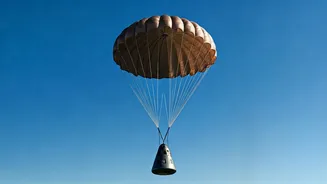
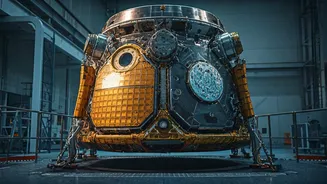
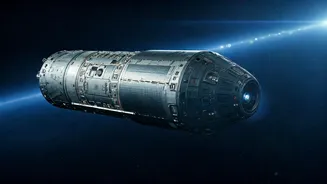
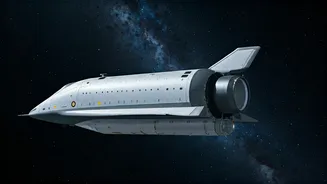
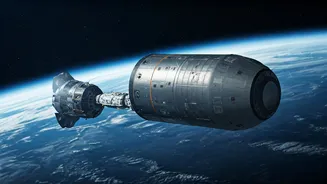
This first uncrewed flight, designated G1, is far more than just a test run; it is a full dress rehearsal for the eventual crewed mission. The primary goal is to validate the performance of the human-rated LVM3 rocket, India's heaviest launch vehicle, which has been modified for this programme. The mission will test the end-to-end capabilities of the Gaganyaan system: a successful launch into a low Earth orbit of around 400 km, the performance of the orbital module in space, and the critical re-entry and splashdown sequence in the Arabian Sea. The spacecraft will carry a humanoid robot named Vyommitra to simulate astronaut conditions and collect vital data on life-support systems, environmental controls, and radiation levels. Every step is designed to prove the system's safety and reliability before Indian astronauts, or 'Gaganyatris', step on board.
A Stepping Stone to History
The Gaganyaan programme consists of a series of test flights before the first crewed mission. Following the successful TV-D1 abort test in 2023, the plan includes at least two full-scale uncrewed orbital flights. Each mission builds upon the last, progressively proving the complex technologies required for human spaceflight. ISRO has confirmed that over 8,000 ground and structural tests have already been completed, demonstrating the thoroughness of its approach. The success of these uncrewed missions is a non-negotiable prerequisite for the final human flight. This methodical, safety-first approach is why timelines are continuously reviewed, as the ultimate goal is not just to reach space, but to do so with the utmost confidence in the safety of the crew.
Why Gaganyaan Matters for India
Successfully launching a crewed mission will make India only the fourth country in the world—after the United States, Russia, and China—to have an independent human spaceflight capability. This achievement holds immense significance beyond the technological feat. The Gaganyaan programme is a powerful driver for industrial and academic growth, with an estimated 60% of its equipment sourced from the Indian private sector and collaborations spanning the country's top institutions. It is projected to create thousands of jobs and inspire a new generation to pursue careers in science and technology. On a strategic level, it enhances India's global stature, boosts its diplomatic leverage, and lays the groundwork for more ambitious future projects, such as the Bharatiya Antariksha Station (Indian Space Station) planned for 2035 and a crewed lunar mission by 2040.