


The Universal Comfort of Pakoras
No monsoon discussion is complete without mentioning the pakora. These deep-fried fritters are the quintessential rainy-day snack, a tradition rooted deep in Indian culinary history. The word 'pakora' is believed to have origins in the Sanskrit word 'pakvavata',
meaning a cooked lump. Made by dipping vegetables like potato, spinach, or paneer into a spiced gram flour (besan) batter and frying them to a golden crisp, pakoras are a celebration of simplicity. The ritual of huddling together with a platter of assorted hot pakoras and a cup of masala chai while the rain pours outside is a cherished memory for many, making it more than just food; it's a shared emotional experience.
The Smoky Allure of Bhutta
As monsoon clouds gather, the familiar sight of the 'bhutta-wala' appears on city streets, roasting corn on the cob over a small coal fire. Though corn arrived in India only about 400 years ago, it has become an inseparable part of the seasonal food culture. The magic of a classic bhutta lies in its preparation: the corn is roasted until the kernels are tender and slightly charred, creating a smoky aroma. It is then vigorously rubbed with a lemon wedge dipped in a mixture of salt, red chilli powder, and sometimes chaat masala. This simple, tangy, and spicy treatment elevates the humble corn on the cob into a monsoon essential, perfect for enjoying on a walk down a rain-washed street.
Delhi's Unique Ram Ladoo
Don't let the name fool you; Ram Ladoo is not a sweet dish. This popular Delhi street food is a savoury delight that truly shines during the cooler, wetter months. They are soft, fluffy fritters made from a batter of soaked moong dal (split mung beans) and chana dal (split Bengal gram), which are deep-fried into small, golden balls. What sets them apart is the serving style. The warm ladoos are topped with a generous helping of tangy green chutney and, most importantly, a pile of sharp, grated radish (mooli). This combination of soft, savoury fritters and the fresh, pungent crunch of radish makes for a unique and memorable chaat experience.
The Intricate Patra or Alu Vadi
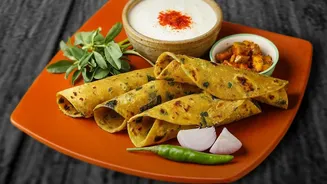
A true dish worth rediscovering, this snack goes by many names—Patra in Gujarat, Alu Vadi in Maharashtra, and Patrode in Karnataka. It is a testament to regional culinary ingenuity, made from colocasia (taro) leaves. The preparation is a labour of love: the leaves are smeared with a spiced paste of gram flour, tamarind, jaggery, and spices, then rolled up tightly and steamed. The cooked rolls are sliced into pinwheels which can be eaten as is, or, more popularly, shallow-fried until the edges are crisp. The result is a complex snack with sweet, sour, and spicy notes, showcasing how traditional recipes masterfully use seasonal ingredients. In 2021, Patrode was even recognized by the Union Ministry of AYUSH for its health benefits, including being rich in iron.
Mumbai's Crispy Kanda Bhaji
While technically a type of pakora, Kanda Bhaji, or onion fritters, deserves its own special mention, especially the version famous in Maharashtra. Unlike some other onion pakoras that are round and dense, the Maharashtrian Kanda Bhaji is known for its irregular, lacy shape and incredible crispiness. This texture is achieved by mixing thinly sliced onions with gram flour, spices, and very little or no water, allowing the moisture from the onions to form the batter. This technique ensures an intensely onion-flavoured and exceptionally crunchy fritter. It’s the ultimate companion to a cutting chai on a rainy Mumbai afternoon, a comforting snack enjoyed by people from all walks of life at roadside stalls.