


The Nutritional Scorecard
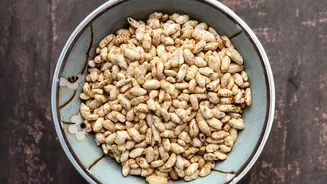
When you put them head-to-head, a clear nutritional divide appears. Puffed quinoa generally boasts a more robust profile. A typical serving packs more protein and dietary fibre than its rice-based counterpart. For instance, a cup of puffed quinoa can
offer around 4 grams of protein and 2.5 grams of fibre, whereas a cup of puffed rice often contains just under 1 gram of protein and minimal fibre. Quinoa is also a complete protein, meaning it contains all nine essential amino acids, a rare trait for a plant-based food. Furthermore, quinoa puffs tend to be richer in minerals like magnesium and iron. On the other hand, plain puffed rice is the undisputed champion of low-calorie snacking. A cup contains significantly fewer calories than the same volume of puffed quinoa, making it an appealing choice for those strictly managing calorie intake.
The Blood Sugar Question
How a snack affects your blood sugar is a crucial factor for many, especially those with diabetes or insulin resistance. This is where the glycemic index (GI) comes into play. Puffed rice, being a simple carbohydrate with very little fibre, has a high glycemic index, meaning it can cause a rapid spike in blood sugar. Quinoa, in its natural state, has a moderate GI, and its higher fibre and protein content help to slow down the absorption of sugar into the bloodstream. While the puffing process can alter the starch structure and raise the GI for both grains, quinoa's superior protein and fibre matrix generally result in a more moderate blood sugar response compared to puffed rice. For sustained energy and avoiding a 'sugar crash', quinoa puffs typically have the advantage.
For Weight Management
The 'best' choice for weight management depends on your strategy. If your main focus is satiety—feeling full for longer—quinoa puffs are likely the better option. The combination of protein and fibre is well-known to promote fullness, which can help prevent overeating later on. However, if you are a volume eater who wants the satisfaction of a large bowl for very few calories, puffed rice can be a useful tool. A cup of puffed rice has only about 56 calories, allowing for a satisfyingly large snack without a heavy calorie load. The key, especially with puffed rice, is to pair it with other foods rich in protein or healthy fats (like nuts or yogurt) to make it more filling and nutritionally balanced.
For Fitness and Energy
Athletes and active individuals might choose between these snacks based on timing. The quick-digesting carbohydrates in puffed rice make it a suitable source of fast energy before a workout. Eaten post-workout, these simple carbs can also help replenish depleted glycogen stores in your muscles. Quinoa puffs, with their complete protein profile, are beneficial for muscle repair and growth, making them a great all-around snack for those with fitness goals. The choice isn't mutually exclusive; some might prefer puffed rice for immediate energy and quinoa puffs for recovery and sustained nourishment.
The Fine Print: Additives and Flavours
It’s vital to remember that not all puffs are created equal. The health benefits of the base grain can be quickly overshadowed by added sugar, excessive sodium, and unhealthy fats in commercially flavoured varieties. A 'cheese' or 'masala' flavoured puff, whether made from rice or quinoa, can be a less healthy choice than the plain version. Always read the nutrition label. Look for products with short ingredient lists and minimal added sugars and sodium. The plain, unseasoned versions of both puffed rice and quinoa are the healthiest canvases, which you can then flavour yourself at home with spices and herbs.