


The Flagship: Mumbai-Ahmedabad High-Speed Rail
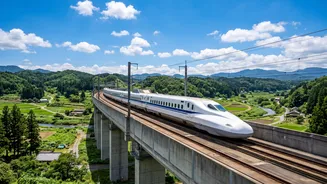
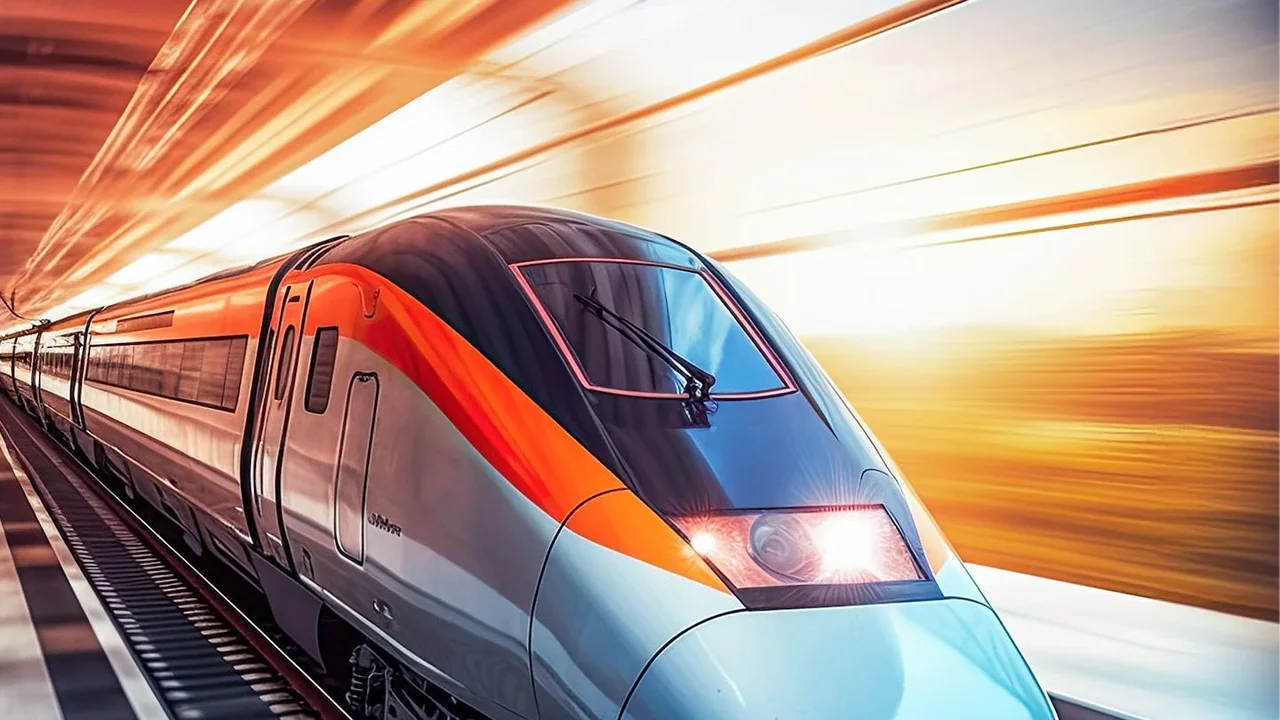
At the forefront of this transformation is the Mumbai-Ahmedabad High-Speed Rail (MAHSR) corridor, popularly known as the bullet train project. This 508-km line will be India's first, connecting the financial hubs of Mumbai and Ahmedabad. With trains designed
to operate at speeds of 320 km/h, the journey time is expected to plummet to just under two hours for express services. Construction is advancing rapidly, particularly in the Gujarat section, with the first operational stretch between Surat and Bilimora targeted for commissioning in 2027. The project includes 12 modern stations, eight of which are in Gujarat, including major hubs like Surat, Vadodara, and Ahmedabad. Beyond just speed, the corridor is a technological leap, introducing Shinkansen technology from Japan and setting a new standard for rail travel in India.
Connecting Saurashtra: Ahmedabad-Rajkot Semi-High-Speed Rail
To better connect the Saurashtra region with the state capital, the proposed Ahmedabad-Rajkot Semi-High-Speed Rail line is another game-changer. This 227-km corridor is designed for trains running at a top speed of 160 km/h, more than halving the current rail travel time to about two hours. The project is being executed by Gujarat Rail Infrastructure Development Corporation (G-RIDE) and is designed to act as a feeder line to the main bullet train corridor at Sabarmati. This integration will effectively slash the Rajkot to Mumbai travel time from over 12 hours to less than five. By largely using existing highway and railway alignments, the project aims to be a cost-effective model for connecting other Tier-2 cities.
Boosting Capacity: Doubling and Quadrupling Lines
Speed is only one part of the equation; capacity is equally crucial. To that end, Indian Railways is undertaking several critical line doubling and expansion projects. One of the most significant is the addition of third and fourth lines on the 259-km Vadodara-Ratlam section. This route is a vital part of the busy Delhi-Mumbai corridor, and the expansion will ease congestion, allowing for more passenger and freight trains to run with greater punctuality. Similarly, the doubling of the 49-km Adipur-Bhuj line will enhance connectivity in the Kutch region, accommodating an expected rise in traffic and supporting industrial growth. Smaller but strategic projects, like the doubling of the Vishwamitri-Dabhoi line, will improve local connectivity and provide better access for tourists heading towards the Statue of Unity.
Modern Gateways: Station Redevelopment
A world-class travel experience begins at the station. Under the Amrit Bharat Station Scheme, major railway stations in Gujarat are being transformed into modern, passenger-friendly hubs. Ahmedabad's Kalupur station is undergoing a massive redevelopment to become a multimodal transport hub, seamlessly integrating the railway station with the metro, bus rapid transit, and the high-speed rail terminus. The new station's design is inspired by the Modhera Sun Temple, blending cultural heritage with state-of-the-art amenities. Similarly, stations in Surat, Vadodara, and others are being upgraded with improved facilities, wider foot overbridges, better accessibility, and enhanced passenger information systems, promising a more comfortable and convenient journey from start to finish.
Forging New Connections: Dholera and Tribal Belts
New railway lines are also being laid to connect emerging economic zones and previously underserved areas. A new broad-gauge line is planned to connect Sarkhej to the Dholera Special Investment Region, one of India's largest upcoming smart cities. This line will also provide crucial links to the Dholera International Airport and the National Maritime Heritage Complex at Lothal, boosting both industrial activity and tourism. In another significant development, new rail connectivity is being extended to tribal areas. The Jobat-Tanda Road line, part of the Chhota Udepur-Dhar project, will connect the remote areas of Alirajpur district in Madhya Pradesh to Gujarat and the national rail network, fostering economic development and improving access for residents.