







Why Humidity Is the Enemy of Freshness
The primary reason your cat's litter box seems far more potent during the monsoon or a sticky summer is simple science. High humidity in the air means moisture struggles to evaporate. This creates a damp environment in the litter itself, which becomes
a perfect breeding ground for bacteria. These bacteria accelerate the breakdown of urea in cat urine, rapidly converting it into pungent ammonia gas—the source of that sharp, unpleasant smell. The heavy, moist air also traps these odour molecules, making them linger in your home for longer. Furthermore, excess ambient moisture can degrade the effectiveness of clumping litters, causing clumps to become soft or break apart, leaving behind small, odour-producing particles that are difficult to scoop out completely.
Choosing Your Litter Wisely
Not all litters are created equal, especially in a humid climate. While traditional bentonite clay litter is popular in India for its clumping ability, it can sometimes absorb moisture from the air itself, making it less effective. For high-humidity regions, consider switching to a more absorbent material. Silica gel or 'crystal' litter is excellent at absorbing and trapping moisture, which helps control odour for longer periods. Natural and biodegradable options like tofu, wood, or corn-based litters are also gaining popularity. Tofu litter, in particular, is known for its fast clumping, low dust, and soft texture, which many cats prefer. Litters infused with activated charcoal can also be a game-changer, as the carbon actively adsorbs and traps odour molecules rather than just masking them.
Upgrade Your Scooping and Cleaning Routine
During humid months, a once-a-day scooping schedule may not be enough. To combat accelerated bacterial growth, it's crucial to scoop waste at least twice daily. This prevents waste from sitting in the damp litter and releasing ammonia. Beyond daily scooping, a weekly deep clean is non-negotiable. Empty the entire litter box and wash it thoroughly with a pet-safe soap and hot water. Avoid ammonia-based cleaners, as their smell can deter cats. The most critical step is to dry the box completely before refilling it. A damp tray will only promote mildew and odour from the start. If there’s a break in the rain, letting the tray sun-dry is an excellent way to disinfect it naturally.
The Power of Ventilation and Placement
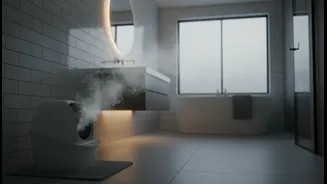
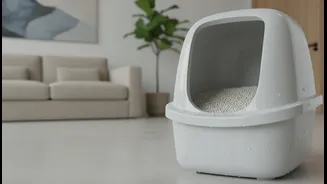
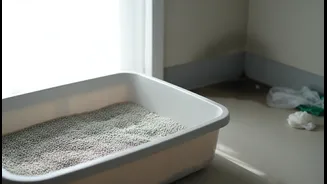
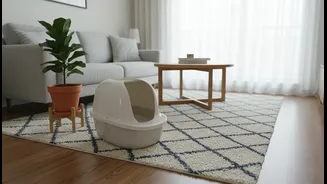
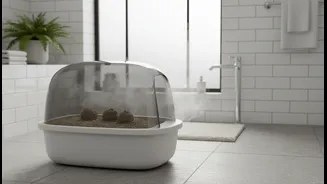
Where you place the litter box has a huge impact on odour control. Avoid keeping it in already damp areas like bathrooms or in sealed, unventilated closets. These spots trap moisture and smells. Instead, choose a cool, well-ventilated area with good airflow. Using a small fan or a dehumidifier near the litter box area can significantly help circulate air and reduce ambient moisture. Even something as simple as using an open-top litter tray instead of a covered one can improve ventilation, preventing the box from becoming a 'fungal petri dish' in the monsoon. Good airflow helps disperse any unavoidable smells before they can concentrate and settle into a room.
Additives That Actually Work
For an extra layer of defence, consider using a litter additive. For years, baking soda has been a popular household hack, sprinkled in the bottom of the tray to absorb some moisture and acidic odours. However, its effectiveness against alkaline ammonia is limited. A more powerful alternative is activated charcoal (or activated carbon). Sprinkling granulated activated carbon into your litter can dramatically boost odour control because its porous structure physically traps and locks away ammonia molecules. You can find litters with charcoal pre-mixed or buy it separately as an additive. These deodorisers work by neutralising or trapping smells at the source, which is far more effective than scented sprays that merely mask the problem and can be off-putting to cats.