


A New Frontier for Private Enterprise
For decades, a career in India's space sector was synonymous with a job at the Indian Space Research Organisation (ISRO). But recent policy shifts, particularly the Indian Space Policy 2023, have thrown the doors wide open for private companies. This
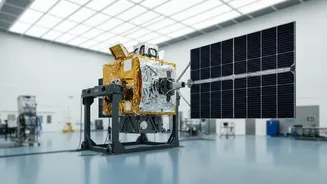
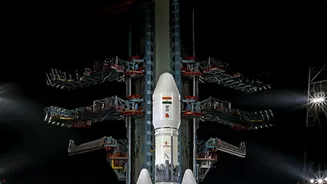
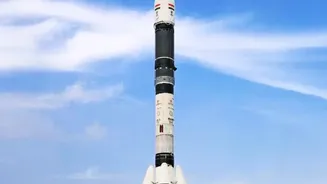
has catalysed a vibrant startup ecosystem, with over 400 private space startups now registered under the regulatory body IN-SPACe. Companies like Skyroot Aerospace, which recently launched India's first privately developed orbital rocket, Agnikul Cosmos, Pixxel, and Dhruva Space are now major players. They are building everything from launch vehicles to satellite constellations, creating a surge in demand for skilled professionals and turning cities like Bengaluru, Hyderabad, and Chennai into burgeoning space hubs. This private-sector boom is projected to help India's space economy grow to $44 billion by 2033, creating over two lakh new jobs along the way.
AI: The Brains of Modern Missions
Artificial Intelligence is rapidly becoming indispensable to space exploration, and India is keenly integrating it into its ambitions. ISRO and private firms are using AI for everything from mission planning and trajectory optimisation to analysing the vast amounts of data sent back from satellites. The Chandrayaan missions, for example, used AI-equipped landers and rovers for autonomous navigation and hazard detection on the lunar surface. For the upcoming Gaganyaan human spaceflight mission, an AI-enabled humanoid robot named Vyommitra will fly on uncrewed test flights to monitor life support systems and ensure the vehicle's safety for astronauts. In the private sector, companies like Dhruva Space and Pixxel use AI and Machine Learning for onboard satellite data processing, reducing the need to send massive datasets back to Earth. This is creating a demand for data scientists and AI specialists who can develop algorithms for spacecraft autonomy, predictive maintenance, and turning raw satellite data into actionable intelligence.
Robotics: Building and Exploring the Cosmos
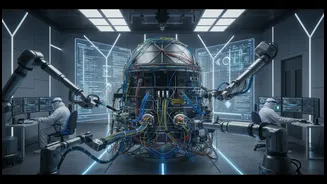
From assembling rockets to exploring other worlds, robotics is at the heart of the new space age. India's capabilities are advancing quickly, from the Pragyan rover that explored the moon during the Chandrayaan-3 mission to the planned use of robotic arms for assembling the Bharatiya Antariksh Station, India's own space station targeted for 2035. ISRO's humanoid robot, Vyommitra, is a prime example of robotics' role in ensuring astronaut safety. This female-presenting robot will simulate human functions and perform tasks in the crew module before humans fly. The development of such advanced systems requires a new generation of robotics engineers, mechanical designers, and automation specialists. These roles are critical not just for deep-space exploration but also for the manufacturing and maintenance of satellites and launch vehicles on the ground, making production more efficient and cost-effective.
Earth Observation: A Universe of Data
Some of the most valuable work in the space sector today involves looking back at our own planet. Earth Observation (EO) uses satellite data to monitor everything from crop health and urban expansion to climate change and disaster management. This field is one of the most commercialised parts of India's space programme, with companies like SatSure and MapmyIndia transforming satellite imagery into products for agriculture, insurance, and urban planning. ISRO's National Remote Sensing Centre (NRSC) and Space Applications Centre (SAC) are major hubs for this work, but a growing number of jobs for GIS analysts, remote sensing specialists, and data scientists are in the private sector. These roles involve combining satellite images with other data to answer critical questions on the ground, like where to build infrastructure or how to manage water resources, making it a field with immense practical impact.