







The Academic Foundation
Before you can prove your potential, you must first prove your academic history. This is the bedrock of your application. Universities across the world will require a complete set of your academic records. This includes mark sheets for Class 10 and 12,
along with all semester-wise or year-wise mark sheets from your bachelor's degree if you are applying for a postgraduate course. You will also need your final degree certificate or a provisional certificate if you have graduated but not yet received the original. It is crucial that the name on your passport exactly matches the name on all your academic documents to avoid any discrepancies. Start gathering these documents early, as obtaining official transcripts from universities can sometimes take weeks.
Proving Your Potential and Proficiency
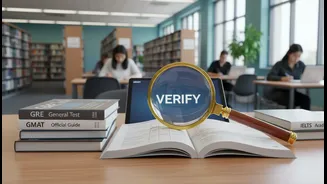
Beyond grades, universities want to know who you are and what drives you. This is where the Statement of Purpose (SOP) and Letters of Recommendation (LORs) come in. Your SOP is your personal essay, a chance to explain your journey, your passion for your chosen field, and your career goals. A generic SOP copied from the internet is easily spotted and can weaken even a strong profile. Similarly, LORs, typically 2-3 from professors or employers, provide a third-party validation of your skills and potential. Alongside these are your standardized test scores. Most universities require proof of English proficiency through tests like IELTS or TOEFL, and many postgraduate programs, especially in the US, require GRE or GMAT scores. Preparing for these tests well in advance is critical.
The Financial Backbone
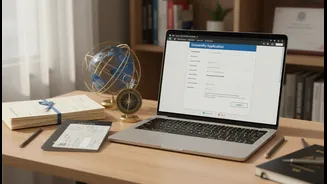
Securing admission is only half the battle; proving you can afford your education is just as important, especially for the visa process. Visa officers need to be convinced that you can cover your tuition fees and living expenses for at least the first year of your study. This financial proof can come in several forms. The most common are bank statements from the last six months, showing a consistent and sufficient balance. An education loan sanction letter from a recognised bank is another strong proof of funds. If your parents or a relative are sponsoring you, you will likely need an Affidavit of Support, along with their income tax returns and bank statements to show their financial capacity. Sudden, large deposits just before applying can raise red flags for visa officers.
Passport and Visa: The Final Hurdles
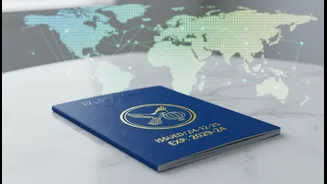
Your passport is your single most important identity document. Ensure it is valid for at least six to twelve months beyond your intended course duration. Once you receive an offer letter from a university—also known as an I-20 for the US or a Confirmation of Acceptance for Studies (CAS) for the UK—you can begin the student visa process. This is often the most stressful part of the journey. Common mistakes that lead to rejections include incomplete forms, inconsistent information between your documents and interview answers, and failing to prove 'intent to return' to India after your studies. You'll need your acceptance letter, financial documents, academic transcripts, and visa application forms. Always carry original documents for your visa interview.