






The Remote Work Inbox Problem
The shift to remote work has transformed email from a communication tool into a primary work environment. The average office worker now receives around 121 emails per day, but for remote employees, this digital firehose feels even more intense. With fewer
in-person interactions, the inbox becomes the main channel for everything from urgent project updates to trivial notifications. This constant stream creates what experts call “digital fatigue,” a state of cognitive exhaustion caused by prolonged screen exposure and endless alerts. This isn't just about feeling tired; it has a measurable impact on productivity, with studies showing professionals spend up to 28% of their workday just managing their inbox. For remote workers, the lines between work and personal life blur, making it harder to disconnect when the office is always in your pocket.
Beyond the Traditional Spam Folder
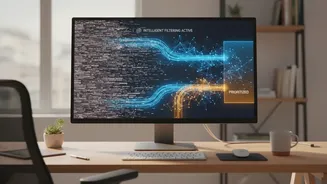
For years, the standard spam folder was our only defense, operating on a simple set of rules. It would flag emails with suspicious keywords or from blacklisted senders. However, these traditional filters are no match for modern spam and sophisticated phishing attacks, which now use AI to appear more convincing. This is where smart AI email filters come in. Instead of relying on fixed rules, these advanced tools use machine learning and natural language processing (NLP) to understand the context, intent, and sender of an email. They learn your personal communication patterns, identifying which messages are truly important to you and which are just noise. So, while a traditional filter might see the word "free" and automatically flag an email, an AI filter can distinguish between a legitimate offer from a trusted brand and a deceptive phishing attempt.
Reclaiming Focus and Productivity
The main benefit of adopting an AI email filter is the immediate boost in productivity. By automatically sorting, prioritizing, and even summarizing messages, these tools clear the path for deep work. Instead of starting the day by manually deleting dozens of cold sales pitches and newsletters, employees can immediately see what requires their attention. This drastically reduces context-switching, the mental toll of jumping between different tasks and topics. Research shows it can take several minutes to regain full concentration after an interruption, and constant email alerts prevent the brain from ever reaching a state of deep focus. By creating a cleaner, more organized digital workspace, AI filters allow remote workers to dedicate their mental energy to high-value tasks rather than inbox administration. This leads to not only getting more done but also feeling less overwhelmed in the process.
A Defense Against Digital Burnout
The fight against inbox chaos is also a fight for mental well-being. Digital burnout is a state of chronic exhaustion driven by the “always-on” culture of modern work. Every email notification triggers a low-level stress response in the brain. When this happens hundreds of times a day, the nervous system remains in a perpetually heightened state, leading to anxiety, difficulty concentrating, and exhaustion. Smart filters help by creating a crucial buffer. They don't just block obvious spam; they intelligently manage the “graymail”—the newsletters, promotional materials, and low-priority CCs that aren't spam but still contribute to the noise. By automatically triaging these messages into separate folders, AI tools give remote employees control over when and how they engage with non-critical information. This empowers them to set healthier boundaries, protect their focus, and prevent the cognitive overload that leads to burnout.