





From Footprints to Foothold
Forget the flags and footprints of the Apollo era. NASA’s vision for the 21st century is the Artemis Base Camp, a permanent human settlement on the Moon. The plan involves establishing a long-term presence near the lunar South Pole, a strategic location
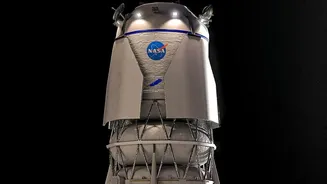
thought to hold vast reserves of water ice in its permanently shadowed craters. This outpost, envisioned to be built in phases starting with robotic missions and culminating in a semi-permanent crewed base after 2032, wouldn't just be a science lab. It would be a critical stepping stone, a place to test the technologies and strategies needed for the next giant leap: sending humans to Mars. The Artemis Base Camp is conceived as a combination of a modern cabin, a mobile rover, and other essential infrastructure to allow astronauts to live and work on the Moon for extended periods.
Why India Is a Key Player
To build a city on the Moon, even a small one, you need reliable partners. In early August 2026, during a joint working group meeting in Bengaluru, NASA officially invited the Indian Space Research Organisation (ISRO) to participate in the Moon Base program. This invitation isn't a surprise. India signed the U.S.-led Artemis Accords in 2023, a set of principles for peaceful and transparent space exploration. More importantly, ISRO has a stellar track record of high-tech, cost-effective missions. Its Chandrayaan-3 mission made history in 2023 by becoming the first to successfully soft-land near the lunar South Pole—the very region NASA is targeting for its base. This demonstrated capability, combined with a history of successful collaboration like the joint NASA-ISRO Synthetic Aperture Radar (NISAR) satellite launched in 2025, makes India an ideal candidate.
What the Partnership Could Look Like
While the exact details are still under discussion, ISRO’s participation could take many forms. India could contribute crucial hardware, such as robotic systems, scientific instruments, or components for the base itself. Given its expertise, ISRO might play a role in communications and navigation systems essential for long-term lunar operations. The partnership would give India access to cutting-edge technologies and deep-space mission experience, accelerating its own ambitious goals, which include a human lunar landing by 2040 and its own space station. This isn't just a symbolic gesture; it's a substantive role that would elevate ISRO into the top tier of global space exploration, moving it from a highly respected national agency to a core partner in humanity’s return to the Moon.
A New Space Race Built on Alliances
This collaboration is about more than just science and engineering; it's smart geopolitics. The new era of space exploration is not a two-way race but a multi-polar landscape. By building a broad coalition of partners through the Artemis Accords, the U.S. is creating a framework for international cooperation that emphasizes shared values like transparency and peaceful exploration. Inviting India, the world's largest democracy and a rising technological power, into the core of its lunar plans sends a powerful strategic message. It strengthens the U.S.-led alliance, pools resources and expertise, and sets a collaborative tone for how humanity will operate on other celestial bodies. This alliance-based approach stands in contrast to the independent, and sometimes more opaque, space ambitions of nations like China.