







The Science of the Perfect Rise
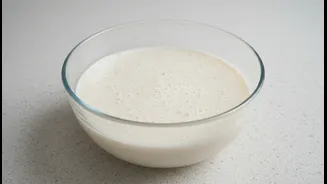
Dosa batter is a living ecosystem. At its heart are naturally occurring microorganisms—wild yeasts and lactic acid bacteria—found on the surface of rice and urad dal. When you soak, grind, and let the batter rest, these microbes get to work. The yeast consumes
sugars in the batter and releases carbon dioxide gas, creating the tiny bubbles that make the batter light and airy. Simultaneously, the lactic acid bacteria produce lactic acid, which contributes that signature tangy flavour and helps preserve the batter. When this process is balanced, the batter doubles in volume and develops a pleasant, slightly sour aroma, signalling it's ready. This magical transformation is what gives a dosa its characteristic crisp-yet-soft texture.
When Good Batter Goes Bad
Over-fermentation is the arch-nemesis of a good dosa. It happens when the microbial party goes on for too long. Given enough time and warmth, the yeast and bacteria go into overdrive. They produce an excessive amount of carbon dioxide gas, which the batter’s structure simply cannot contain. Think of it like over-inflating a balloon; eventually, the structure weakens. The batter becomes excessively bubbly, thin, and runny. Instead of holding its shape on a hot tawa, it spreads uncontrollably or becomes difficult to handle. Furthermore, the bacteria produce too much lactic acid, resulting in a batter that is not just tangy, but unpleasantly sour and sometimes even alcoholic in its aroma. This destabilised batter often leads to dosas that are hard, sticky, or refuse to become crisp.
Time, Temperature, and Control
The speed of fermentation is not governed by the clock alone, but by temperature. Microbes are most active in warm environments, with an ideal temperature range between 25°C and 32°C. In the heat of an Indian summer, this means fermentation can happen very quickly, sometimes in as little as six to eight hours. Conversely, in a cooler climate or during winter, the same process might take 12 to 24 hours. This is why blindly following a recipe's eight-hour rule can lead to disaster. The key is observation. A shorter fermentation window is essential in warmer weather to catch the batter at its peak before it becomes overactive. As soon as the batter has doubled in volume and is visibly bubbly, the fermentation process must be stopped.
Mastering Your Fermentation Window
So, how do you prevent the dreaded over-fermentation? The solution is simple: refrigeration. The cold temperature of a refrigerator doesn't kill the microbes, but it dramatically slows down their activity, effectively pausing the fermentation process. The moment your batter reaches its perfect state—doubled, airy, and pleasantly aromatic—transfer it to the fridge. This is the 'shortened window' in action. By refrigerating it promptly, you prevent the excessive gas production that destabilises the batter's structure. This keeps the batter in its prime for several days, ready to be used whenever you crave a perfect dosa. Before using, simply take out the required amount and let it sit at room temperature for about an hour to take the chill off.
Rescue Missions for Sour Batter
Even the most experienced cooks can sometimes miss the perfect window. If you find yourself with a batch of over-fermented batter, don't throw it away. While it may not produce the perfect crisp dosa, it can be rescued. The most common fix is to add a few tablespoons of rice flour or fine semolina (rava). This helps to thicken the runny batter, absorb some of the excess liquid, and dilute the sour flavour. Stir it in gently until you get a more manageable consistency. While some suggest a pinch of baking soda to neutralise the acid, this can sometimes impart a chemical taste. A better option might be to use the sour batter to make other dishes like uttapam or kuzhi paniyaram, where the tangy flavour is often a desirable trait.