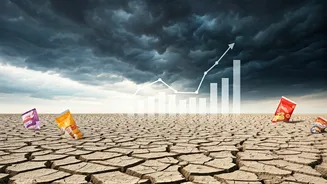









Why the Weather Report is Now a Financial Document
For decades, the Indian economy has danced to the rhythm of the monsoon. The annual rainfall is more than just a weather event; it's a critical economic driver. With a significant portion of the population reliant on agriculture, and over half of the country's
farmland being rain-fed, the performance of the monsoon has a direct and powerful impact on the nation's financial health. A strong, well-distributed monsoon boosts agricultural output, which increases rural incomes and fuels consumer spending. This, in turn, helps to keep food inflation under control, giving the Reserve Bank of India more flexibility with its monetary policy. Conversely, a weak or erratic monsoon can lead to crop failures, a slump in rural demand, and rising food prices, creating a ripple effect that touches everyone's wallet.
From Farm Fortunes to Your Portfolio
The stock market, always looking ahead, is highly sensitive to monsoon predictions. A positive forecast can boost investor confidence and lead to rallies in specific sectors. Companies in the Fast-Moving Consumer Goods (FMCG) sector often see a direct benefit, as higher rural incomes translate to increased sales of everyday products like soaps and packaged foods. The automobile sector, particularly manufacturers of two-wheelers and tractors, also watches the rains closely, as farmers with good harvests are more likely to purchase new vehicles. Other direct beneficiaries include companies dealing in fertilisers, seeds, and agrochemicals, whose products are in high demand during a healthy sowing season. Even banks and NBFCs feel the effect; a strong agricultural season reduces the risk of loan defaults in rural areas, improving their asset quality.
Smarter Forecasts Enable Smarter Planning
This shift towards integrating weather into financial planning is powered by increasingly sophisticated forecasting. The India Meteorological Department (IMD) now provides detailed long-range forecasts that, while still probabilistic, offer valuable insights into expected rainfall patterns. Investors and financial planners no longer see the monsoon as an unpredictable variable but as a quantifiable risk and opportunity. While a forecast is not a guarantee, it provides an essential signal for market sentiment. A 'below normal' forecast, like the one issued for 2026, prompts investors to re-evaluate their exposure to rural-dependent sectors and consider defensive strategies.
Building Your Personal Monsoon Budget
Beyond investments, the monsoon has tangible effects on household budgets. Planning for these seasonal expenses can prevent financial strain. A heavy monsoon season can lead to higher costs for home repairs due to leaks and water damage. In urban areas, intense rainfall often disrupts transportation, potentially increasing travel costs or causing lost workdays. Conversely, a weak monsoon that drives up food prices directly impacts your grocery bills. Prudent financial planning involves creating a seasonal buffer. This could mean setting aside a small portion of your income in the months leading up to the monsoon in an easily accessible savings account or liquid fund to cover unexpected costs, from higher electricity bills for drying clothes to potential medical expenses for seasonal illnesses.
Investing with the Clouds in Mind
So, how does this translate into actionable investment strategy? A forecast for a strong monsoon might signal an opportunity to look at stocks in the FMCG, auto, and agri-input sectors. On the other hand, a 'below-normal' forecast, might suggest caution. In such a scenario, investors might trim their exposure to companies with high rural-demand risk, like those focused on tractors or entry-level two-wheelers. A weak monsoon could also hurt hydroelectric power generation. Some sectors might even benefit counterintuitively from poor rainfall, such as those involved in irrigation infrastructure and water management. The key is not to make drastic moves based on a single forecast but to use it as another layer of data to inform a diversified and resilient investment strategy.