






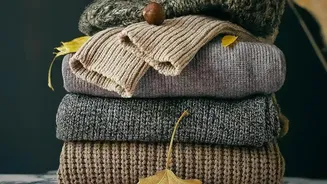
The Golden Rule: Fold, Don't Hang
The single most important rule for woollen sweater care is to fold them rather than hang them. Wool, especially when it's a heavier knit, is susceptible to stretching. When a sweater is placed on a hanger, the weight of the garment pulls downwards, causing
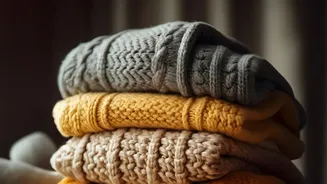
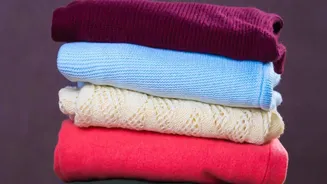
the shoulders to develop unsightly bumps and the overall shape to become distorted and elongated. Over time, this stress on the fibres can permanently ruin the sweater's fit. Stacking them neatly in a drawer or on a shelf ensures the weight is evenly distributed, preserving the original shape and integrity of the knit for seasons to come.
The Art of the Perfect Fold
Folding a sweater properly is a quick skill that makes a world of difference. Start by laying the sweater face down on a clean, flat surface. Smooth out any wrinkles with your hands. Fold one arm straight across the body, towards the opposite shoulder. Then, fold the other arm over the first, creating a neat rectangle. From there, fold the bottom half of the sweater up to meet the neckline. For bulkier sweaters, you might fold it in thirds to create a more compact and stable shape that is less prone to toppling in a stack. This method minimises creasing along the front of the garment and makes it easy to stack.
Choose the Right Storage Environment
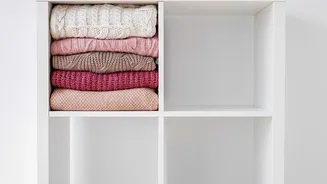
Where you store your woollens is just as crucial as how you fold them. Wool thrives in a cool, dark, and dry environment. Avoid attics or basements where temperature and humidity can fluctuate dramatically, creating a risk for mildew. Instead, opt for a closet or a set of drawers in your main living space. When choosing containers, breathability is key. Airtight plastic bins are not ideal for long-term storage as they can trap residual moisture, which can damage the fibres. Instead, use breathable cotton or linen garment bags, or place them on a shelf where air can circulate.
Keep Pests at Bay, Naturally
One of the biggest threats to woollen clothing is the common clothes moth. The larvae, not the adult moths, feed on the keratin protein in wool fibres, leaving behind small, destructive holes. The first line of defence is to ensure all garments are clean before storing them for an extended period. Moths are attracted to food stains, sweat, and body oils. After cleaning, add a natural pest deterrent to your storage area. Traditional mothballs have a harsh chemical smell, but natural alternatives like cedar blocks or lavender sachets are highly effective and leave a pleasant scent. Cedar's aromatic oils repel pests; you can lightly sand cedar blocks once a year to refresh their potency.
Seasonal Storage and Organisation
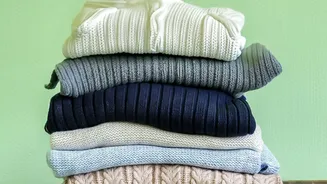
When packing sweaters away at the end of the season, give them space. Avoid over-stacking, as the weight can crush the fibres of the sweaters at the bottom of the pile, leading to deep creases. A good rule of thumb is to stack no more than three or four sweaters together. If you use drawers, consider a filing method where you place folded sweaters vertically. This allows you to see every sweater at a glance and pull one out without disturbing the entire stack. For long-term storage, placing acid-free tissue paper between folds can provide an extra layer of protection against creasing and yellowing.