



First, Let's Define 'Day' and 'Year'
Before we dive into the weirdness of Venus, let’s get our terms straight. For any planet, a 'year' is simple: it’s the time it takes to complete one full orbit around the sun. For Earth, that’s about 365 days. A 'day,' however, is the time it takes for a planet to complete one full rotation
on its own axis. For us, that’s about 24 hours. On most planets, including Earth, you experience many, many days within a single year. It’s a rhythm we take for granted. But Venus, our so-called 'sister planet,' throws that entire concept out the window. It’s the solar system's oddball, where the basic relationship between a day and a year is completely inverted.
The Bizarre Math of Venus
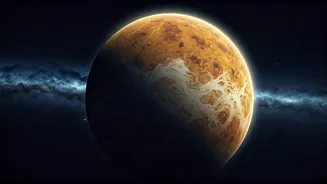
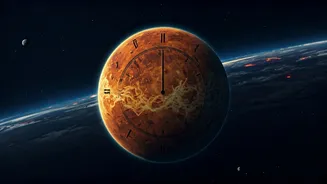
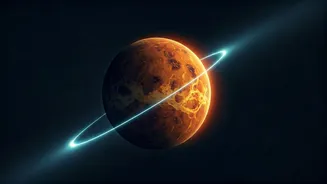
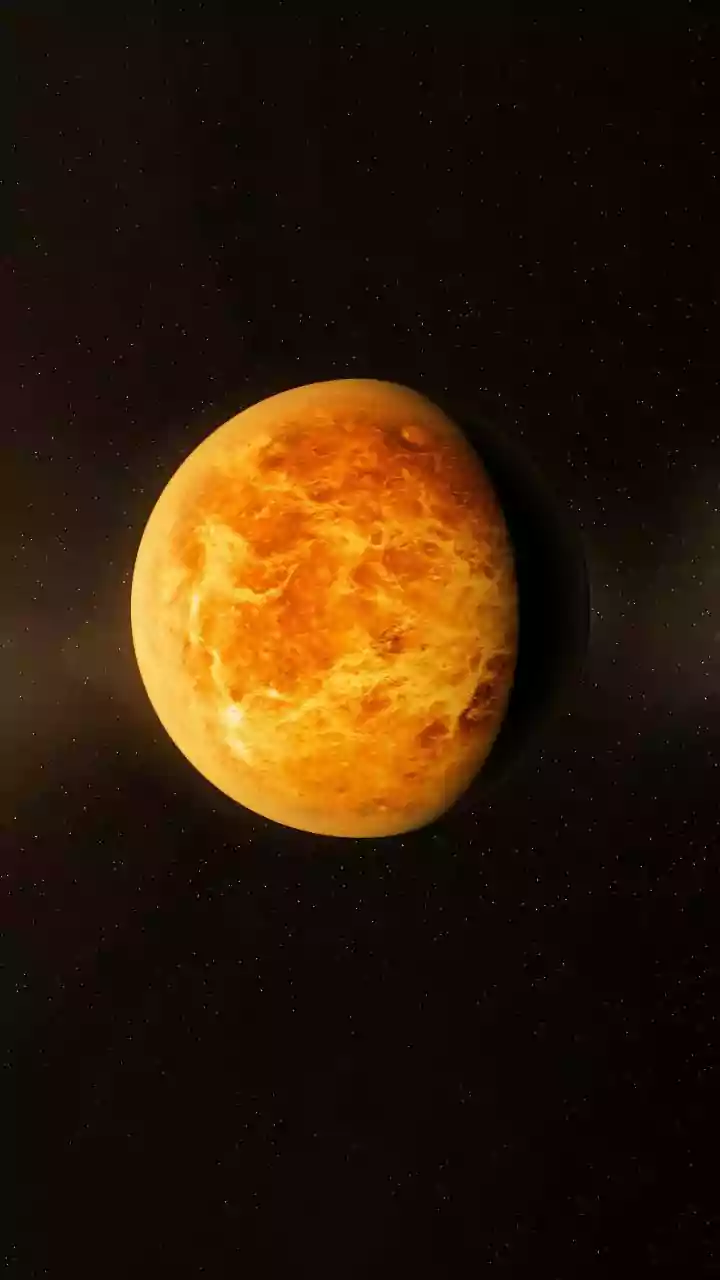
Here’s where your brain might start to melt a little, much like the lead on Venus's surface. Venus takes approximately 225 Earth days to complete one orbit around the sun. That’s its year. So, a Venusian year is shorter than an Earth year. No big deal. The wild part is its rotation. Venus spins incredibly slowly. It takes a staggering 243 Earth days to rotate just once on its axis. So, a single Venusian day (243 Earth days) is longer than a single Venusian year (225 Earth days). Think about that: the planet completes a full trip around the sun before it finishes a single turn. If you could stand on Venus, you'd celebrate your New Year's party before the 'day' was even over. To make things even stranger, a 'solar day' on Venus—the time from one sunrise to the next—is about 117 Earth days, because the planet is orbiting the sun in the opposite direction of its spin.
Spinning the Wrong Way
The reason for this temporal madness is Venus's retrograde rotation. Almost every planet in our solar system, including Earth, spins on its axis counter-clockwise. But Venus spins clockwise. It's essentially rotating backward compared to its orbit around the sun. No one is entirely sure why Venus is the rebel of the solar system, but scientists have a couple of leading theories. One suggests that Venus was struck by a massive asteroid or planetary body billions of years ago, which sent it spinning in the opposite direction. Another theory proposes that the planet’s thick, heavy atmosphere created powerful tidal forces that, over eons, slowed its rotation to a crawl and eventually flipped it over. Whatever the cause, this slow, backward spin is the engine behind its mind-bendingly long day.
What a Venusian Day Would Feel Like
So, what would it be like to experience this never-ending day? In a word: hellish. This isn't a place you’d want to wait for the sunset. The surface temperature on Venus is a consistent 864 degrees Fahrenheit (462 degrees Celsius), hot enough to melt lead. That temperature barely changes between day and night because its crushingly dense atmosphere—90 times thicker than Earth’s and made mostly of carbon dioxide—traps heat in a runaway greenhouse effect. You wouldn't be basking in sunshine, either. The sky is perpetually overcast with thick clouds of sulfuric acid that rain down acid instead of water. So, while the concept of a year-long day is a fun cosmic puzzle, the reality is a reminder that Venus is one of the most inhospitable places imaginable.