





An Unexpected Discovery
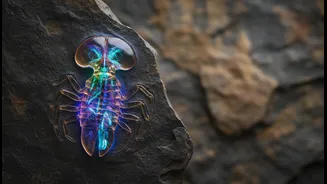
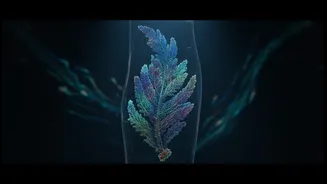
The fossil belongs to a creature called Dendrocrinus simcoensis, an ancient relative of modern starfish and sea urchins known as a crinoid. These animals, which resembled sea flowers on a stalk, were common in Earth's earliest oceans, long before the
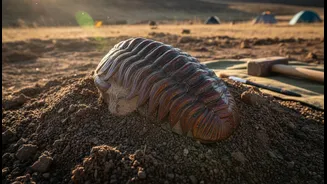
dinosaurs. While crinoid skeletons are found by the millions, this is only the second time soft tissue has ever been found preserved in one, and this new specimen is the oldest by a significant margin. The incredible find wasn't unearthed on a new dig, but was spotted by researchers from the University of Oklahoma while examining existing specimens at a small museum in Montréal.
What Makes Soft Tissue So Rare?
When an animal dies, its soft parts—like skin, organs, and muscles—are the first things to decay. Usually, only hard parts like bones and shells stand a chance of becoming fossils. For soft tissue to survive, it requires a perfect storm of conditions. The creature must be buried incredibly quickly in fine sediment, which cuts off the oxygen supply and halts decomposition. This acts like a natural vacuum-sealer, allowing minerals to slowly replace the organic matter before it disappears. In the case of this crinoid, the preservation was so perfect that researchers could identify its delicate tube feet, structures it used for feeding.
A Window Into a Lost World
Finding these preserved tube feet is a game-changer for paleontologists. These structures are central to understanding how crinoids lived, fed, and moved through the water. By comparing the ancient fossil's anatomy to that of its modern relatives, like feather stars, scientists can see evolution in action. The researchers noted that this 450-million-year-old animal would have behaved and fed very differently from its contemporary cousins. The fossil provides direct evidence of biological features that are normally erased from the fossil record, offering a brief but invaluable snapshot of life more than 200 million years before the first dinosaurs.
The Science of 'Impossible' Preservation
The discovery of soft tissues in ancient fossils challenges long-held assumptions about fossilization. For years, it was believed that complex organic molecules couldn't survive for millions of years. However, recent discoveries have revealed that under specific chemical conditions, these tissues can be stabilized. Sometimes, iron from the blood can act as a preservative, cross-linking proteins and making them resistant to decay. Other times, rapid mineralization essentially creates a perfect cast of the tissue before it disappears. Each new discovery like this adds another piece to the puzzle of how life's most delicate structures can sometimes withstand the immense pressure of deep time.
What It Means for Science
This discovery does more than just teach us about one specific creature. It highlights the immense value of museum collections, where world-changing discoveries can lie in wait for a specialist's eye. It also provides a new roadmap for paleontologists, suggesting that more examples of soft tissue preservation may be hiding in plain sight. By studying these exceptionally rare fossils, scientists can build a more complete and vivid picture of ancient ecosystems. They can move beyond the skeletons to understand the biology and behaviour of animals that have been extinct for hundreds of millions of years, rewriting our understanding of the evolution of life on Earth.