







The Age-Old Problem
Kashmir is India’s largest apple producer, responsible for over 70% of the country's total output. Yet, for the farmers who are the backbone of this multi-crore industry, the period after harvest has traditionally been fraught with anxiety. A lack of adequate
local storage meant they were forced to sell their produce immediately, often flooding the market and driving prices down. This created a system where middlemen and traders in distant cities reaped the benefits of off-season price hikes, while the growers themselves saw their margins shrink. Furthermore, unpredictable weather and highway closures could leave trucks of perishable apples stranded, leading to devastating financial losses for entire communities. The choice was stark: sell cheap or risk losing everything.
The Power of a Cold Chain
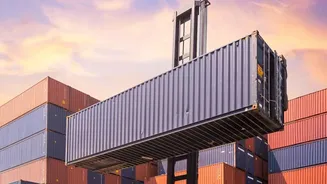
The solution lies in a concept known as a cold chain—an uninterrupted system of refrigerated storage and transport from the orchard to the final market. At the heart of this system are Controlled Atmosphere (CA) stores. These are not merely giant refrigerators; they are sophisticated facilities that precisely manage temperature, humidity, and the levels of oxygen and carbon dioxide. This controlled environment slows down the ripening process, extending the apple's shelf life from a few months to as long as ten months. For farmers, this is a game-changer. It gives them the power to hold their produce and strategically sell it when market demand is high, effectively breaking the cycle of distress sales.
A Cooperative Shift
While large-scale private and government-subsidised CA stores have existed for some time, their high costs have often put them out of reach for small and marginal farmers. The headline shift is the move towards a cooperative model. By pooling resources, farmers are beginning to form collectives to build and operate their own cold chain infrastructure. This grassroots approach empowers growers by giving them direct ownership and control over their post-harvest fate. Instead of being passive price-takers, they become active participants in the value chain. Government schemes under initiatives like the Mission for Integrated Development of Horticulture (MIDH) are providing crucial subsidies for such projects, encouraging more farmers and entrepreneurs to invest in this critical infrastructure.
From Spoilage to Profit
The economic impact is transformative. Farmers who gain access to CA storage can see their earnings more than double for the same produce. One grower from Shopian noted that where he once earned Rs 550–650 for a 16 kg box of apples, CA storage allows him to command prices of Rs 1,200–1,500. This ability to wait for better prices not only increases income but also brings a new level of financial stability to farming families. It allows them to invest back into their orchards, adopt modern farming techniques, and secure a more predictable livelihood. The cold chain acts as a crucial buffer, protecting farmers from the volatility of both weather and market fluctuations.
Building a Resilient Future
The development of farmer-led cold chains is more than just an agricultural upgrade; it's a fundamental restructuring of the rural economy. These initiatives create local employment, reduce the massive post-harvest wastage that plagues Indian agriculture, and stabilise food supply. However, challenges remain. Kashmir still has only about half the cold storage capacity it truly needs, and building these facilities requires significant capital and technical expertise. Despite this, the cooperative model represents a powerful and sustainable path forward. By working together, Kashmiri apple farmers are not just storing fruit; they are building a more prosperous and resilient future for their entire community.