







The Water Crisis in a Cold Desert
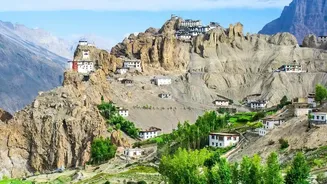
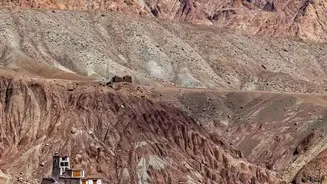
Ladakh's agriculture, which sustains roughly 80% of its population, has always been a delicate dance with the elements. Farmers depend almost entirely on the slow, steady melt of glacial ice to water their crops like barley and wheat. However, rising
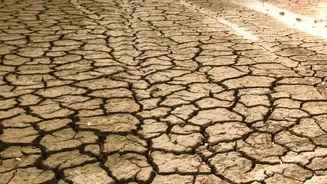
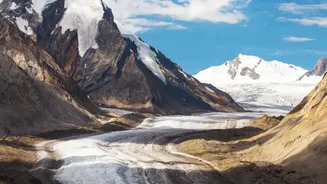
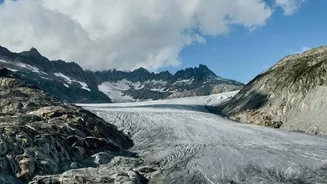
global temperatures are disrupting this ancient rhythm. Glaciers are receding at an alarming rate, and winter snowfalls have become erratic. This causes a critical mismatch: glacial streams now often run dry in April and May, precisely when farmers need water to sow their fields. The water arrives in a rush later in the summer, often too late, leaving communities vulnerable to drought and food insecurity.
An Idea Inspired by Nature and Geometry
The solution came from an observation by Ladakhi engineer and innovator Sonam Wangchuk. He noticed a patch of ice surviving under a bridge well into the spring, shielded from the direct sun. This sparked an idea: what if you could store the abundant, unused water from winter streams and shape it to last until the spring planting season? This led to the creation of the 'ice stupa', an artificial glacier shaped like the conical Buddhist monuments that dot the Ladakhi landscape. The vertical cone shape is a stroke of genius; it minimizes the surface area exposed to the sun, ensuring the ice melts much more slowly than a flat sheet of ice would.
Engineering Simplicity: How It Works
The beauty of the ice stupa lies in its elegant simplicity. There are no complex machines or external power sources. The entire system runs on gravity. In late autumn and winter, a pipe channels water from a glacial stream at a higher altitude down to a village. The natural water pressure forces the water up through a vertical pipe and out of a sprinkler. In the sub-zero temperatures of a Ladakhi winter, the sprayed water freezes as it falls, gradually forming a massive cone of ice. A single stupa can stand over 60 feet tall and hold millions of litres of water, effectively creating a frozen reservoir that waits patiently for spring.
From Concept to Lifeline
The first prototype, built in 2013-2014, successfully stored 150,000 litres of water and lasted until mid-May, proving the concept worked. Since then, the project has expanded dramatically. Dozens of ice stupas have been built across Ladakh, turning barren land green. The slowly melting cones release a steady supply of water throughout the crucial spring months, allowing farmers to irrigate their fields and plant trees. In one instance, villagers planted 5,000 saplings using water from a new stupa, transforming the arid landscape. The initiative has become a lifeline, recharging groundwater tables and ensuring agricultural stability for communities that were facing an uncertain future.
A Symbol of Hope and Adaptation
The ice stupa project, managed by Wangchuk's Students' Educational and Cultural Movement of Ladakh (SECMOL) and the Himalayan Institute of Alternatives, Ladakh (HIAL), has become more than just a water conservation scheme. It is a powerful symbol of community-led climate adaptation. The project has garnered international recognition and inspired similar initiatives in other mountain regions, from the Swiss Alps to Chile. It demonstrates how local knowledge, combined with scientific principles, can create effective, low-cost solutions to some of our most pressing environmental challenges. The stupas have also become a source of local pride and an educational tool, engaging the younger generation in building a resilient future for Ladakh.