



First, What Is Authentic Tteokbokki?
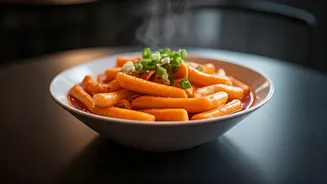
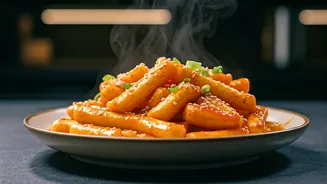
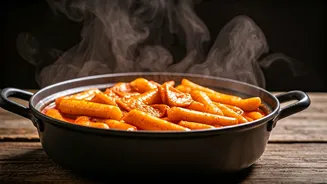
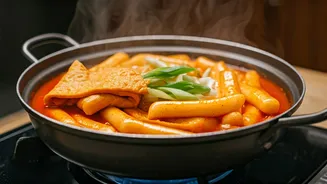
Before we dive into places, let's break down this iconic dish. At its heart, tteokbokki (pronounced ‘tok-bok-ki’) is made of garae-tteok, long, chewy cylinders of rice cake. These are simmered in a vibrant sauce that’s the perfect balance of spicy, sweet,
and savoury. The classic sauce gets its signature kick and deep red colour from gochujang (Korean chilli paste) and gochugaru (Korean chilli powder). Floating alongside the rice cakes are typically slices of eomuk (fish cake), which add a soft, savoury bite and absorb the delicious sauce. While it’s now a beloved street food, its origins trace back to the Joseon Dynasty as a non-spicy, soy sauce-based dish called gungjung-tteokbokki, served in the royal court. The spicy version we love today became popular after the Korean War, a comforting and affordable dish for the masses.
The Classic: Seoul's Street Stalls (Pojangmacha)
The most authentic way to experience tteokbokki is standing shoulder-to-shoulder with locals at a pojangmacha, or street food tent. These humble stalls, found in bustling areas like Myeongdong and Hongdae, are the soul of Korean street food. Here, you’ll see massive pans of tteokbokki simmering away all day, the sauce thickening into a rich, concentrated gravy. The flavour is often straightforward and powerful—intensely spicy and deeply satisfying. It's usually served in a simple paper cup with a wooden skewer for a fork. This isn't a fine-dining experience; it's fast, cheap, and incredibly delicious. The magic lies in the atmosphere: the steam, the chatter of the crowd, and the simple joy of warming up with a cup of spicy goodness. This is the tteokbokki you see characters grabbing after a long day in your favourite K-drama.
The Old School: Sindang-dong Tteokbokki Town
For a more dedicated pilgrimage, food lovers head to Sindang-dong in Seoul, famously known as 'Tteokbokki Town'. This entire alley is dedicated to the dish, but with a twist. Unlike the pre-made street stall version, here it's served jeukseok tteokbokki, meaning 'on the spot'. You get a large, shallow pot on a tabletop burner filled with raw ingredients: rice cakes, vegetables, fish cakes, ramyeon noodles (making it 'rabokki'), and a generous dollop of secret sauce. You cook it all yourself right at the table, watching the sauce bubble and thicken. It’s a communal, interactive meal perfect for sharing with friends. Each restaurant in Sindang-dong has its own secret recipe for the sauce, a legacy often passed down through generations, making it a truly unique and historical place to eat.
The Modern Twist: Franchise Favourites
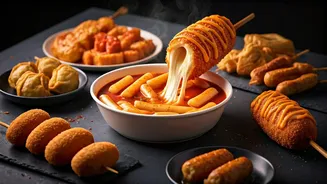
Korean cuisine is constantly evolving, and tteokbokki is no exception. Modern franchise restaurants have taken the classic dish and given it a contemporary spin, making it popular with a younger crowd. These eateries offer customisable tteokbokki where you can choose everything from the spice level to a wild array of toppings. Think melted mozzarella cheese pulling gloriously from the spicy sauce, crispy fried dumplings, sausages, and even seafood. Popular chains across South Korea have turned tteokbokki into a full-on sit-down meal. While purists might stick to the original, these modern interpretations are a delicious way to see how the dish continues to adapt. The addition of cheese, in particular, has become a global phenomenon, as the creamy dairy perfectly cuts through the intense spice of the gochujang.
Finding a Taste of Seoul in India
You don't need a plane ticket to find great tteokbokki. Thanks to the Hallyu wave, Korean restaurants are popping up across India's major cities. Look for them in areas known for their international cuisine, like Majnu-ka-tilla in Delhi, the lanes of Koramangala in Bengaluru, or the suburbs of Mumbai. When scanning a menu, look for signs of authenticity. A good tteokbokki will have that signature chewy, not mushy, texture in its rice cakes. The sauce should be rich and clinging, not watery. The presence of eomuk (fish cake) is a classic sign. Don't be shy about asking for the spice level—many restaurants in India will adjust it to your preference. Trying tteokbokki at a local Korean-run restaurant is the next best thing to being on a street corner in Seoul.