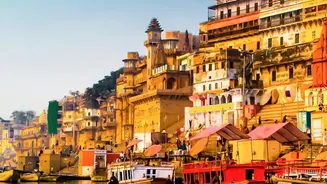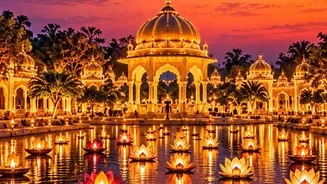


Varanasi, the city of light, hosts two spectacular festivals of lamps: Diwali and Dev Deepawali. While both illuminate the ancient city, they are distinct in their meaning, scale, and spirit. Let's explore what sets them apart.
The Calendar's Tale: A Fortnight Apart
The most fundamental difference
lies in their timing. Diwali, the nationwide festival of lights, is celebrated on Amavasya, the new moon night of the Hindu month of Kartik. In contrast, Dev Deepawali takes place exactly fifteen days later on Kartik Purnima, the night of the full moon in the same month. This fortnight gap means that while Diwali is celebrated under the darkest sky, Dev Deepawali unfolds under the bright light of a full moon, adding a celestial glow to the man-made illuminations. In 2026, for example, Diwali falls on November 8, while Dev Deepawali is on November 24.
Divine Legends: Rama's Return vs. Shiva's Victory
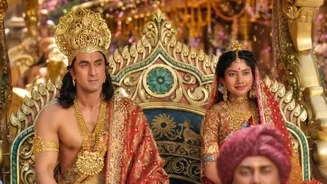
The mythological origins of the two festivals are entirely different. Diwali primarily celebrates the return of Lord Rama to Ayodhya with Sita and Lakshmana after defeating the demon king Ravana, an event symbolizing the victory of good over evil. It is also associated with the worship of Goddess Lakshmi for prosperity. Dev Deepawali, meaning 'the Diwali of the Gods', commemorates a different divine victory. According to scripture, it marks the day Lord Shiva, in his form as Tripurari, defeated the powerful demon Tripurasura, who had terrorized the three worlds. The gods celebrated this triumph by descending to Earth to bathe in the Ganga at Kashi (Varanasi) and lighting lamps in Shiva's honour.
A Spectacle of Light: Homes vs. Ghats
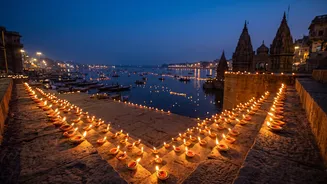
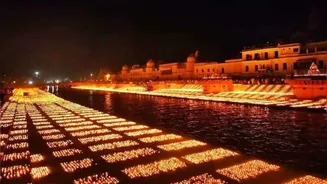
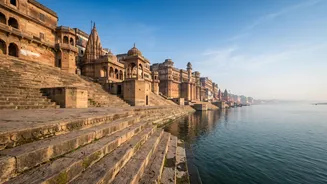
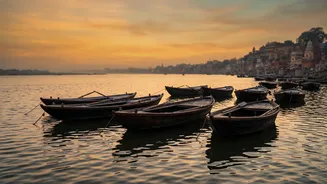
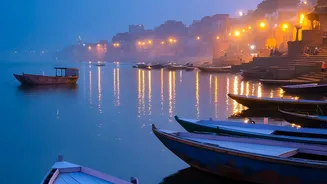
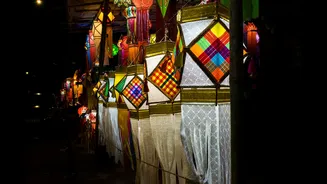
While both are festivals of light, the scale and location of the celebrations differ dramatically. Diwali in Varanasi, as elsewhere in India, is a more personal, home-centric festival. Families decorate their houses, light diyas in their doorways and windows, share sweets, and perform Lakshmi Puja. Dev Deepawali, however, is a massive public spectacle almost entirely focused on the riverfront. More than 80 ghats along the Ganga, from Ravidas Ghat to Rajghat, are adorned with over a million earthen lamps, creating a breathtaking river of light. This grand display is not a nationwide custom but a tradition deeply rooted in and iconic to Varanasi.
Rituals and Atmosphere: Personal Joy vs. Public Devotion
The rituals reflect this difference in focus. On Diwali, the atmosphere is one of festive family joy and social gatherings. In Varanasi, this means bustling markets and decorated homes. Dev Deepawali's rituals are centred on collective, public devotion. The day begins for many with a holy dip in the Ganga, known as Kartik Snan. The evening's highlight is the grand Ganga Aarti at ghats like Dashashwamedh and Assi, which becomes an especially elaborate ceremony drawing thousands of pilgrims and tourists. Volunteers and devotees spend hours carefully arranging the diyas on the ghat steps, an act of collective service and faith that defines the festival's atmosphere.
The Diwali of Humans vs. The Diwali of Gods
Ultimately, the core feeling of the two festivals is distinct. Diwali is a celebration by and for humanity, marking a triumph in human history and seeking blessings for worldly prosperity. It connects families and communities across the nation. Dev Deepawali is conceived as a celebration hosted on Earth for the divine. The belief that the gods themselves descend upon Varanasi to partake in the festivities gives it a unique spiritual weight. It transforms the city into a temporary celestial court, where the river Ganga reflects not just the light of a million diyas, but the perceived presence of the gods themselves, making it a profoundly moving experience for believers.