

Brilliant Venus Dazzles After Sunset
Throughout September, the planet Venus will be a dominant and unmissable feature in the western sky just after sunset. Often called the 'Evening Star,' Venus will reach its greatest brilliancy around September 18-22, shining at its brightest for the year.
At a magnitude of nearly -4.8, it will outshine every object in the night sky except for the Moon. This peak brightness makes it incredibly easy to spot, even from brightly lit urban areas. For those with a telescope, the planet will appear as a beautiful, thinning crescent. On the evening of September 14, look for a lovely pairing as a slim crescent Moon passes close to Venus, creating a stunning photo opportunity low on the horizon.
Catch a Glimpse of the 'False Dawn'
For those willing to wake up early and find a truly dark location, September offers a chance to see a subtle and beautiful phenomenon known as the zodiacal light. This faint, pyramid-shaped glow appears in the eastern sky about 90 minutes before sunrise. It's not a true dawn but sunlight reflecting off a vast cloud of dust particles in our solar system. The weeks surrounding the autumn equinox are one of the best times of the year to witness this eerie light. With the new moon falling on September 11, the days around it provide the darkest skies, making it an ideal window to try and spot this elusive glow, often called the 'false dawn.'
The Autumnal Equinox (September 23)
On September 23, 2026, the Northern Hemisphere officially welcomes autumn with the arrival of the autumnal equinox. This astronomical event marks the moment the Sun crosses the celestial equator, moving from north to south. The word equinox translates to 'equal night,' and while it's commonly believed that day and night are exactly 12 hours long on this day, it's not perfectly precise due to atmospheric effects. However, it does signify the point when our days become shorter than our nights. For skywatchers, the equinox is a welcome milestone, as the lengthening nights provide more time for observing the cosmos. In India, the equinox occurs early in the morning on September 23, calculated from its UTC time of 00:06.
Neptune at Opposition (September 26)
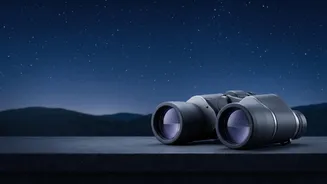
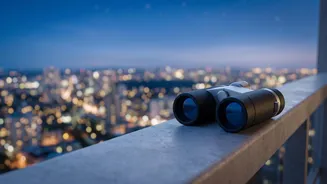
The distant, icy giant Neptune reaches opposition on September 26, the same night as the full moon. Opposition is when Earth passes directly between the Sun and an outer planet, placing that planet opposite the Sun in our sky. This alignment means Neptune will rise in the east around sunset, be visible all night long, and be at its closest and brightest for the year. However, due to its immense distance, Neptune is not visible to the naked eye. You will need a good pair of binoculars or a small telescope to spot it as a faint, star-like object in the constellation Pisces. Through a telescope, it may reveal itself as a tiny, blue-grey disc. Saturn will be shining nearby, making for a great planetary pairing.
The Harvest Moon (September 26)
September's full moon, which reaches its peak illumination in India on the night of September 26, is famously known as the Harvest Moon. This is the full moon that falls closest to the autumnal equinox. Its name comes from agricultural tradition, as the bright moonlight for several successive evenings around sunset gave farmers extra light to bring in their crops. Look for the Moon to rise in the east around sunset on September 26, appearing large and orange-hued while it's near the horizon due to atmospheric scattering. The ringed planet Saturn will also be a bright point of light near the Moon, adding to the beautiful sight.