



First, What Is a Super New Moon?
The term sounds like a contradiction, but it’s a simple combination of two separate celestial events. First, you have a 'Supermoon.' This happens when the Moon is at its closest point to Earth in its elliptical orbit, a position called perigee. This makes
it appear slightly larger and brighter in our sky—when it's visible, of course. Then you have the 'New Moon.' This is the lunar phase when the Moon is positioned between the Earth and the Sun. From our perspective, the side of the Moon facing us is not illuminated by sunlight, making it effectively invisible in the sky. When these two events coincide—the Moon is both at its closest point to Earth and in its 'new' phase—we get a Super New Moon. It’s an invisible giant, lurking in the sky.
The Ultimate Gift: Total Darkness
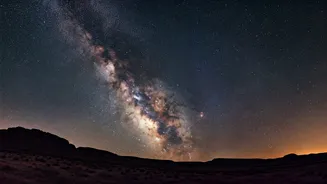
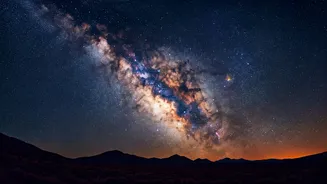
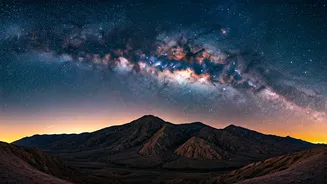
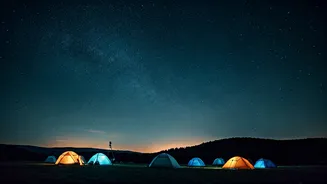
For deep-sky observers, the Moon is often the biggest source of natural light pollution. A bright full moon can wash out all but the brightest stars and planets, like a celestial streetlamp obscuring the faint details of the universe. A New Moon, by contrast, removes this massive source of light entirely. A Super New Moon enhances this effect. Because the Moon is at perigee, its gravitational pull on Earth is slightly stronger. This results in higher 'perigean spring tides.' While this mainly affects our oceans, it’s a reminder of the powerful cosmic alignment taking place. The real prize for astronomers, however, is the profound darkness. With the Moon completely absent from the night sky, the faintest, most distant objects become accessible to our telescopes.
Mapping the Unseen Parts of Our Galaxy
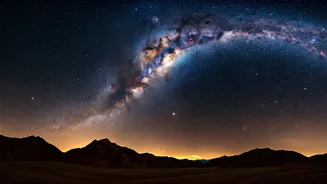
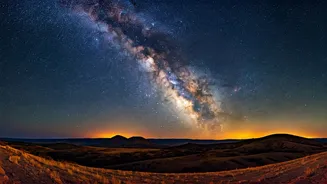
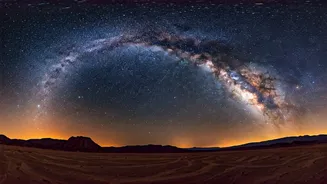
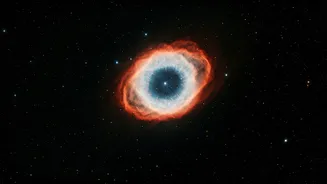
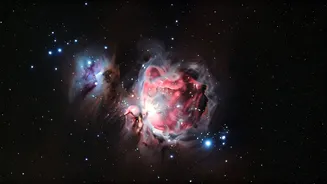
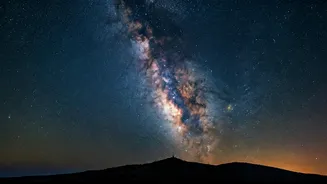
The headline's phrase 'map galaxy' doesn’t mean creating the first-ever map of the Milky Way. Instead, it refers to charting its most elusive and faint structures. During a Super New Moon, astronomers can focus on 'Deep Sky Objects' (DSOs) that are normally impossible to see. This includes faint nebulae, which are vast clouds of gas and dust where new stars are born, and faint stellar streams—the ghostly trails of stars left behind by dwarf galaxies that the Milky Way has consumed over billions of years. Observing these streams helps astronomers piece together our galaxy’s violent history of mergers and acquisitions. They can also better study dark nebulae, which are clouds so dense they block the light from stars behind them. Mapping these dark patches is crucial for understanding the distribution of matter in our galaxy.
The View from India and Beyond
This window of opportunity is seized by observatories worldwide. In India, facilities like the Indian Astronomical Observatory in Hanle, Ladakh, are perfectly positioned to take advantage. Located at a high altitude with clear, dry skies, Hanle is one of the world's best sites for optical and infrared astronomy. During a Super New Moon, its powerful telescopes can conduct surveys that would be unfeasible at other times. Both professional and highly skilled amateur astronomers use this time to hunt for new comets, track faint asteroids, and capture breathtaking images of distant galaxies. For them, the Super New Moon isn’t an event to 'see' but a condition to exploit—a brief period when the cosmic curtains are pulled back as far as possible.
Why This Deeper View Matters
These observations are more than just pretty pictures. By mapping faint structures, scientists refine their models of galactic evolution. They learn more about the cycle of star birth and death and the distribution of dark matter, the mysterious substance that makes up most of the universe's mass but doesn't emit light. Each new discovery, whether it’s a faint star cluster or a previously unknown gas cloud, adds another piece to the grand puzzle of our cosmic home. It helps us understand where we came from and how our corner of the universe was built. The Super New Moon, while invisible to the naked eye, is therefore a critical event that illuminates our understanding of the cosmos.